
4381663

iTRAQ® Reagent - 8PLEX Multiplex Kit
Sinonimo/i:
iTRAQ 8-Plex
Autenticati per visualizzare i prezzi organizzativi e contrattuali.
Informazioni su questo articolo
NACRES:
NA.24
UNSPSC Code:
12161503
product line
Milliplex®
storage temp.
−20°C
General description
Contains iTRAQ® Reagents 113, 114, 115, 116, 117, 118, 119 and 121 and sufficient material for five 8-plex assays. Multiplex Buffer kit (Cat. No. 4381664) to be ordered separately.
Cat. No. 4381663 contains the equivalent reagents in the Sciex iChemistry® product number 4390812.
Cat. No. 4381663 contains the equivalent reagents in the Sciex iChemistry® product number 4390812.
The isobaric tags for relative and absolute quantitation (iTRAQ®) reagents are the first set of multiplexed, amine-specific, stable-isotope reagents that can label all peptides in up to eight different biological samples enabling simultaneous identification and quantitation, relative and absolute, while retaining important post-translational modification (PTM) information. The iTRAQ Reagents - 8plex kits are available in more economical bulk packs.
Application
iTRAQ® Reagent - 8PLEX Multiplex Kit has been used:
- to derivatize and label the tryptic digests of the iodoacetamide probe (IPM)-labeled HeLa proteome
- in isobaric tags for relative and absolute quantitation (iTRAQ) labeling of peptides
- as isobaric labels for the comparative quantification of proteins between the digested samples in proteomic analysis
Features and Benefits
- Simultaneously identify and quantify proteins from multiple samples
- Expands protein and proteome coverage by labeling all peptides, including those with post-translational modifications (PTMs)
- Increases confidence in identification and quantitation from MS/MS spectra by tagging multiple peptides per protein
- Increases throughput and confidence in results for protein biomarker discovery studies
- Offers a simple workflow without sample fractionation for reduced-complexity samples, such as affinity pull-downs
- Provides the flexibility to multiplex up to eight different biological samples simultaneously in a single experiment
- Fully supported by ProteinPilot Software on all SCIEX proteomics LC/MS/MS platforms
Analysis Note
To view the Protocol for the iTRAQ Reagents 8-plex Kit, please visit this Protocol link.
To view the Chemistry Quick Reference Card for the iTRAQ Reagents, please visit this Chemistry Quick Reference Card link.
To view the Chemistry Quick Reference Card for the iTRAQ Reagents, please visit this Chemistry Quick Reference Card link.
Legal Information
MILLIPLEX is a registered trademark of Merck KGaA, Darmstadt, Germany
iChemistry is a registered trademark of AB Sciex Pte. Ltd.
iTraq is a registered trademark of AB Sciex Pte. Ltd.
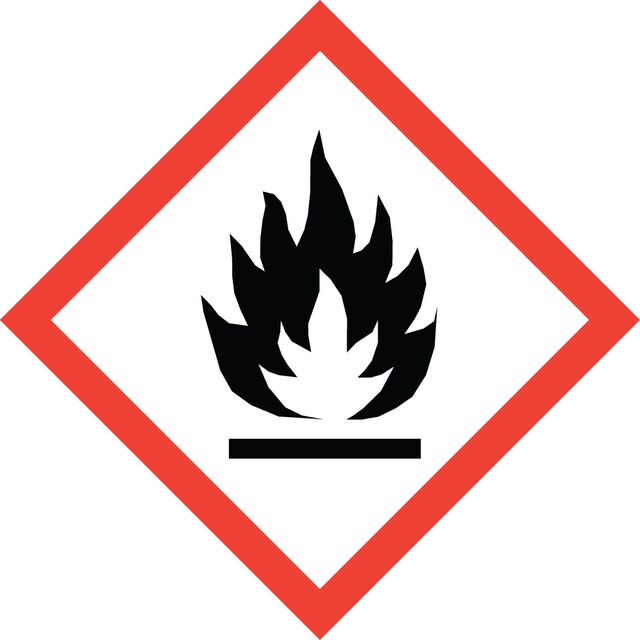

Parola di avvertenza
Danger
Codici di pericolo
Avvertenze di sicurezza
Hazard Classifications
Acute Tox. 4 Dermal - Acute Tox. 4 Inhalation - Acute Tox. 4 Oral - Eye Irrit. 2 - Flam. Liq. 2
Classe di stoccaggio
3 - Flammable liquids
Punto di infiammabilità (°F)
35.6 °F - closed cup
Punto di infiammabilità (°C)
2.0 °C - closed cup
Che succede?
WGK 3
Scegli una delle versioni più recenti:
Possiedi già questo prodotto?
I documenti relativi ai prodotti acquistati recentemente sono disponibili nell’Archivio dei documenti.