

Passa al contenuto
Merck

Vai a

BCA1

Kit dell′acido bicinconinico per la determinazione delle proteine

for 200-1000 μg/ml protein

Sinonimo/i:

Saggio proteico BCA

Autenticati per visualizzare i prezzi organizzativi e contrattuali.

Scegli un formato

Cambia visualizzazione
Voi/SKUDisponibilitàPrezzo
1 kit
Per conoscere la disponibilità, visualizza il carrello
CHF 489.00

Informazioni su questo articolo

NACRES:
NA.32
UNSPSC Code:
12352106

CHF 489.00


Per conoscere la disponibilità, visualizza il carrello

Servizio Tecnico
Hai bisogno di aiuto? Il nostro team di scienziati qualificati è a tua disposizione.
Permettici di aiutarti


Quality Segment

usage

sufficient for ~500 assays

storage temp.

2-8°C

Application

Il kit dell′acido bicinconinico è stato utilizzato per la stima delle proteine nei campioni di proteomi salivari, nelle cellule di rene embrionale umano 293 e nelle cellule luteiniche.

Biochem/physiol Actions

Le proteine riducono il Cu(II) alcalino in Cu(I) in modo dipendente dalla concentrazione. L′acido bicinconinico è un reagente cromogenico altamente specifico per il Cu(I) che forma un complesso di colore viola con un′assorbanza massima a 562 nm. L′assorbanza è direttamente proporzionale alla concentrazione di proteine. È un′alternativa al reagente di Folin-Ciocalteu per la determinazione delle proteine.

Features and Benefits

  • Saggio colorimetrico semplice e sensibile per le proteine
  • Due reagenti stabili utilizzati per la soluzione di lavoro
  • Un metodo più semplice e rapido del saggio proteico di Lowry
  • Compatibile con molti detergenti ionici e non ionici
  • Minore variazione tra diverse proteine rispetto al saggio sul legame con il colorante di Bradford
  • Adattabile all′uso su piastre con micropozzetti

Confronta articoli simili

Visualizza il confronto per intero

Mostra le differenze

1 of 1

Questo articolo
QPBCAB9643DUO82047
Acido bicinconinico

Supelco

B9643

Acido bicinconinico

description

for 200-1000 μg/ml protein

description

for 0.5-30 μg/ml protein

description

-

description

-

Quality Level

200

Quality Level

200

Quality Level

200

Quality Level

200

usage

sufficient for ~500 assays

usage

-

usage

-

usage

-

storage temp.

2-8°C

storage temp.

2-8°C

storage temp.

-

storage temp.

20-25°C


Solo come componenti del kit

N° Catalogo
Descrizione

  • Bicinchoninic Acid Solution 1 L

  • 4%(w/v) CuSO4 · 5H2O Solution 25 mL

  • Protein Standard Solution 5 x 1

Pittogrammi

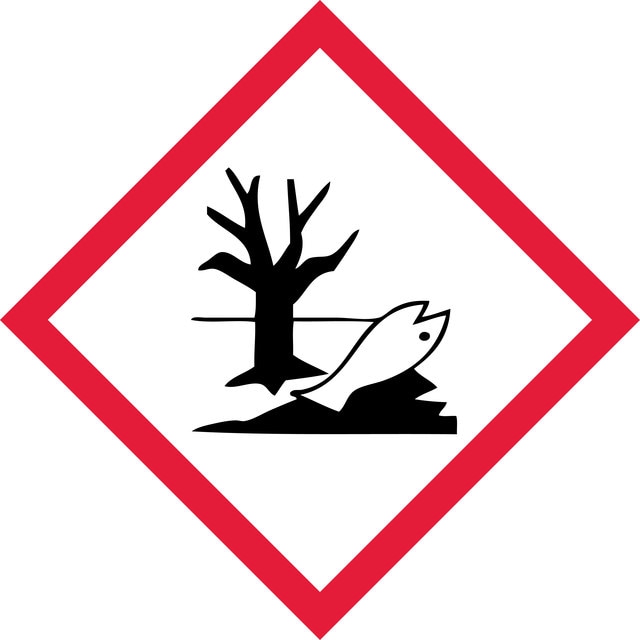
CorrosionEnvironment

Parola di avvertenza

Danger

Codici di pericolo

Hazard Classifications

Aquatic Acute 1 - Aquatic Chronic 1 - Eye Dam. 1 - Met. Corr. 1

Classe di stoccaggio

8A - Combustible corrosive hazardous materials

Punto di infiammabilità (°F)

Not applicable

Punto di infiammabilità (°C)

Not applicable

DPI (dispositivi di protezione individuale)

Eyeshields, Gloves, type ABEK (EN14387) respirator filter


Scegli una delle versioni più recenti:

Certificati d'analisi (COA)

Lot/Batch Number

It looks like we've run into a problem, but you can still download Certificates of Analysis from our Documenti section.

Se ti serve aiuto, non esitare a contattarci Servizio Clienti

Possiedi già questo prodotto?

I documenti relativi ai prodotti acquistati recentemente sono disponibili nell’Archivio dei documenti.

Visita l’Archivio dei documenti


Questions

1–4 of 4 Questions  
  1. Good morning. Is the "Bicinchoninic Acid Kit for Protein Determination" complete? i.e. does it contain all the necessary reactants? Is there a need to buy plates, wells or other? Thank you.

    1 answer
    1. This kit does require the use of materials that are dependant on the assay format used, but not provided in the kit. These items are as follows:

      • Spectrophotometer capable of accurately measuring absorbance in the 560 nm region
      • 96-well plates, such as Cat. No. CLS9017
      • 96-well plate sealing film: Cat. No. Z369667

      OR

      • Test tubes, 13 × 100 mm: Cat. No. CLS980013
      • 1 mL Disposable Plastic Cuvettes: Cat. No. C5416

      Please see the link below to review additional information available in the product datasheet:
      https://www.sigmaaldrich.com/deepweb/assets/sigmaaldrich/product/documents/246/793/bca1pis-ms.pdf

      Helpful?

  2. Can the kit be used for measuring the protein content of marine bacteria grown in artificial sea water?

    1 answer
    1. This product has not been tested for use with marine bacteria in artificial sea water. However, the publication below used the Bicinchoninic acid method to measure total protein in planktonic marine bacteria, indicating that this kit may be suitable.
      Determination of Total Protein Content of Bacterial Cells by SYPRO Staining and Flow Cytometry
      https://www.ncbi.nlm.nih.gov/pmc/articles/PMC91485/

      Note that there are a number of potential interfering substances that may impact results. Please see the link below to review the product datasheet, including a list of interfering substances beginning on page 4.
      https://www.sigmaaldrich.com/deepweb/assets/sigmaaldrich/product/documents/246/793/bca1pis-ms.pdf

      Helpful?

  3. Does this kit rely on naked-eye colorimetric detection or does it require a fluorescent microscope?

    1 answer
    1. The kit is based on colorimetric, not fluorometric, detection. The color intensity should be measured at A562nm

      Helpful?

  4. Can a standard OD plate reader be used for the BCA1-1KT Kit, which offers a choice of assay tubes and 96-well plates as mentioned in the technical description? Additionally, would the Test tubes, 13 × 100 mm, Catalog Number CLS980013 not be needed?

    1 answer
    1. If a standard ELISA plate reader capable of measuring absorbance in the 560nm region is being used, the 96-well format should be suitable. The test tubes are recommended for larger volume analysis with cuvettes, but if the 96-well format is used, they will not be needed for the samples. However, they are also being utilized to make the BSA protein standard curve dilutions. If there is an alternative method for making the serial standard protein dilutions that ensures thorough mixing and utilizes a low-binding surface to prevent protein absorption, such as borosilicate glass and/or polypropylene tubes, that will be suitable as well.

      Helpful?

Reviews

No rating value

Active Filters