



This product is extracted from bovine plasma as described in the datasheet. It is not a recombinant protein and does not contain any tags.
T4648

Thrombin from bovine plasma
lyophilized powder, 40-500 NIH units/mg protein (biuret)
Synonym(s):
Factor IIa
Sign In to View Organizational & Contract Pricing.
Select a Size
Pricing and availability is not currently available.
About This Item
CAS Number:
UNSPSC Code:
12352204
NACRES:
NA.54
EC Number:
232-648-7
MDL number:
Skip To
Product Name
Thrombin from bovine plasma, lyophilized powder, 40-500 NIH units/mg protein (biuret)
biological source
bovine plasma
form
lyophilized powder
specific activity
40-500 NIH units/mg protein (biuret)
mol wt
heavy chain ~33 kDa
light chain ~5 kDa
composition
Protein, 40-60%
Quality Level
Gene Information
cow ... F2(280685)
color
, white to faint yellow to faint red
UniProt accession no.
shipped in
wet ice
storage temp.
−20°C
Looking for similar products? Visit Product Comparison Guide
1 of 4
This Item | 1.12374 | 604980 | 605160 |
|---|---|---|---|
| biological source bovine plasma | biological source bovine plasma | biological source bovine | biological source - |
| Gene Information cow ... F2(280685) | Gene Information - | Gene Information - | Gene Information - |
| specific activity 40-500 NIH units/mg protein (biuret) | specific activity 50 NIH units/mg dry wt | specific activity ≥1800 NIH units/mg protein | specific activity ≥1000 NIH units/mg protein |
| form lyophilized powder | form solid | form lyophilized | form lyophilized |
| mol wt heavy chain ~33 kDa, light chain ~5 kDa | mol wt - | mol wt - | mol wt - |
| shipped in wet ice | shipped in - | shipped in ambient | shipped in ambient |
Analysis Note
Activity is expressed in NIH units obtained by direct comparison to a NIH Thrombin Reference Standard, Lot K.
The NIH assay procedure uses 0.2 mL of diluted plasma (1:1 with saline) as a substrate and 0.1 mL of thrombin sample (stabilized in a 1% buffered albumin solution) based on a modification of the method of Biggs. Only clotting times in the range of 15-25 seconds are used for determining thrombin concentrations.
Application
Thrombin is used for site specific cleavage of recombinant fusion proteins containing an accessible thrombin recognition site for removal of affinity tags. Thrombin has been used in a study to assess persistent hypocoagulability in patients with septic shock. [1]
Biochem/physiol Actions
Serine protease that selectively cleaves Arg-Gly bonds in fibrinogen to form fibrin and fibrinopeptides A and B.
General description
Thrombin is the final coagulation protease in regard to hemostasis, promoting both procoagulant and anticoagulant effects.
Other Notes
Activity is expressed in NIH units obtained by direct comparison to a NIH thrombin reference standard.
View more information on thrombin at www.sigma-aldrich.com/enzymeexplorer.
Physical form
Lyophilized powder containing sodium chloride and Tris-HCl, pH 7.0
Preparation Note
Activated with bovine brain thromboplastin.
related product
Product No.
Description
Pricing
signalword
Danger
hcodes
Hazard Classifications
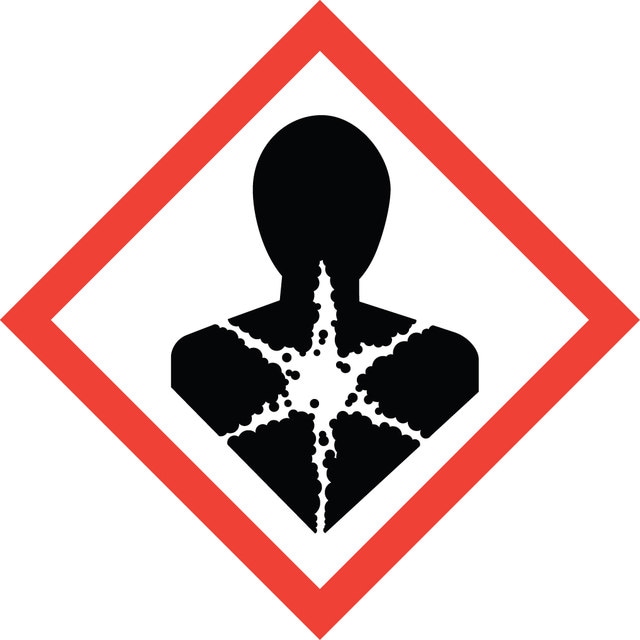
Eye Irrit. 2 - Resp. Sens. 1 - Skin Irrit. 2 - STOT SE 3
target_organs
Respiratory system
Storage Class
11 - Combustible Solids
wgk
WGK 2
flash_point_f
Not applicable
flash_point_c
Not applicable
Choose from one of the most recent versions:
Already Own This Product?
Find documentation for the products that you have recently purchased in the Document Library.
Persistent hypocoagulability in patients with septic shock predicts greater hospital mortality: impact of impaired thrombin generation
Massion, P., et al.
Intensive Care Medicine, 1823(8), 1316-1323 (2012)
Marek R Baranowski et al.
Nucleic acids research, 48(15), 8209-8224 (2020-06-10)
The high sensitivity of 19F nucleus to changes in the chemical environment has promoted the use of fluorine-labeled molecular probes to study structure and interactions of nucleic acids by 19F NMR. So far, most efforts have focused on incorporating the
Adam M Jorgensen et al.
Tissue engineering. Part A, 26(9-10), 512-526 (2019-12-22)
Over 1 million burn injuries are treated annually in the United States, and current tissue engineered skin fails to meet the need for full-thickness replacement. Bioprinting technology has allowed fabrication of full-thickness skin and has demonstrated the ability to close
Sunghoon Lee et al.
Nature nanotechnology, 14(2), 156-160 (2019-01-02)
In biointegrated electronics, the facile control of mechanical properties such as softness and stretchability in electronic devices is necessary to minimize the perturbation of motions inherent in biological systems1-5. For in vitro studies, multielectrode-embedded dishes6-8 and other rigid devices9-12 have
Navid Hakimi et al.
Lab on a chip, 18(10), 1440-1451 (2018-04-18)
We present a handheld skin printer that enables the in situ formation of biomaterial and skin tissue sheets of different homogeneous and architected compositions. When manually positioned above a target surface, the compact instrument (weight <0.8 kg) conformally deposits a
Related Content
Instructions
-
Does this product contain his tag or other tags?
1 answer-
Helpful?
-
-
10KUは1KUの10倍量でしょうか? 1KUのg数を教えてください。
1 answer-
Yes, the 10KU is 10 times the amount of the 1 KU pack size, the equivalent of 10,000 units. The gram quantity is lot-specific and dependent upon the protein content and the unit activity per milligram protein. This product may range from 40 - 60% protein and the activity may range from 40 - 300 units per milligram protein. At the minimum of 40% protein and 40 units per milligram protein, the amount of material per 10KU bottle is 625 mg. Please see the link below to review a sample or lot-specific Certificate:
https://www.sigmaaldrich.com/product/sigma/t46483product-documentationHelpful?
-
-
Is T4648 thrombin sterile?
1 answer-
This product is not a sterile powder. Prepared solutions may be filter-sterilized.
Helpful?
-
-
Is this product (T4648-1KU) suitable for cell culture experiments? endotoxin free?
1 answer-
This product is not tested for endotoxin content. However, it has been cited for cell culture application in the publication: Neuroreport. 2015 May 6;26(7):416-23.
Helpful?
-
-
I just bought this thrombin to cleave HisTag from recombinant proteins but I am struggling in understanding how much /mg of purified recombinant protein I have to use. Do you have any suggestion? Thanks a lot
1 answer-
The amount of thrombin to use depends on the protein expression system. Optimization is needed for each specific protein, and 1 to 10 units per mg of recombinant protein can be used as a starting point.
Helpful?
-
-
How do i dissolve the lyophilized powder of T4648 bovine thrombin of 40-300 NIH units/mg
1 answer-
This product is soluble in water at 10 mg/mL. Stock solutions may be prepared at 100 units/mL in water containing 0.01% BSA. Please see the link below to review the product datasheet for additional information, including solution stability and storage:
https://www.sigmaaldrich.com/deepweb/assets/sigmaaldrich/product/documents/335/094/t4648dat.pdfHelpful?
-
-
What is the bottle information for T4648-1KU and T4648-10KU?
1 answer-
Both products are packaged in a 20 ML Amber glass bottle with a 24-400 thread.
Helpful?
-
-
I was cleave gfp from my protein which is dissovled in PBS. Should I make thrombin stock in pbs or bsa?
1 answer-
The recommended preparation instructions, per the product information sheet, are 10 mg/mL in water or 100 units/mL in a 0.01% BSA solution. Stock solutions of either aforementioned recommendations can then be added to PBS at the desired usage concentration. The addition of BSA to the stock solution will aid in long-term product stability when stored at -20 deg. C. See the link below to review the product information sheet:
https://www.sigmaaldrich.com/deepweb/assets/sigmaaldrich/product/documents/335/094/t4648dat.pdfHelpful?
-
-
What is the purity of this product?
1 answer-
The purity of this product is not determined. The biuret method is used to verify the protein content. In general, products with higher activity levels can be considered higher in 'purity'. See the link below to other bovine thrombin products for comparison:
https://www.sigmaaldrich.com/substance/thrombinfrombovineplasma123459002044.Helpful?
-
-
What is the cross reactivity of Thrombin?
1 answer-
Thrombin from any vertebrate species will clot the fibrinogen of virtually any other species. Fibrinogen from any mammalian source will cross-react with thrombin from any mammalian source, but it is not well known how thrombin and fibrinogen from different animals differ in their sequence. When any mammalian thrombin is injected into a different mammal, clotting will occur.
Helpful?
-
Active Filters
Our team of scientists has experience in all areas of research including Life Science, Material Science, Chemical Synthesis, Chromatography, Analytical and many others.
Contact Technical Service