
8.05791

Mesityl oxide
for synthesis
Synonim(y):
Mesityl oxide, Isopropylideneacetone, 4-Methyl-3-penten-2-one
Wybierz wielkość
| Rozmiar/SKU | Dostępność | Cena netto |
|---|---|---|
100 mL | Skontaktuj się z Obsługą Klienta, aby uzyskać informacje na temat dostępności | 174,00 zł |
1 L | Skontaktuj się z Obsługą Klienta, aby uzyskać informacje na temat dostępności | 732,00 zł |
Informacje o tej pozycji
174,00 zł
vapor pressure
10.5 hPa ( 20 °C)
Quality Segment
form
liquid
autoignition temp.
344 °C
potency
1120 mg/kg LD50, oral (Rat), 5150 mg/kg LD50, skin (Rabbit)
expl. lim.
1.4-10.1 % (v/v)
bp
130 °C/1013 hPa
mp
-59 °C
transition temp
flash point 28 °C
density
0.85 g/cm3 at 20 °C
storage temp.
2-30°C
SMILES string
O=C(C)C=C(C)C
InChI
1S/C6H10O/c1-5(2)4-6(3)7/h4H,1-3H3
InChI key
SHOJXDKTYKFBRD-UHFFFAOYSA-N
Application
- Nanomaterial synthesis: Mesityl oxide is employed in the chemical reactivity studies of the tryptophan/acetone/DMSO triad system, highlighting its potential applications in the innovative synthesis of nanomaterials, advancing green chemistry initiatives (Huang et al., 2023).
- Electrode modification for residue detection: Utilized in the detection of residual 2-Phenylphenol on lemon rind, mesityl oxide served as a solvent in the electrochemical deposition of polymeric stackings, illustrating its utility in enhancing analytical methods in food safety (Kiss et al., 2022).
- Organic sensing media: Mesityl oxide was a key solvent in the anodic polymerization process for sensing phenols, indicating its effective use in the development of sensing layers for environmental monitoring (Kiss et al., 2022).
- Pharmaceutical product quality control: Mesityl oxide is instrumental in the determination of acetone and related impurities in drug product intermediates, showing its critical role in ensuring pharmaceutical quality and compliance (Quirk et al., 2014).
Analysis Note
a-Mesityl oxide (GC, area%): ≥ 85.0 % (a/a)
Density (d 20 °C/ 4 °C): 0.853 - 0.856
Identity (IR): passes test
Still not finding the right product?
Explore all of our products under Mesityl oxide
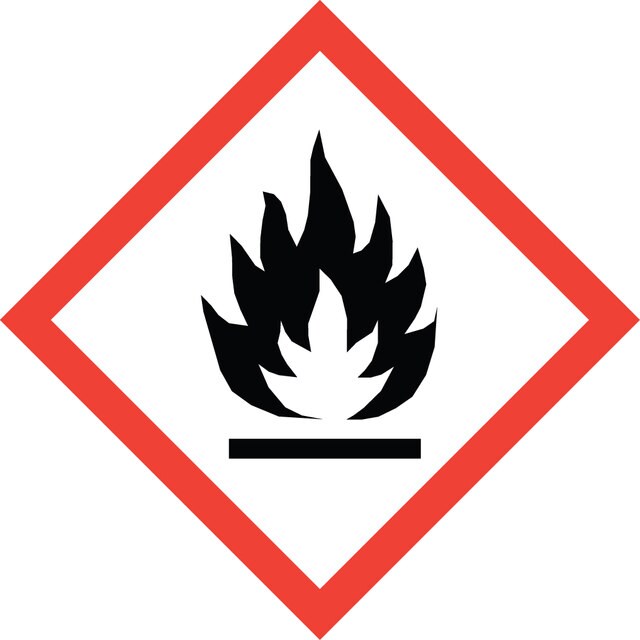
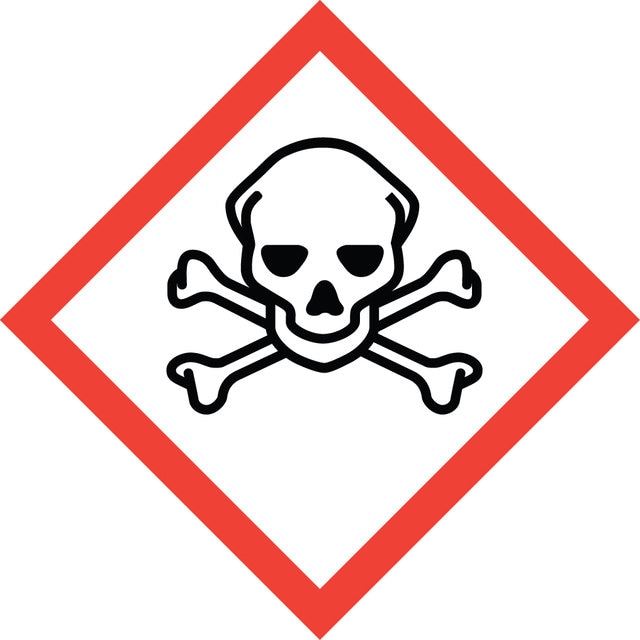
Słowo ostrzegawcze
Danger
Hazard Classifications
Acute Tox. 3 Inhalation - Acute Tox. 4 Dermal - Acute Tox. 4 Oral - Eye Irrit. 2 - Flam. Liq. 3 - Skin Irrit. 2 - STOT SE 3
Narządy docelowe
Respiratory system
Klasa składowania
3 - Flammable liquids
Co się dzieje?
WGK 1
Temperatura zapłonu (°F)
87.8 °F - closed cup
Temperatura zapłonu (°C)
31 °C - closed cup
Kody zagrożeń
Wykazy regulacyjne
Wykazy regulacyjne dotyczą głównie produktów chemicznych. Można w nich podawać ograniczoną liczbę informacji na temat produktów niechemicznych. Brak wpisu oznacza, że żaden ze składników nie znajduje się w wykazie. Użytkownik odpowiada za zagwarantowanie bezpiecznego i zgodnego z prawem stosowania produktu.
141-79-7
Wybierz jedną z najnowszych wersji:
Masz już ten produkt?
Dokumenty związane z niedawno zakupionymi produktami zostały zamieszczone w Bibliotece dokumentów.