
ECM810

Zestaw do badania osteogenezy in vitro
Wybierz wielkość
| Rozmiar/SKU | Dostępność | Cena netto |
|---|---|---|
1 kit | Skontaktuj się z Obsługą Klienta, aby uzyskać informacje na temat dostępności | 2600,00 zł |
Informacje o tej pozycji
2600,00 zł
species reactivity
mouse
Quality Segment
manufacturer/tradename
Chemicon®
technique(s)
cell based assay: suitable
detection method
colorimetric
General description
Osteoclasts are related to macrophages, and erode the bone matrix by secreting acids and hydrolases to dissolve bone minerals and digest organic components. Osteoblasts arise from undifferentiated precursor cells, and deposit a mineralized matrix consisting of collagen, calcium, and phosphorous and other minerals, leading to the formation of new bone. Osteoblasts have also been shown to express factors which regulate the differentiation and function of osteoclasts [2]. The balance between the activity of osteoblasts and osteoclasts determines the mass and density of bone [1].
Studies of the mechanisms underlying osteogenesis have been greatly facilitated by the use of the undifferentiated preosteoblastic cell line MC3T3-E1, available from ATCC. This cell line was derived from mouse calvaria [3,4] and under defined culture conditions can be induced to undergo a developmental sequence leading to the formation of multilayered bone nodules [4,5]. This sequence is characterized by the replication of preosteoblasts followed by growth arrest and expression of mature osteoblastic characteristics such as matrix maturation and eventual formation of multilayered nodules with a mineralized extracellular matrix [5]. This cell line has become the standard in vitro model of osteogenesis and has found widespread use in studies examining many aspects and applications of osteogenesis, including transcriptional regulation [5], mineralization [3,6] and tissue engineering [7].
Millipore′s In Vitro Osteogenesis Assay Kit provides the necessary reagents and protocols for efficient in vitro differentiation of MC3T3-E1 cells to mature osteoblasts, and for the end-point determination and quantification of this process.
Application:
Millipore′s In Vitro Osteogenesis Assay Kit contains all reagents necessary to efficiently differentiate MC3T3-E1cells to a mature osteoblastic lineage, as determined by staining for mineralization. In addition this kit provides all the necessary reagents and a protocol for quantifying osteogenesis using a standard plate reader. This product is useful for studying the effects of growth factors, drugs and toxic agents on bone formation and for screening candidate osteogenic pharmaceuticals. Also, studies examining the intracellular signaling pathways regulating osteoblast differentiation can be facilitated by use of this kit.
The kit includes the osteogenesis-inducing reagents: ascorbic acid 2-phosphate, β-glycerophosphate and melatonin, and Alizarin Red Solution, a staining solution used to detect the presence of calcium in bone. Additionally, we provide reagents and a protocol for performing quantitative analysis of Alizarin Red staining.
Using Millipore′s In Vitro Osteogenesis Assay Kit, we routinely obtain >75% mature osteoblasts from a starting population of uninduced MC3T3-E1 cells obtained from ATCC. Efficiency of osteoblastic differentiation may vary, depending upon the quality of the cells used, and if variations to the protocol are introduced.
For Research Use Only. Not for use in diagnostic procedures.
Application
Dostarczana jest jedna fiolka zawierająca 5 mL rozcieńczalnika ARS (Alizarin Red Stain). Przed użyciem należy dodać 5 ml 80% kwasu octowego do końcowej objętości 10 ml.
Struktura komórki
Preparation Note
Other Notes
Glycerol 2- Phosphate Solution (100X): Part No. 2004010 Three vials containing 1 mL of 1 M glycerol 2-phosphate in deionized water. Store at -20°C.
Melatonin Solution: Part No. 2004353 One vial containing 6 μg of melatonin. Reconstitute before use with 500 μL distilled H2O for a final concentration of 50 μM. Store at -20°C.
Alizarin Red S Stain Solution (1X): Part No. 2003999 One bottle containing 50 mL Alizarin Red S Solution. Store at 2°-8°C.
10% Acetic Acid: Part No. 2004807 One vial containing 20 mL of 10% Acetic Acid in deionized water. Store at 2°-8°C.
10% Ammonium Hydroxide: Part No. 2004809 One vial containing 10 mL of 10% Ammonium Hydroxide in deionized water. Store at 2°-8°C.
10X ARS Dilution Buffer: Part No. 2004810 One vial containing 5 mL of ARS (Alizarin Red Stain) Diluent. Add 5 mL of 80% Acetic Acid for a final volume of 10 mL before use. Store at 2°-8°C.
Legal Information
Disclaimer
1 of 1
Ta pozycja | |||
|---|---|---|---|
| description - | description The Osteogenesis Quantitation Kit provides all the necessary reagents & a protocol to enable quantification of osteogenesis using a standard plate reader. | description - | description The Fibrin Gel In Vitro Angiogenesis Assay Kit represents a simple model of angiogenesis in which the induction or inhibition of tube formation by exogenous signals can be easily monitored. |
| species reactivity mouse | species reactivity - | species reactivity vertebrates | species reactivity vertebrates |
| technique(s) cell based assay: suitable | technique(s) cell based assay: suitable | technique(s) ELISA: suitable | technique(s) activity assay: suitable, cell based assay: suitable |
| detection method colorimetric | detection method colorimetric | detection method - | detection method - |
| manufacturer/tradename Chemicon® | manufacturer/tradename Chemicon® | manufacturer/tradename Chemicon® | manufacturer/tradename Chemicon® |
| Quality Level 100 | Quality Level 100 | Quality Level 100 | Quality Level 100 |


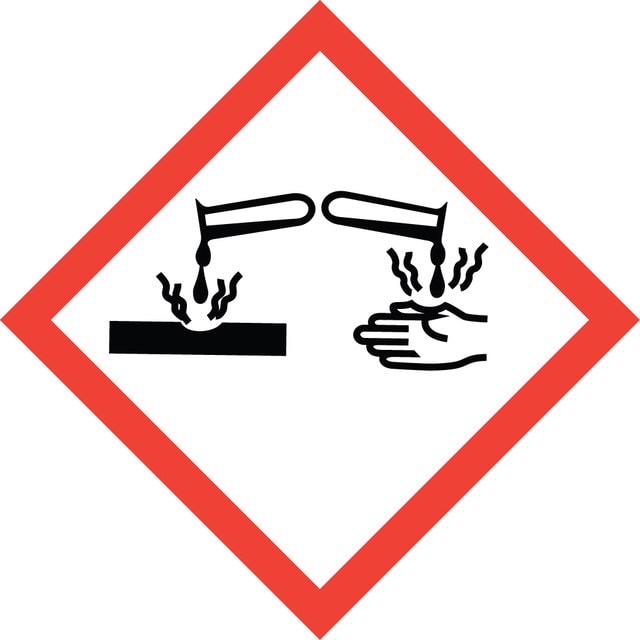

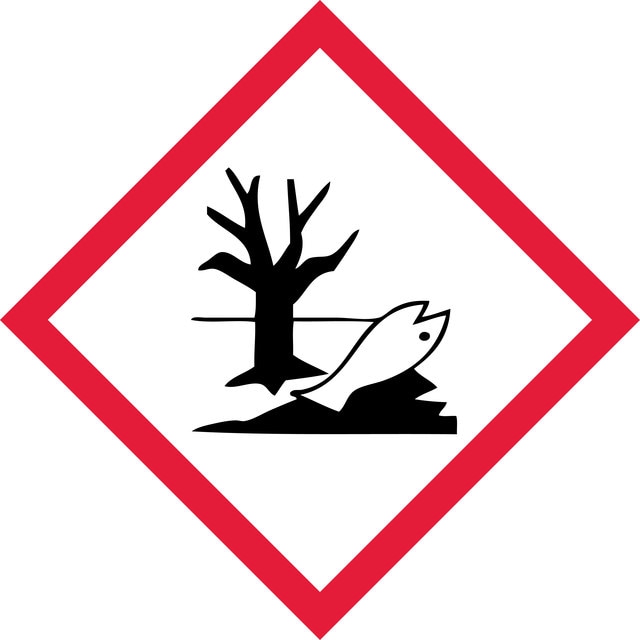
Słowo ostrzegawcze
Danger
Kody zagrożeń
Hazard Classifications
Aquatic Acute 1 - Aquatic Chronic 2 - Eye Dam. 1 - Skin Corr. 1B - Skin Sens. 1 - STOT SE 3
Narządy docelowe
Respiratory system
Klasa składowania
8A - Combustible corrosive hazardous materials
Co się dzieje?
WGK 3
Wybierz jedną z najnowszych wersji:
Masz już ten produkt?
Dokumenty związane z niedawno zakupionymi produktami zostały zamieszczone w Bibliotece dokumentów.