Przejdź do zawartości
Merck

Przejdź do

C3118

CPNQ

≥98% (HPLC), solid

Synonim(y):

5-[4-(4-Chlorobenzoyl)-1-piperazinyl]-8-nitroquinoline, B2

Zaloguj się, aby wyświetlić ceny organizacyjne i kontraktowe.

Wybierz wielkość

Zmień widok
Rozmiar/SKUDostępnośćCena netto

Informacje o tej pozycji

Wzór empiryczny (zapis Hilla):
C20H17ClN4O3
Numer CAS:
Masa cząsteczkowa:
396.83
NACRES:
NA.77
PubChem Substance ID:
UNSPSC Code:
12352202
MDL number:
Assay:
≥98% (HPLC)
Form:
solid
Aby zapytać o ten produkt C3118, skontaktuj się z lokalnym biurem lub sprzedawcą firmy Merck. Skontaktuj się z zespołem ds. pomocy technicznej
Pomoc techniczna
Potrzebujesz pomocy? Nasz zespół doświadczonych naukowców chętnie Ci pomoże.
Pozwól nam pomóc


Quality Segment

assay

≥98% (HPLC)

form

solid

color

brown

solubility

H2O: insoluble <2 mg/mL, DMSO: >5 mg/mL

storage temp.

2-8°C

SMILES string

[O-][N+](=O)c1ccc(N2CCN(CC2)C(=O)c3ccc(Cl)cc3)c4cccnc14

InChI

1S/C20H17ClN4O3/c21-15-5-3-14(4-6-15)20(26)24-12-10-23(11-13-24)17-7-8-18(25(27)28)19-16(17)2-1-9-22-19/h1-9H,10-13H2

InChI key

KLNPVNZJCWIQSK-UHFFFAOYSA-N

Biochem/physiol Actions

CPNQ is a promoter of polyQ and α-synuclein inclusion formation and rescuer of Htt proteosomal dysfunction and α-synuclein toxicity.
Misfolded proteins accumulate in many neurodegenerative diseases, including huntingtin in Huntington′s disease and alpha-synuclein in Parkinson′s disease. The disease-causing proteins can take various conformations and are prone to aggregate and form larger cytoplasmic or nuclear inclusions. CPNQ (B2) was identified as a compound that promotes inclusion formation in cellular models of both Huntington′s disease and Parkinson′s disease. Despite the aggregate-forming specifics the compound prevents huntingtin-mediated proteasome dysfunction and reduces alpha-synuclein-mediated toxicity. These results demonstrate that compounds that increase inclusion formation may actually lessen cellular pathology in both Huntington′s and Parkinson′s diseases, suggesting a therapeutic approach for neurodegenerative diseases caused by protein misfolding. The ability of B2 to prevent toxicity, despite increasing inclusions, suggests that inclusions are beneficial rather than toxic, which will be further explored as the molecular target and mechanism. CPNQ (B2) is a desirable tool for both Huntington′s and Parkinson′s research.

Other Notes

Product is air sensitive.
Ta strona może zawierać tekst przetłumaczony maszynowo.


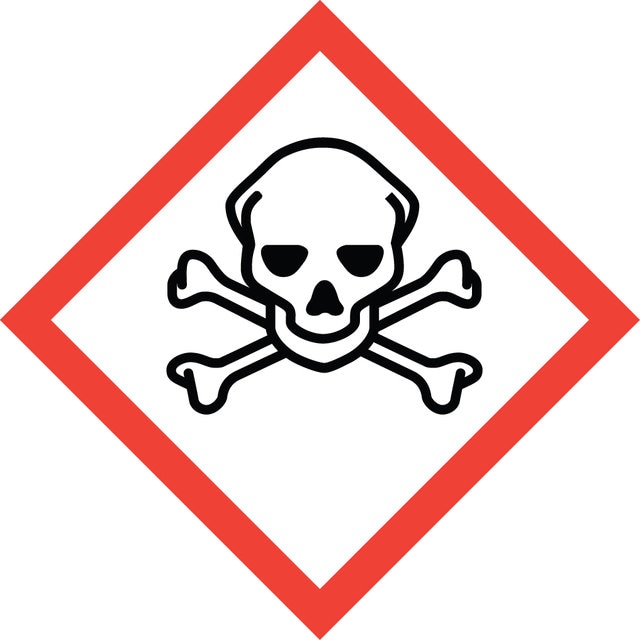
Piktogramy

Skull and crossbones

Słowo ostrzegawcze

Danger

Kody zagrożeń

Hazard Classifications

Acute Tox. 3 Oral - Eye Irrit. 2 - Skin Irrit. 2 - STOT SE 3

Narządy docelowe

Respiratory system

Klasa składowania

6.1C - Combustible acute toxic Cat.3 / toxic compounds or compounds which causing chronic effects

Co się dzieje?

WGK 3

Temperatura zapłonu (°F)

Not applicable

Temperatura zapłonu (°C)

Not applicable

PPE (środki ochrony indywidualnej)

Eyeshields, Faceshields, Gloves, type P2 (EN 143) respirator cartridges


Wybierz jedną z najnowszych wersji:

Certyfikaty analizy (CoA)

Lot/Batch Number

It looks like we've run into a problem, but you can still download Certificates of Analysis from our Dokumenty section.

Proszę o kontakt, jeśli potrzebna jest pomoc Obsługa Klienta

Masz już ten produkt?

Dokumenty związane z niedawno zakupionymi produktami zostały zamieszczone w Bibliotece dokumentów.

Odwiedź Bibliotekę dokumentów


Questions

Reviews

No rating value

Active Filters