


This product has not been tested for solubility in DMSO. However, product 612030 is a Nicotine solution prepared at 2 mg/mL in DMSO. In addition, external sources indicate that this material is soluble up to 30 mg/mL in DMSO. Other solvents include Methanol, Ethanol, Dimethylformamide, and Chloroform.
Przejdź do
N3876

(−)-Nicotine
≥99% (GC), Prototype nicotinic acetylcholine receptor agonist, liquid
Synonim(y):
(−)-1-Methyl-2-(3-pyridyl)pyrrolidine, (S)-3-(1-Methyl-2-pyrrolidinyl)pyridine
Zaloguj się, aby wyświetlić ceny organizacyjne i kontraktowe.
Wybierz wielkość
Zmień widok
| Rozmiar/SKU | Dostępność | Cena netto |
|---|---|---|
5 mL | Skontaktuj się z Obsługą Klienta, aby uzyskać informacje na temat dostępności | 435,00 zł |
25 mL | Skontaktuj się z Obsługą Klienta, aby uzyskać informacje na temat dostępności | 1060,00 zł |
100 mL | Skontaktuj się z Obsługą Klienta, aby uzyskać informacje na temat dostępności | 1620,00 zł |
Informacje o tej pozycji
Wzór empiryczny (zapis Hilla):
C10H14N2
Numer CAS:
Masa cząsteczkowa:
162.23
NACRES:
NA.77
PubChem Substance ID:
UNSPSC Code:
12352210
EC Number:
200-193-3
MDL number:
Beilstein/REAXYS Number:
82109
Assay:
≥99% (GC)
Form:
liquid
435,00 zł
Skontaktuj się z Obsługą Klienta, aby uzyskać informacje na temat dostępności
Pomoc techniczna
Potrzebujesz pomocy? Nasz zespół doświadczonych naukowców chętnie Ci pomoże.
Pozwól nam pomócNazwa produktu
(−)-Nicotine, ≥99% (GC), liquid
Quality Segment
assay
≥99% (GC)
form
liquid
optical activity
[α]20/D −169°(lit.)
color
yellow
refractive index
n20/D 1.5265 (lit.)
solubility
ethanol: 50 mg/mL
density
1.010 g/mL at 20 °C (lit.)
SMILES string
CN1CCC[C@H]1c2cccnc2
InChI
1S/C10H14N2/c1-12-7-3-5-10(12)9-4-2-6-11-8-9/h2,4,6,8,10H,3,5,7H2,1H3/t10-/m0/s1
InChI key
SNICXCGAKADSCV-JTQLQIEISA-N
Gene Information
human ... CHRNA2(1135), CHRNA3(1136), CHRNA4(1137), CHRNB2(1141), CHRNB4(1143), CYP2A6(1548), KCNH1(3756)
mouse ... Chrna7(11441), Chrnb1(11443)
rat ... Chrna1(79557), Chrna2(170945), Chrna4(25590), Chrna7(25302), Chrnb2(54239), Chrnb4(25103)
General description
Nicotine is the most abundant alkaloid found in the leaves of Nicotiana species. It is a major toxic agent.
Application
(-)-Nicotine has been used:
- to stimulate neutrophils in extracellular DNA fluorescence assay and in immunostaining of neutrophils
- to study the effects of chronic neonatal nicotine exposure on nicotinic acetylcholine receptor (nAChR) binding, cell death and morphology in hippocampus and cerebellum
- in an in vitro study to evaluate the effect of root exposure to nicotine or cotinine on the morphology and density of fibroblasts
Biochem/physiol Actions
Prototype nicotinic acetylcholine receptor agonist; naturally occurring isomer.
Nicotine binds to nicotinic acetylcholine receptors and exhibit both neuroprotective and neurotoxic effects on the developing brain. It is associated with lung cancer development and reduces the efficiency of chemotherapeutic agents. In addition, nicotine has an ability to impair phagocytic host defense and also increase reactive oxygen species (ROS) associated injury. It also stops Akt/ protein kinase B (PKB) deactivation and decreases spontaneous death of neutrophils. Nicotine is used to treat Alzheimer′s and Parkinson′s disease.
Preparation Note
This product should be dissolved in 200 proof, pure ethanol.
Ta strona może zawierać tekst przetłumaczony maszynowo.
1 of 1
Ta pozycja | |||
|---|---|---|---|
| description ≥99% (GC), liquid | description PESTANAL®, analytical standard | description 1.0 mg/mL, analytical standard, for drug analysis | description analytical standard |
| form liquid | form - | form - | form - |
| assay ≥99% (GC) | assay - | assay - | assay ≥98.5% (GC) |
| Quality Level 200 | Quality Level 100 | Quality Level 200 | Quality Level 100 |
| solubility ethanol: 50 mg/mL | solubility - | solubility - | solubility - |
| color yellow | color - | color - | color - |
| Gene Information human ... CHRNA2(1135), CHRNA3(1136), CHRNA4(1137), CHRNB2(1141), CHRNB4(1143), CYP2A6(1548), KCNH1(3756) | Gene Information human ... CHRNA2(1135), CHRNA4(1137), CHRNB2(1141) | Gene Information human ... CHRNA3(1136), CHRNA4(1137), CHRNB2(1141), CHRNB4(1143), CYP2A6(1548), KCNH1(3756) | Gene Information - |
Still not finding the right product?
Explore all of our products under (−)-Nicotine
Słowo ostrzegawcze
Danger
Kody zagrożeń
Hazard Classifications
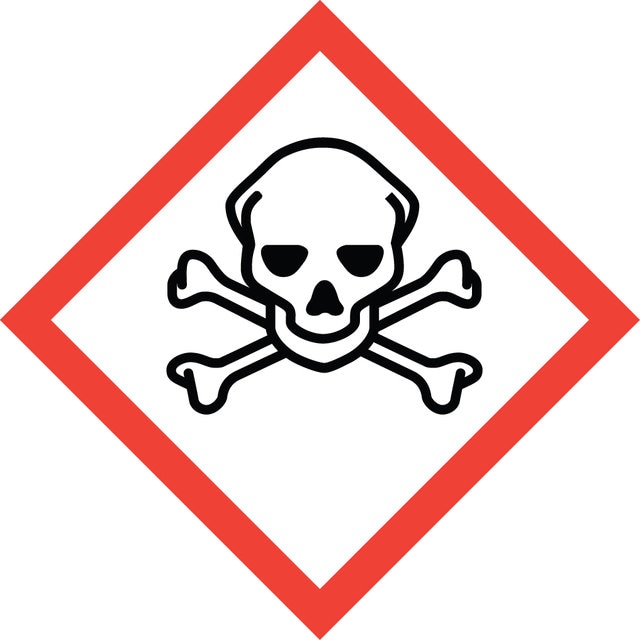
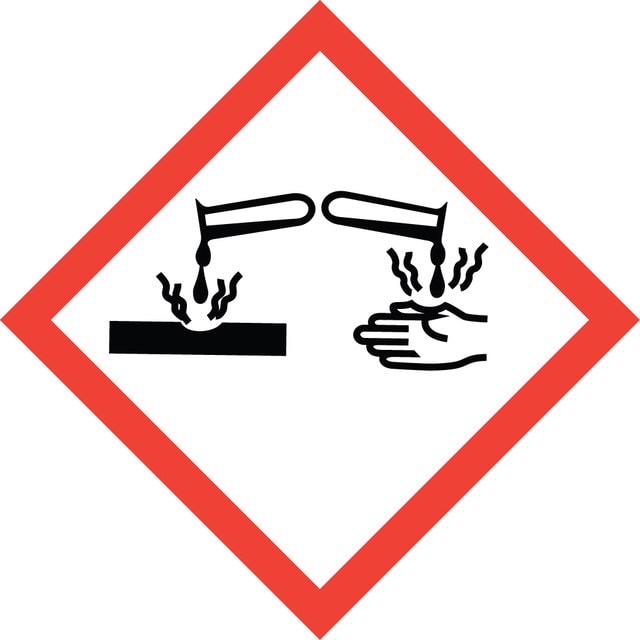
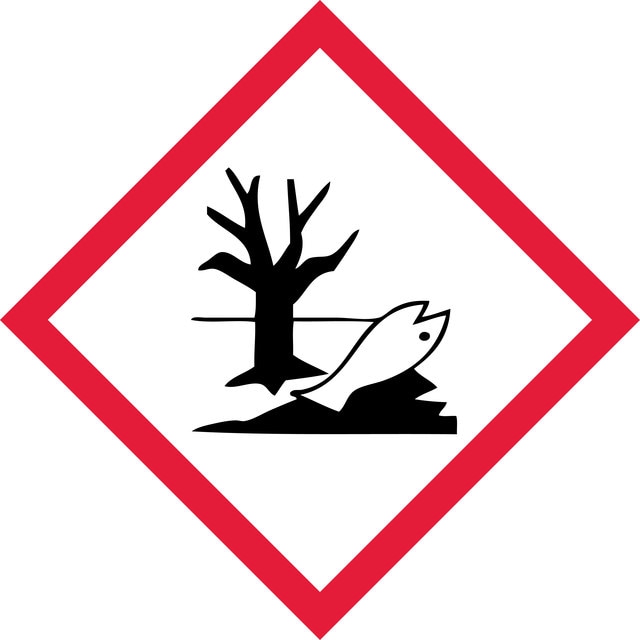
Acute Tox. 1 Oral - Acute Tox. 2 Dermal - Acute Tox. 2 Inhalation - Aquatic Chronic 2 - Eye Dam. 1 - Skin Irrit. 2
Klasa składowania
6.1A - Combustible acute toxic Cat. 1 and 2 / very toxic hazardous materials
Temperatura zapłonu (°F)
213.8 °F - closed cup
Temperatura zapłonu (°C)
101 °C - closed cup
PPE (środki ochrony indywidualnej)
Eyeshields, Faceshields, Gloves, type ABEK (EN14387) respirator filter
Wybierz jedną z najnowszych wersji:
Masz już ten produkt?
Dokumenty związane z niedawno zakupionymi produktami zostały zamieszczone w Bibliotece dokumentów.
-
Is that product soluble in DMSO?
1 answer-
Helpful?
-
-
Is product N3876 (-)-Nicotine considered freebase nicotine or a nicotine salt dissolved in a carrier liquid
1 answer-
This product is nicotine free base and is provided in the form of a neat or pure liquid.
Helpful?
-
-
Hi , How i want to measure the purity level of nicotine? Can refractive index or polarimeter use to measure level of impurity?
1 answer-
The measurement of purity in nicotine can be assessed using various analytical techniques. Refractive index and polarimetry are among the methods that can provide useful information. However, it's important to note that these techniques may not directly measure specific impurities but can be indicative of changes in the overall composition or characteristics of a substance. The purity of this product is determined by GC. Gas Chromatography (GC) is a widely used and effective method for assessing the purity of nicotine and detecting impurities. GC separates and analyzes components based on their volatility and interaction with a stationary phase.
Please access a Certificate of Analysis in the DOCUMENTATION section for reference:
https://www.sigmaaldrich.com/product/sigma/n3876#product-documentationHelpful?
-
-
Hello, I would like to know the concentration of the nicotine in this liquid solution.
1 answer-
This product is a neat or pure liquid. Based on the density of 1.02 g/mL and the molecular weight of 162.2 g/mole, the calculated molar concentration is 6.3 M.
Helpful?
-
-
How long is the nicotine stable if stored at room temperature? How long is it stable after being dssiolved and how should the solution be stored?
1 answer-
This compound is stored at room temperature, but is extremely sensitive to light, moisture, and oxygen. The product is a neat liquid and packaged in amber glass under argon to preserve stability. In the unopened container, the product is stable at least until the recommended retest date reported on the lot specific Certificate of Analysis. This date is typically 3 years from the quality release date. Factors such as light, humidity, and exposure to air will limit the shelf life after opening, It is recommended to prepare solutions fresh. The vial head space should be cleared with argon or nitrogen prior to closing. Increased darkening of the material is an indication of product degradation. Please see the link below to review a sample Certificate of Analysis:
https://www.sigmaaldrich.com/certificates/sapfs/PROD/sap/certificate_pdfs/COFA/Q14/N3876-BULKBCCK8089.pdfHelpful?
-
-
what % of ethanol should be used to be solublized?
1 answer-
This product should be dissolved in 200-proof, pure ethanol.
Helpful?
-
-
What is the difference between Nicotine, Products N3876 and N0267?
1 answer-
Prod. No. N3876 is the naturally occurring (-) isomer while Prod. No. N0267 is a mixture of the (+) and (-) isomers.
Helpful?
-
-
How can Product N3876, (-)-Nicotine, be solublized?
1 answer-
Product N3876, (-)-Nicotine, is soluble in ethanol. It is only miscible in water. We would recommend to solublized the product in ethanol to make a 1000x stock solution. This can then be diluted 1:1000 into aqueous buffer for use.
Helpful?
-
-
What is the concentration of Product N3876, (-)-Nicotine?
1 answer-
This product is not a solution. It is a liquid. The physical state of (-)-Nicotine is a liquid at room temperature. It has not been dissolved in any solvent at a specific concentration to prepare a solution. The density of (-)-Nicotine as a liquid at 20 °C is 1.010 g/mL.
Helpful?
-
-
Where should Product N3876, (-)-Nicotine, be stored and what sensitivities does it have?
1 answer-
For long-term storage, this product can be stored at room temperature. This compound is very hygroscopic and can darken in color on exposure to air and light.
Helpful?
-