
Przejdź do
SML0563

Docosahexaenoyl ethanolamide
≥98% (HPLC), ethanol solution (5 mg/ml)
Synonim(y):
(4Z,7Z,10Z,13Z,16Z,19Z)-N-(2-Hydroxyethyl)docosa-4,7,10,13,16,19-hexaenamide, DEA, DHEA, N-(2-Hydroxyethyl)-4Z,7Z,10Z,13Z,16Z,19Z-docosahexaenamide, N-Docosahexaenoylethanolamide
Zaloguj się, aby wyświetlić ceny organizacyjne i kontraktowe.
Wybierz wielkość
Zmień widok
| Rozmiar/SKU | Dostępność | Cena netto |
|---|
Informacje o tej pozycji
Wzór empiryczny (zapis Hilla):
C24H37NO2
Numer CAS:
Masa cząsteczkowa:
371.56
NACRES:
NA.77
UNSPSC Code:
12352211
Assay:
≥98% (HPLC)
Form:
ethanol solution (5 mg/ml)
Aby zapytać o ten produkt SML0563, skontaktuj się z lokalnym biurem lub sprzedawcą firmy Merck. Skontaktuj się z zespołem ds. pomocy technicznej
Pomoc techniczna
Potrzebujesz pomocy? Nasz zespół doświadczonych naukowców chętnie Ci pomoże.
Pozwól nam pomócQuality Segment
assay
≥98% (HPLC)
form
ethanol solution (5 mg/ml)
drug control
regulated under CDSA - not available from Sigma-Aldrich Canada
color
colorless to yellow
shipped in
dry ice
storage temp.
−20°C
Biochem/physiol Actions
Docosahexaenoyl ethanolamide (DHEA) is a lipid signaling molecule present in brain and retina at concentrations, similar to those for arachidonoyl ethanolamide. DHEA binds to the rat brain CB1 receptor with a Ki of 324 nM. It exhibits anti-inflammatory and organ protective activity. Studies show that docosahexaenoyl ethanolamide is the mediator of neurite growth and synaptogenesis in hippocampal neurons, resulting in enhanced synaptic activity.
Docosahexaenoyl ethanolamide (DHEA), a lipid signaling molecule, binds to the rat brain CB1 receptor and exhibits anti-inflammatory and organ protective activity.
Docosahexaenoyl ethanolamide (DHEA) has the ability to block the proliferation of head and neck squamous cell carcinoma (HNSCC) cell.
Features and Benefits
This compound is featured on the Cannabinoid Receptors page of the Handbook of Receptor Classification and Signal Transduction. To browse other handbook pages, click here.
Ta strona może zawierać tekst przetłumaczony maszynowo.
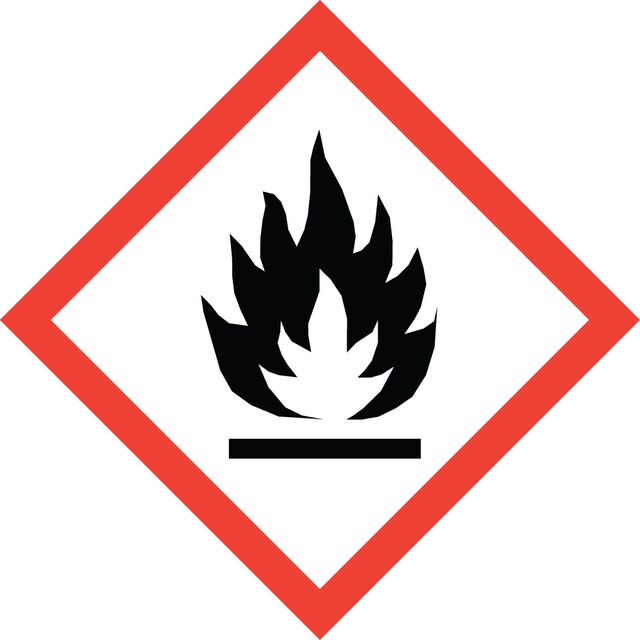

Słowo ostrzegawcze
Danger
Kody zagrożeń
Hazard Classifications
Eye Irrit. 2 - Flam. Liq. 2
Klasa składowania
3 - Flammable liquids
Co się dzieje?
WGK 3
Temperatura zapłonu (°F)
55.4 °F
Temperatura zapłonu (°C)
13 °C
Wybierz jedną z najnowszych wersji:
Masz już ten produkt?
Dokumenty związane z niedawno zakupionymi produktami zostały zamieszczone w Bibliotece dokumentów.