Saltar al contenido
MilliporeSigma

H6878

8-Hydroxyquinoline

Sinónimos:

8-Quinolinol

Iniciar sesión para ver los precios por organización y contrato.

Seleccione un Tamaño

En este momento no podemos mostrarle ni los precios ni la disponibilidad

Acerca de este artículo

Fórmula empírica (notación de Hill):
C9H7NO
Número CAS:
Peso molecular:
145.16
UNSPSC Code:
12352005
NACRES:
NA.21
PubChem Substance ID:
EC Number:
205-711-1
Beilstein/REAXYS Number:
114512
MDL number:

Saltar a

Servicio técnico
¿Necesita ayuda? Nuestro equipo de científicos experimentados está aquí para ayudarle.
Permítanos ayudarle

InChI key

MCJGNVYPOGVAJF-UHFFFAOYSA-N

InChI

1S/C9H7NO/c11-8-5-1-3-7-4-2-6-10-9(7)8/h1-6,11H

SMILES string

Oc1cccc2cccnc12

assay

≥98.5%

form

powder

mp

72.5-74.0 °C

antibiotic activity spectrum

fungi

mode of action

DNA synthesis | interferes
enzyme | inhibits

Quality Level

¿Está buscando productos similares? Visita Guía de comparación de productos

Comparar elementos similares

Ver comparación completa

Mostrar Diferencias

1 of 4

Este artículo
1.0709813-251036524
mode of action

DNA synthesis | interferes, enzyme | inhibits

mode of action

-

mode of action

DNA synthesis | interferes, enzyme | inhibits

mode of action

DNA synthesis | interferes, enzyme | inhibits

antibiotic activity spectrum

fungi

antibiotic activity spectrum

-

antibiotic activity spectrum

fungi

antibiotic activity spectrum

fungi

Quality Level

200

Quality Level

200

Quality Level

-

Quality Level

100

form

powder

form

solid

form

solid

form

-

assay

≥98.5%

assay

-

assay

≥99.0%

assay

98-100% (GC)

mp

72.5-74.0 °C

mp

72.5-74.0 °C

mp

72.5-74.0 °C

mp

72.5-74.0 °C

Application

Used as a lipophilic monoprotic bidentate chelating agent.

General description

Chemical structure: quinolone

signalword

Danger

Hazard Classifications

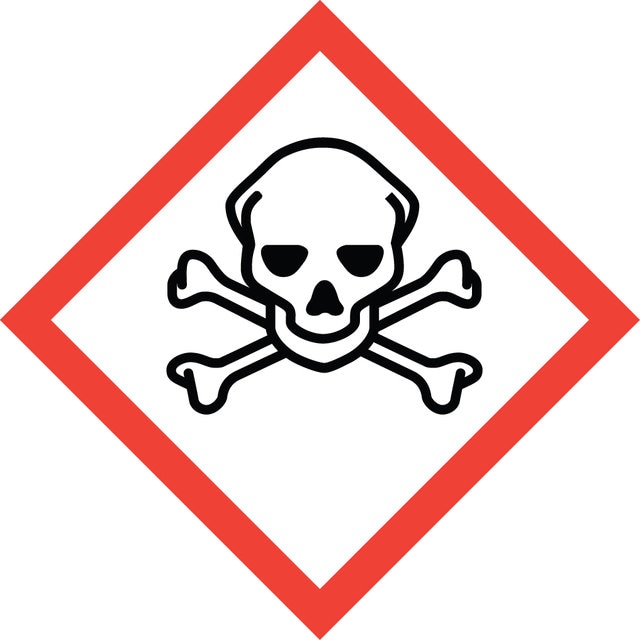
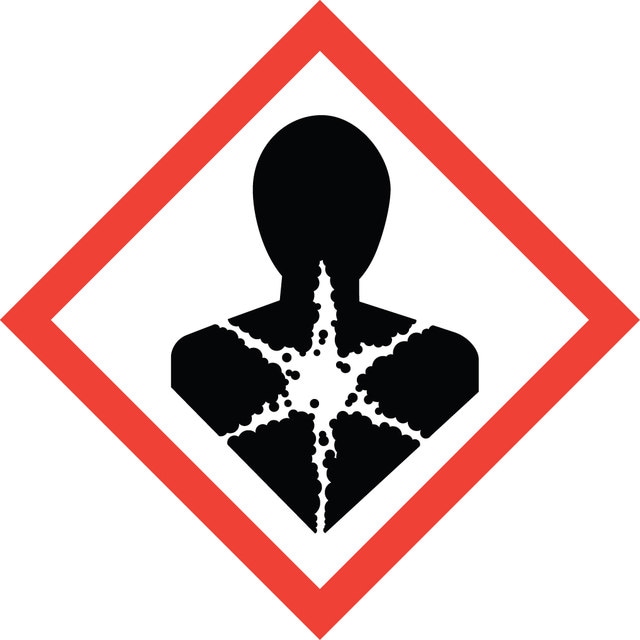
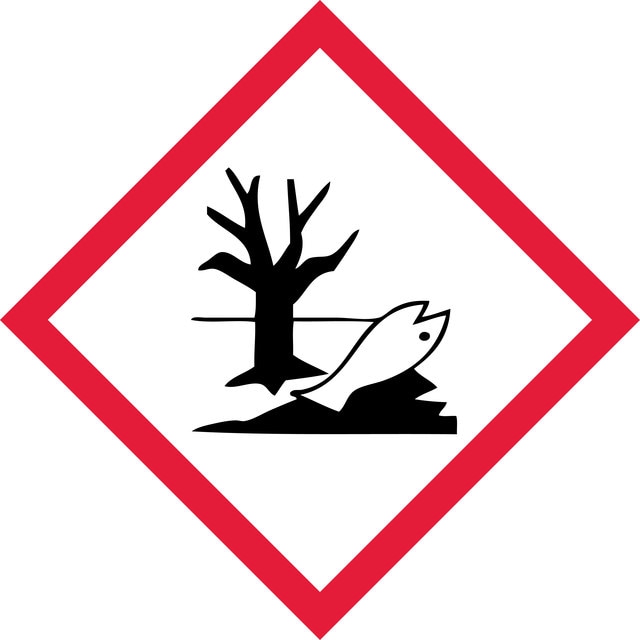
Acute Tox. 3 Oral - Aquatic Acute 1 - Aquatic Chronic 1 - Eye Dam. 1 - Repr. 1B - Skin Sens. 1

Clase de almacenamiento

6.1C - Combustible acute toxic Cat.3 / toxic compounds or compounds which causing chronic effects

wgk

WGK 3

flash_point_f

Not applicable

flash_point_c

Not applicable

ppe

dust mask type N95 (US), Eyeshields, Faceshields, Gloves


Elija entre una de las versiones más recientes:

Certificados de análisis (COA)

Lot/Batch Number

¿No ve la versión correcta?

Si necesita una versión concreta, puede buscar un certificado específico por el número de lote.

¿Ya tiene este producto?

Encuentre la documentación para los productos que ha comprado recientemente en la Biblioteca de documentos.

Visite la Librería de documentos

Pawel Strzelczyk et al.
Scientific reports, 10(1), 17516-17516 (2020-10-17)
The mechanism of catalysis by the L-glutaminase-asparaginase from Pseudomonas 7A (PGA) was investigated using structural, mass spectrometry, and kinetic data. We had previously proposed mechanism of hydrolysis of L-Asn by the type II L-asparaginase from E. coli (EcAII), but that
Michael Riedelberger et al.
Cell host & microbe, 27(3), 454-466 (2020-02-23)
Type I interferons (IFNs-I) fulfil multiple protective functions during pathogenic infections, but they can also cause detrimental effects and enhance immunopathology. Here, we report that IFNs-I promote the dysregulation of iron homeostasis in macrophages during systemic infections with the intracellular
María Isabel Fernández-Bachiller et al.
Journal of medicinal chemistry, 53(13), 4927-4937 (2010-06-16)
Tacrine and PBT2 (an 8-hydroxyquinoline derivative) are well-known drugs that inhibit cholinesterases and decrease beta-amyloid (Abeta) levels by complexation of redox-active metals, respectively. In this work, novel tacrine-8-hydroxyquinoline hybrids have been designed, synthesized, and evaluated as potential multifunctional drugs for
Saverio Tardito et al.
Journal of medicinal chemistry, 55(23), 10448-10459 (2012-11-23)
This study reports the structure-activity relationship of a series of 8-hydroxoquinoline derivatives (8-HQs) and focuses on the cytotoxic activity of 5-Cl-7-I-8-HQ (clioquinol, CQ) copper complex (Cu(CQ)). 8-HQs alone cause a dose-dependent loss of viability of the human tumor HeLa and
Erik H J G Aarntzen et al.
Clinical cancer research : an official journal of the American Association for Cancer Research, 19(6), 1525-1533 (2013-02-06)
Anticancer dendritic cell (DC) vaccines require the DCs to relocate to lymph nodes (LN) to trigger immune responses. However, these migration rates are typically very poor. Improving the targeting of ex vivo generated DCs to LNs might increase vaccine efficacy

Questions

Reviews

No rating value

Active Filters

Nuestro equipo de científicos tiene experiencia en todas las áreas de investigación: Ciencias de la vida, Ciencia de los materiales, Síntesis química, Cromatografía, Analítica y muchas otras.

Póngase en contacto con el Servicio técnico