


The distinctive smell is caused by the presence of triethylamine. Even a small amount of TMA, slightly above 50 ppb, can give the entire product its characteristic odor. Despite the odor, the product can still be used.
34860

Methanol
≥99.9%, suitable for immunofluorescence, HPLC
Methanol
1 of 3 reviewers took part in a promotion
Synonym(s):
Methyl alcohol
Sign In to View Organizational & Contract Pricing.
Select a Size
Change View
| Size/SKU | Availability | Price |
|---|---|---|
100 mL | Available to ship TODAYfromMILWAUKEE | $56.80 |
1 L | Available to ship TODAYfromMILWAUKEE | $85.00 |
2 L | Available to ship TODAYfromMILWAUKEE | $119.00 |
4 L | Available to ship TODAYfromMILWAUKEE | $217.00 |
4 x 2 L | Available to ship TODAYfromMILWAUKEE | $390.00 |
4 x 4 L | Available to ship TODAYfromMILWAUKEE | $719.00 |
About This Item
Linear Formula:
CH3OH
CAS Number:
Molecular Weight:
32.04
NACRES:
NA.21
PubChem Substance ID:
UNSPSC Code:
41116105
EC Number:
200-659-6
MDL number:
Beilstein/REAXYS Number:
1098229
Assay:
≥99.9%
Grade:
HPLC grade
Technique(s):
HPLC: suitable, immunofluorescence: suitable
Bp:
64.7 °C (lit.)
Vapor pressure:
410 mmHg ( 50 °C), 97.68 mmHg ( 20 °C)
$56.80
Available to ship TODAYDetails
Subscriptions are currently unavailable.
Ships Every 4 weeks
Product Name
Methanol, suitable for HPLC, ≥99.9%
grade
HPLC grade
Quality Segment
vapor density
1.11 (vs air)
vapor pressure
410 mmHg ( 50 °C), 97.68 mmHg ( 20 °C)
assay
≥99.9%
form
liquid
autoignition temp.
725 °F
expl. lim.
36 %
technique(s)
HPLC: suitable, immunofluorescence: suitable
impurities
≤0.0005% non-volatile matter, ≤1 ppb fluorescence (quinine) at 254 nm, ≤1 ppb fluorescence (quinine) at 365 nm, <0.03% water (Karl Fischer)
evapn. residue
<0.0005%
color
APHA: ≤10
refractive index
n
bp
64.7 °C (lit.)
mp
−98 °C (lit.)
density
0.791 g/mL at 25 °C (lit.)
λ
neat
UV absorption
λ: 205 nm Amax: ≤1.00, λ: 210 nm Amax: ≤0.60, λ: 220 nm Amax: ≤0.30, λ: 230 nm Amax: ≤0.20, λ: 235 nm Amax: ≤0.10, λ: 240 nm Amax: ≤0.10, λ: 260 nm Amax: ≤0.04, λ: 280 nm Amax: ≤0.01, λ: 400 nm Amax: ≤0.01
SMILES string
CO
application(s)
PFAS testing
food and beverages
format
neat
InChI
1S/CH4O/c1-2/h2H,1H3
InChI key
OKKJLVBELUTLKV-UHFFFAOYSA-N
General description
Methanol is an organic solvent that can be synthesized from syngas in the presence of CuO/ZnO/Al2O3 catalysts. It is an ideal candidate as a hydrogen source in fuel cell technology due to its high H/C ratio, low propensity for soot generation, relatively low reforming temperature and as it exists in liquid state at room temperature. In a direct methanol fuel cell (DMFC), methanol undergoes oxidation with air to generate electricity. The olefins (ethylene or propylene) formed from methanol via MTO (methanol-to-olefins) process, can be an alternate to oil and gas to produce hydrocarbon fuels.
Thermochemical conversion of methanol to C2-C10 hydrocarbons in the presence of shape-selective zeolites has been reported. Its oxidation on Ru-Pt catalyst system by ruthenium ad-atoms has been proposed.
Application
Methanol (MeOH) has been used in the wholemount immunofluorescence studies of embryonic tissues.
It may be used in the following studies:
It may be used in the following studies:
- Colony forming unit-fibroblast assay of bone marrow mononuclear cells.
- As solvent for the preparation of extracts of hyphae of Aspergillus for the estimation of gliotoxin by reversed phase-HPLC.
- Immunofluorescence studies.
- To compose the eluent for the ion-pair reverse-phase HPLC isolation of nucleotides and their decomposition products.
Methanol can be used as a mobile phase in reversed-phase liquid chromatography.
Packaging
Preparation Note
Product filtered through a 0.2 μm filter
Other Notes
Important notice
- The article number 34860-4X2.5L-R will be discontinued. Please order the single bottle 34860-2.5L-R which is physically identical with the same exact specifications.
- The article number 34860-6X1L-R will be discontinued. Please order the single bottle 34860-1L-R which is physically identical with the same exact specifications.
1 of 1
This Item | |||
|---|---|---|---|
| description suitable for HPLC, ≥99.9% | description HPLC Plus, ≥99.9% | description suitable for HPLC, gradient grade, ≥99.9% | description HPLC, Meets ACS Specifications, Meets Reagent Specifications for testing USP/NF monographs |
| assay ≥99.9% | assay ≥99.9% | assay ≥99.9% | assay ≥99.8% (GC) |
| Quality Level 100 | Quality Level 100 | Quality Level 100 | Quality Level 100, 300 |
| technique(s) HPLC: suitable, immunofluorescence: suitable | technique(s) HPLC: suitable | technique(s) HPLC: suitable, immunofluorescence: suitable | technique(s) HPLC: suitable |
| grade HPLC grade | grade HPLC Plus | grade gradient grade | grade HPLC grade |
| application(s) PFAS testing | application(s) PFAS testing | application(s) food and beverages | application(s) PFAS testing |
| form liquid | form liquid | form liquid | form liquid |
Still not finding the right product?
Explore all of our products under Methanol
signalword
Danger
Hazard Classifications
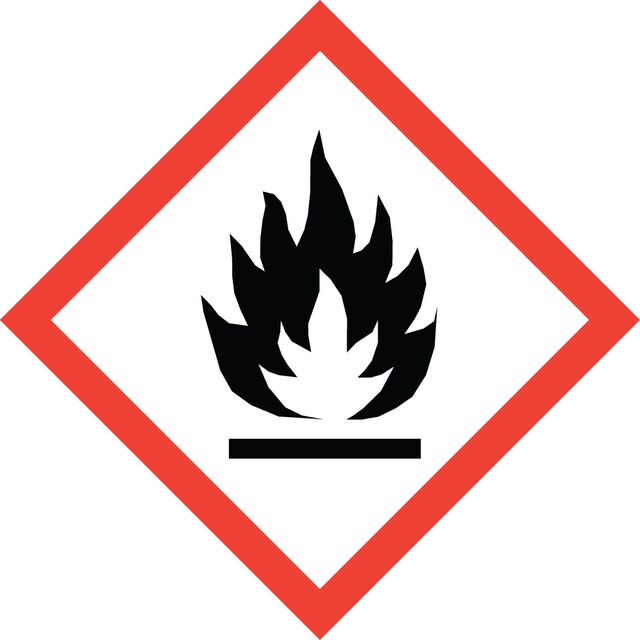
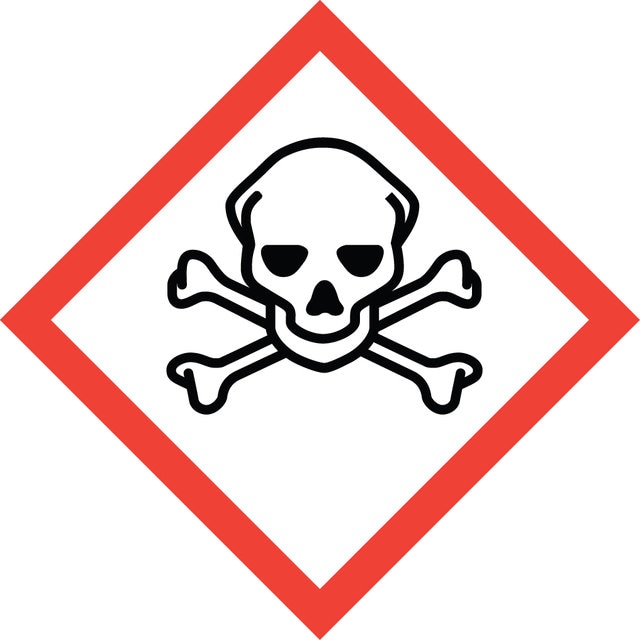
Acute Tox. 3 Dermal - Acute Tox. 3 Inhalation - Acute Tox. 3 Oral - Flam. Liq. 2 - STOT SE 1
target_organs
Eyes,Central nervous system
Storage Class
3 - Flammable liquids
flash_point_f
49.5 °F - closed cup
flash_point_c
9.7 °C - closed cup
Choose from one of the most recent versions:
Already Own This Product?
Find documentation for the products that you have recently purchased in the Document Library.
-
Product 34860 has an unpleasant fishy odor. What are the possible causes of this odor? Can we still use the product despite the odor?
1 answer-
Helpful?
-
-
What apparatus do you recommend for HPLC solvent filtration?
1 answer-
The Sigma-Aldrich Vacuum Filtration Assembly gives you all the components you need including: funnel top, fritted glass funnel support, filtration flask, aluminum clamp, and silicone stopper. The Acrodisc Syringe Filters offer high quality filtration for analytical samples, certified for HPLC to ensure low extractable and available in a broad range of membranes to meet sample compatibility requirements.
Helpful?
-
-
Can you recommend a Solvent Extractor for organics from aqueous solution?
1 answer-
Solvent extractors are often used for the quantitative extraction of organics from aqueous solutions and separations in immunoassays. The MIXXOR system has been applied successfully in many laboratory solvent extraction operations and is ideal for the rapid screening of alternative solvents for specific extraction problems.
Helpful?
-
-
Why on occasion does Product 34860, Methanol, have an unusual odor? Does it affect the product purity or performance?
1 answer-
Industry research has indicated that unusual odors in methanol are a common problem and stem from low - level mercaptans and / or amines found in the natural gas raw materials used in production. Odors from these types of compounds can be noticeable at low part per million (ppm) levels and have not been shown to have any negative impact on product performance at these concentrations.
Helpful?
-
-
What is the Department of Transportation shipping information for this product?
1 answer-
Transportation information can be found in Section 14 of the product's (M)SDS.To access the shipping information for this material, use the link on the product detail page for the product.
Helpful?
-
-
What are the options for drying solvents?
1 answer-
Sigma-Aldrich offers a full range of high-purity solvents with extremely low water levels specifically manufactured for moisture sensitive Organic and Biotech applications. Sigma-Aldrich also carries various drying agents such as molecular sieves, which are typically compatible with organic solvents.
Helpful?
-
-
Who do I contact about larger solvent volume needs?
1 answer-
Email us at labessentials@sial.com or visit Sigma-Aldrich Fine Chemicals for development and manufacturing-scale inquiries: safcglobal@sial.com
Helpful?
-