

Product 1004960700 and all other formaldehyde or formalin solutions contain methanol to prevent the formaldehyde from reforming as a polymer or escaping as a gas. If a methanol-free solution is required, paraformaldehyde powders or crystals can be purchased and prepared into methanol-free solutions, although these solutions are unstable and should be prepared fresh daily or kept for only short periods of time.
1.00496

Formaldehyde solution 4%, buffered, pH 6.9
(approx. 10% Formalin solution) for histology
Sinónimos:
Formaline solution, Methanal solution, Methyl aldehyde solution
Iniciar sesión para ver los posibles precios especiales de su organización
Seleccione un Tamaño
En este momento no podemos mostrarle ni los precios ni la disponibilidad
Acerca de este artículo
UNSPSC Code:
41116124
NACRES:
NA.21
Application(s):
diagnostic assay manufacturing
hematology
histology
hematology
histology
Bp:
100 °C/1013 hPa
Saltar a
Servicio técnico
¿Necesita ayuda? Nuestro equipo de científicos experimentados está aquí para ayudarle.
Permítanos ayudarleQuality Level
form
liquid
IVD
for in vitro diagnostic use
concentration
3.8-4.2% (acidimetric)
color
colorless
pH
6.7-7.1 ( in H2O)
bp
100 °C/1013 hPa
mp
-92 °C
density
1.017 g/cm3 at 20 °C
application(s)
diagnostic assay manufacturing
hematology
histology
storage temp.
15-25°C
General description
Formaldehyde (HCOH) is one of the most familiar and effective fixatives. Formaldehyde fixation is suitable for nearly all types of histological tissue, as well as calcified deposits, bone, cartilage, nervous system specimens. The fixation of the histological specimen material of human or animal origin is commonly performed in a 4% or 10% Formaldehyde solution. Chemically, the 4 % Formaldehyde solution equals a 10 % Formalin solution. This Formaldehyde solution 4% is a ready-to-use working solution that is stabilized with phosphate buffer to protect tissue structures. The development of formic acid will be effective prevented. It is an IVD registered and CE certified product and can be applied for diagnostical purposes. For more details, please see instructions for use (IFU). The IFU can be downloaded from this webpage.
signalword
Danger
Hazard Classifications
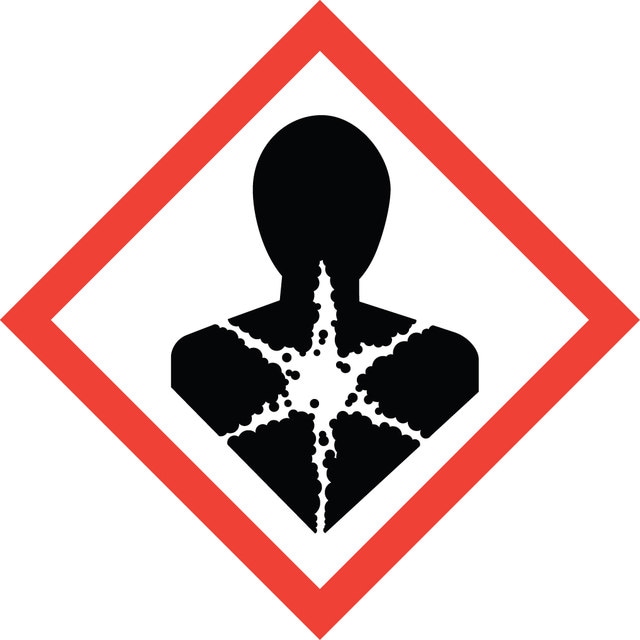
Acute Tox. 4 Inhalation - Acute Tox. 4 Oral - Carc. 1B - Muta. 2 - Skin Sens. 1
Clase de almacenamiento
6.1D - Non-combustible, acute toxic Cat.3 / toxic hazardous materials or hazardous materials causing chronic effects
wgk_germany
WGK 3
flash_point_f
Not applicable
flash_point_c
Not applicable
Certificados de análisis (COA)
Busque Certificados de análisis (COA) introduciendo el número de lote del producto. Los números de lote se encuentran en la etiqueta del producto después de las palabras «Lot» o «Batch»
¿Ya tiene este producto?
Encuentre la documentación para los productos que ha comprado recientemente en la Biblioteca de documentos.
Soham Gupta et al.
Frontiers in immunology, 11, 437-437 (2020-04-01)
The hijacking of cellular function through expression of proteins that interfere with the activity of cellular enzymes and regulatory complexes is a common strategy used by viruses to remodel the cell environment in favor of their own replication and spread.
Protocolos
How to stain organoids? A complete step-by-step protocol for immunofluorescent (IF) and immunocytochemical (ICC) staining of organoid cultures using antibodies
TrueGel3D® Hydrogel Plate protocol guides high-throughput culture of human adipose MSCs for screening applications.
Cultivate ReNcell® human neural stem cells in 3D hydrogels for high-throughput screening using the TrueGel3D® HTS Hydrogel Plate with this protocol.
Contenido relacionado
Conocer la criticidad de la tinción de los tejidos biológicos para investigación y anatomía patológica utilizando colorantes y tintes convencionales y especiales.
Learn about the criticality of biological tissue staining for research and clinical pathology using standard and special stains and dyes.
-
Do 4% formaldehyde or 10% formalin solutions contain traces of methanol?
1 answer-
Helpful?
-
-
Is it okay to fix an entire tissue with 4% PFA at 37°C overnight using product 1004960700 without altering its morphology?
1 answer-
The temperature used for standard tissue processing historically has been room temperature. Temperature can affect the rate of fixation, and modern tissue processors may use elevated temperatures to reduce processing time without adverse effects on tissue morphology. Cold fixation is common in electron microscopy when using glutaraldehyde as a fixative.
Helpful?
-
Active Filters
Nuestro equipo de científicos tiene experiencia en todas las áreas de investigación: Ciencias de la vida, Ciencia de los materiales, Síntesis química, Cromatografía, Analítica y muchas otras.
Póngase en contacto con el Servicio técnico