Skip to Content
Merck

H6878

8-Hydroxyquinoline

Synonym(s):

8-Quinolinol, 8-Hydroxyquinoline, 8-Oxychinolin, Oxine

Sign In to View Organizational & Contract Pricing

Select a Size

Pricing and availability is not currently available.

About This Item

Empirical Formula (Hill Notation):
C9H7NO
CAS Number:
Molecular Weight:
145.16
Beilstein:
114512
EC Number:
MDL number:
UNSPSC Code:
12352005
PubChem Substance ID:
NACRES:
NA.21

Skip To

Technical Service
Need help? Our team of experienced scientists is here for you.
Let Us Assist

Assay

≥98.5%

Quality Level

form

powder

mp

72.5-74.0 °C

antibiotic activity spectrum

fungi

Mode of action

DNA synthesis | interferes
enzyme | inhibits

SMILES string

Oc1cccc2cccnc12

InChI

1S/C9H7NO/c11-8-5-1-3-7-4-2-6-10-9(7)8/h1-6,11H

InChI key

MCJGNVYPOGVAJF-UHFFFAOYSA-N

Looking for similar products? Visit Product Comparison Guide

Compare Similar Items

View Full Comparison

Show Differences

1 of 4

This Item
1.070983652432502
mode of action

DNA synthesis | interferes, enzyme | inhibits

mode of action

-

mode of action

DNA synthesis | interferes, enzyme | inhibits

mode of action

DNA synthesis | interferes, enzyme | inhibits

antibiotic activity spectrum

fungi

antibiotic activity spectrum

-

antibiotic activity spectrum

fungi

antibiotic activity spectrum

fungi

Quality Level

200

Quality Level

200

Quality Level

100

Quality Level

200

form

powder

form

solid

form

-

form

solid

assay

≥98.5%

assay

-

assay

98-100% (GC)

assay

≥99% (perchloric acid titration)

mp

72.5-74.0 °C

mp

72.5-74.0 °C

mp

72.5-74.0 °C

mp

72.5-74.0 °C, 72.5-75 °C

General description

Chemical structure: quinolone

Application

Used as a lipophilic monoprotic bidentate chelating agent.

Signal Word

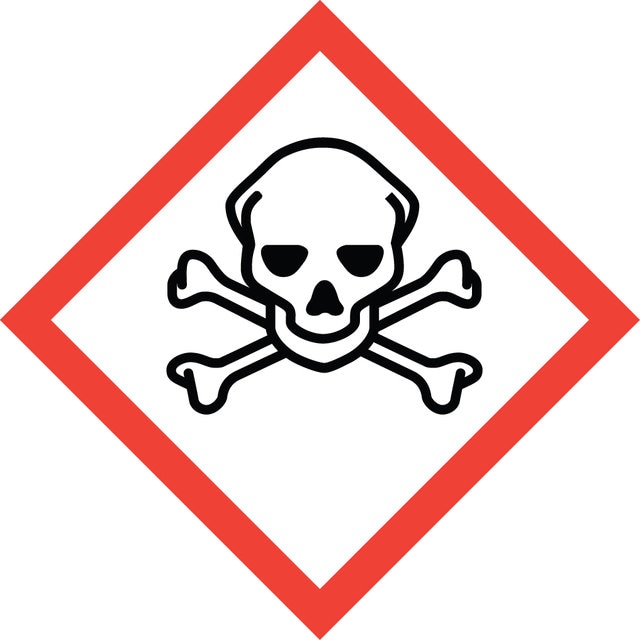
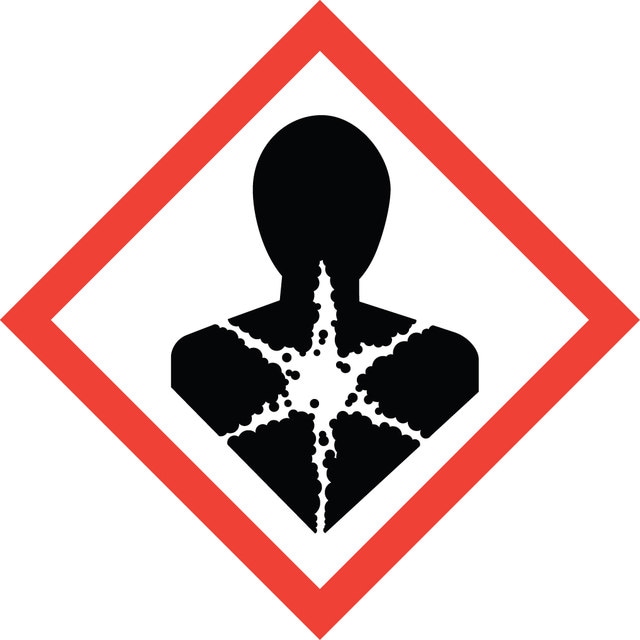
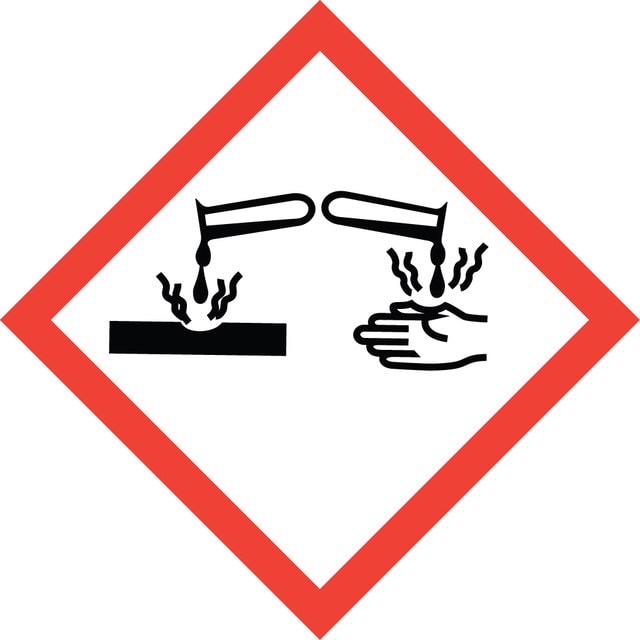
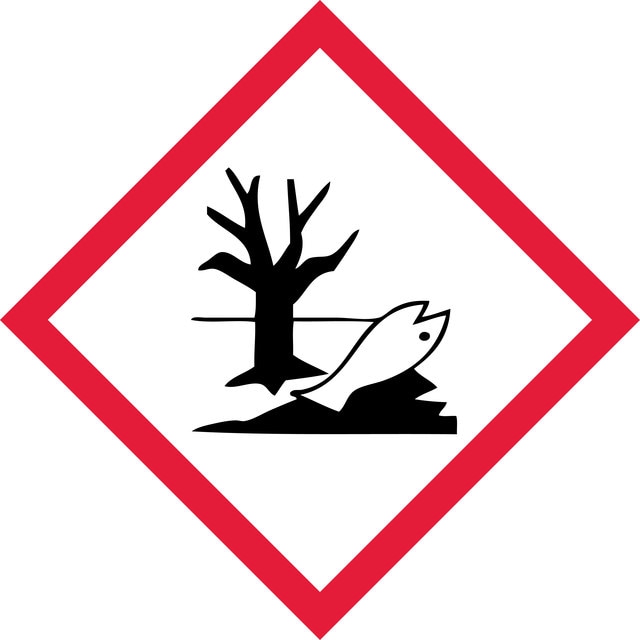
Danger

Hazard Statements

Hazard Classifications

Acute Tox. 3 Oral - Aquatic Acute 1 - Aquatic Chronic 1 - Eye Dam. 1 - Repr. 1B - Skin Sens. 1

Storage Class Code

6.1C - Combustible acute toxic Cat.3 / toxic compounds or compounds which causing chronic effects

WGK

WGK 3

Flash Point(F)

Not applicable

Flash Point(C)

Not applicable

Personal Protective Equipment

dust mask type N95 (US), Eyeshields, Gloves

Choose from one of the most recent versions:

Certificates of Analysis (COA)

Lot/Batch Number

Don't see the Right Version?

If you require a particular version, you can look up a specific certificate by the Lot or Batch number.

Already Own This Product?

Find documentation for the products that you have recently purchased in the Document Library.

Visit the Document Library

Pawel Strzelczyk et al.
Scientific reports, 10(1), 17516-17516 (2020-10-17)
The mechanism of catalysis by the L-glutaminase-asparaginase from Pseudomonas 7A (PGA) was investigated using structural, mass spectrometry, and kinetic data. We had previously proposed mechanism of hydrolysis of L-Asn by the type II L-asparaginase from E. coli (EcAII), but that
Michael Riedelberger et al.
Cell host & microbe, 27(3), 454-466 (2020-02-23)
Type I interferons (IFNs-I) fulfil multiple protective functions during pathogenic infections, but they can also cause detrimental effects and enhance immunopathology. Here, we report that IFNs-I promote the dysregulation of iron homeostasis in macrophages during systemic infections with the intracellular
Huiguo Lai et al.
Antiviral research, 97(1), 74-80 (2012-11-07)
Four serotypes of dengue virus (DENV1-4), mosquito-borne members of Flaviviridae family cause frequent epidemics causing considerable morbidity and mortality in humans throughout tropical regions of the world. There is no vaccine or antiviral therapeutics available for human use. In a
Elke Debroye et al.
Dalton transactions (Cambridge, England : 2003), 41(35), 10549-10556 (2012-07-26)
A ditopic DTPA monoamide derivative containing an 8-hydroxyquinoline moiety was synthesized and the corresponding gadolinium(III) complex ([Gd(H5)(H(2)O)](-)) was prepared. After adding aluminum(III), the 8-hydroxyquinoline part self-assembled into a heteropolymetallic triscomplex [(Gd5)(3)Al(H(2)O)(3)](3-). The magnetic and optical properties of this metallostar compound
Tomoko Fukuuchi et al.
Bioorganic & medicinal chemistry letters, 16(23), 5982-5987 (2006-09-22)
Various compounds were evaluated for ability to inhibit the formation of the abnormal protease-resistant form of prion protein (PrP-res) in two cell lines infected with different prion strains. Examination of the structure-activity relationships indicated that compounds with copper-selective chelating ability

Questions

Reviews

No rating value

Active Filters

Our team of scientists has experience in all areas of research including Life Science, Material Science, Chemical Synthesis, Chromatography, Analytical and many others.

Contact Technical Service