
Przejdź do
Zaloguj się, aby wyświetlić ceny organizacyjne i kontraktowe.
Informacje o tej pozycji
UNSPSC Code:
41116158
NACRES:
NA.54
Storage temp.:
2-8°C

usage
sufficient for 10 x 96 multiwell tests (11920685001), sufficient for 96 multiwell tests (11774425001)
manufacturer/tradename
Roche
technique(s)
ELISA: suitable
detection method
photometric
storage temp.
2-8°C
General description
Use this kit for relative quantification of histone-complexed DNA fragments (mono- and oligonucleosomes) out of the cytoplasma of cells after the induction of apoptosis or when released from necrotic cells. Since the assay does not require prelabeling of cells, it can detect internucleosomal degradation of genomic DNA during apoptosis even in cells that do not proliferate in vitro, for example, freshly isolated tumor cells. The antibodies used in the assay are not species-specific, therefore, the kit may be used to assay cells from a wide variety of species.
Application
For research use only. Not for use in diagnostic procedures.
The Cell Death Detection ELISAPLUS photometric enzyme immunoassay is used for the quantitative in vitro determination of cytoplasmic histone-associated DNA fragments (mono- and oligonucleosomes) after induced cell death.
The kit contains a stop solution which allows users to terminate the substrate reaction and run the assay under defined conditions, making it suitable for use in high-throughput applications.
The Cell Death Detection ELISAPLUS photometric enzyme immunoassay is used for the quantitative in vitro determination of cytoplasmic histone-associated DNA fragments (mono- and oligonucleosomes) after induced cell death.
The kit contains a stop solution which allows users to terminate the substrate reaction and run the assay under defined conditions, making it suitable for use in high-throughput applications.
Biochem/physiol Actions
Anti-histone reacts with the histones H1, H2A, H2B, H3, and H4 of various species (e.g., human, mouse, rat, hamster, cow, opossum, Xenopus). Anti-DNA binds to single- and double-stranded DNA. Therefore, the ELISA allows the detection of mono- and oligonucleosomes from various species, and may be applied to measure apoptotic cell death in many different cell systems.
Features and Benefits
Assay time: 3 - 4 hours
Negative control: Depending on cell culture conditions, each exponentially growing permanent cell culture contains a certain amount of dead cells (typically approximately 3 - 8%). In the immunoassay, these inherent dead cells in the untreated sample (without a cell-death-inducing agent) will cause a certain absorbance value (negative control).
Positive control: A DNA-histone complex serves as a positive control.
Sample material: Cytoplasmic fractions (lysates) of cell lines, cells ex vivo, cell culture supernatants, and serum or plasma
Negative control: Depending on cell culture conditions, each exponentially growing permanent cell culture contains a certain amount of dead cells (typically approximately 3 - 8%). In the immunoassay, these inherent dead cells in the untreated sample (without a cell-death-inducing agent) will cause a certain absorbance value (negative control).
Positive control: A DNA-histone complex serves as a positive control.
Sample material: Cytoplasmic fractions (lysates) of cell lines, cells ex vivo, cell culture supernatants, and serum or plasma
- One-step ELISA
- High sensitivity: (5 x 10² cells/ml)
- Fast performance: (3 - 4 hours)
- Positive control included
- No prelabeling of cells necessary
- Nonradioactive assay system
- No species restriction
- Easy handling
- Low background
- Suppressed human anti-mouse factor
- Function tested
Packaging
1 kit containing 10 components
- 11774425001 (1 kit containing 10 components)
- 11920685001 (1 kit containing 10 components)
Preparation Note
Working solution: Preparation of Working Solutions
Alongside the ready-to-use solutions supplied with this kit, you will need to prepare the following working solutions:
Note: Use only double-distilled water for reconstitution of lyophilizates.
Anti-Histone Biotin
Reconstitute the lyophilizate in 450 μl double-distilled water for 10 minutes and mix thoroughly.
Use: Component of the Immunoreagent.
Anti-DNA Peroxidase
Reconstitute the lyophilizate in 450 μl double-distilled water for 10 minutes and mix thoroughly.
Use: Component of the Immunoreagent.
Positive Control
Reconstitute the lyophilizate in 450 μl double-distilled water for 10 minutes and mix thoroughly.
Use: ELISA Step 1.
ABTS Tablets
Dependent on the number of samples tested, dissolve 1, 2, or 3 tablets from bottle 7 in 5, 10, or 15 ml Substrate Buffer.
Use: ELISA Step 5.
ABTS Stop Solution
If turbidity or a precipitate is visible, warm to 37 °C with shaking until the solution is clear.
Use: ELISA Step 6.
Storage conditions (working solution): Anti-Histone Biotin: 2 to 8 °C for 2 months
ABTS Tablets: 1 month stored protected from light. Allow to come to 15 to 25 °C before use.
ABTS Stop Solution: 2 to 8 °C until the expiration date printed on the label.
Alongside the ready-to-use solutions supplied with this kit, you will need to prepare the following working solutions:
Note: Use only double-distilled water for reconstitution of lyophilizates.
Anti-Histone Biotin
Reconstitute the lyophilizate in 450 μl double-distilled water for 10 minutes and mix thoroughly.
Use: Component of the Immunoreagent.
Anti-DNA Peroxidase
Reconstitute the lyophilizate in 450 μl double-distilled water for 10 minutes and mix thoroughly.
Use: Component of the Immunoreagent.
Positive Control
Reconstitute the lyophilizate in 450 μl double-distilled water for 10 minutes and mix thoroughly.
Use: ELISA Step 1.
ABTS Tablets
Dependent on the number of samples tested, dissolve 1, 2, or 3 tablets from bottle 7 in 5, 10, or 15 ml Substrate Buffer.
Use: ELISA Step 5.
ABTS Stop Solution
If turbidity or a precipitate is visible, warm to 37 °C with shaking until the solution is clear.
Use: ELISA Step 6.
Storage conditions (working solution): Anti-Histone Biotin: 2 to 8 °C for 2 months
ABTS Tablets: 1 month stored protected from light. Allow to come to 15 to 25 °C before use.
ABTS Stop Solution: 2 to 8 °C until the expiration date printed on the label.
The exact detection limit of dying/dead cells in a particular sample strongly depends on the kinetics of cell death, the cytotoxic agent used, and the amount of affected cells in the total cell population. Using U937/camptothecin (CAM) as a cellular model system for cell death, the immunoassay allows the specific detection of mono- and oligonucleosomes in the cytoplasmic fraction of 125cell equivalents/well.
Other Notes
For life science research only. Not for use in diagnostic procedures.
Unit Conversion: 1 mU = 1 x 10⁻³ OD (1 mU = 0.001 OD).
Ta strona może zawierać tekst przetłumaczony maszynowo.
Tylko elementy zestawu
Numer produktu
Opis
- Anti-histone-biotin antibody (clone H11-4)
- Anti-DNA-POD antibody (clone MCA-33)
- Positive Control
- Incubation Buffer
- Lysis Buffer
- Substrate Buffer
- ABTS Substrate Tablet
Zobacz wszystko (10)


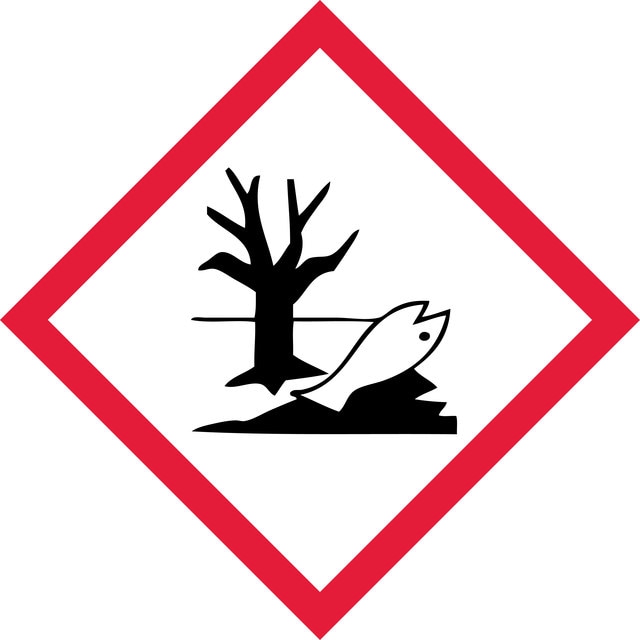
Słowo ostrzegawcze
WarningDanger
Kody zagrożeń
Hazard Classifications
Aquatic Chronic 2 - Aquatic Chronic 3 - Eye Dam. 1 - Eye Irrit. 2 - Skin Sens. 1
Klasa składowania
8B - Non-combustible, corrosive hazardous materials
Co się dzieje?
WGK 3
Temperatura zapłonu (°C)
does not flash
Wybierz jedną z najnowszych wersji:
Masz już ten produkt?
Dokumenty związane z niedawno zakupionymi produktami zostały zamieszczone w Bibliotece dokumentów.