


Store this product at 2–8 °C. When stored properly, the product remains active for at least 3 years. Solutions of tunicamycin in DMSO (5 mg/ml) can be stored at -20 °C in small aliquots of 25 - 50uL. No specific time frame for storage at -20 °C was indicated.
Przejdź do
T7765

Tunicamycin
from Streptomyces sp., ≥98% (HPLC), powder, N-acetylglucosamine transferase inhibitor
Zaloguj się, aby wyświetlić ceny organizacyjne i kontraktowe.
Wybierz wielkość
Zmień widok
| Rozmiar/SKU | Dostępność | Cena netto |
|---|---|---|
1 mg | Skontaktuj się z Obsługą Klienta, aby uzyskać informacje na temat dostępności | 384,00 zł |
5 mg | Skontaktuj się z Obsługą Klienta, aby uzyskać informacje na temat dostępności | 1190,00 zł |
10 mg | Skontaktuj się z Obsługą Klienta, aby uzyskać informacje na temat dostępności | 2130,00 zł |
50 mg | Skontaktuj się z Obsługą Klienta, aby uzyskać informacje na temat dostępności | 3940,00 zł |
Informacje o tej pozycji
Numer CAS:
UNSPSC Code:
51111800
PubChem Substance ID:
NACRES:
NA.77
Beilstein/REAXYS Number:
6888090
MDL number:
384,00 zł
Skontaktuj się z Obsługą Klienta, aby uzyskać informacje na temat dostępności
Pomoc techniczna
Potrzebujesz pomocy? Nasz zespół doświadczonych naukowców chętnie Ci pomoże.
Pozwól nam pomócNazwa produktu
Tunicamycin from Streptomyces sp.,
Quality Segment
solubility
95% ethanol: soluble 1 mg/mL, clear to faintly hazy, THF: soluble <1 mg/mL, dioxane: soluble <1 mg/mL, DMF: soluble >10 mg/mL, pyridine: >10 mg/mL, DMSO: soluble 4.9-5.1 mg/mL, clear to slightly hazy, colorless to yellow, methanol: slightly soluble 4.9-5.1 mg/mL, methanol: soluble 4.9-5.1 mg/mL, clear to slightly hazy, colorless to yellow, acetone: insoluble, aqueous base: insoluble, chloroform: insoluble, ethyl acetate: insoluble
antibiotic activity spectrum
fungi, viruses
mode of action
protein synthesis | interferes
storage temp.
2-8°C
SMILES string
CC(C)CCCCCCCC\C=C\C(=O)N[C@@H]1[C@@H](O)[C@@H](O)[C@@H](C[C@@H](O)[C@H]2O[C@H]([C@H](O)[C@@H]2O)N3C=CC(=O)NC3=O)O[C@H]1O[C@@H]4O[C@@H](CO)[C@H](O)[C@@H](O)[C@@H]4NC(C)=O
InChI
1S/C37H60N4O16/c1-18(2)12-10-8-6-4-5-7-9-11-13-23(45)39-26-30(50)27(47)21(54-36(26)57-35-25(38-19(3)43)29(49)28(48)22(17-42)55-35)16-20(44)33-31(51)32(52)34(56-33)41-15-14-24(46)40-37(41)53/h11,13-15,18,20-22,25-36,42,44,47-52H,4-10,12,16-17H2,1-3H3,(H,38,43)(H,39,45)(H,40,46,53)/b13-11+/t20-,21-,22+,25+,26-,27+,28+,29+,30-,31+,32-,33-,34-,35+,36+/m1/s1
InChI key
YJQCOFNZVFGCAF-WPTOCQRYSA-N
General description
Chemical structure: nucleoside
Contains homologues A,B,C, and D. Composition may vary from lot to lot. Actual content given on label.
Tunicamycin is an antibiotic and a glycosylation inhibitor. Its mode of action includes blocking human UDP-HexNAc:polyprenol-P HexNAc-1-P enzymes in the enzyme GlcNAc phosphotransferase (GPT). Glycosylation is a major post-translational modification that plays a critical role in glycoprotein folding, stability, and subcellular localization, as well as in the biological functions of the glycoprotein. Abnormal glycosylation has been identified as a signature of cancer and has been shown to play a significant role in tumor progression, metastasis, and chemoresistance. Research shows tunicamycin exhibits antitumor action. Furthermore, tunicamycin inhibition of N-glycosylation ultimately results in the build-up of unstructured proteins in the endoplasmic reticulum (ER) lumen, potentially leading to ER stress. Tunicamycin also exhibits antibacterial and antifungal actions. It blocks the formation of protein N-glycosidic linkages by inhibiting the transfer of N-acetylglucosamine 1-phosphate to dolichol monophosphate. Tunicamycin also Inhibits bacterial and eukaryote N-acetylglucosamine transferases and prevents the formation of N-acetylglucosamine lipid intermediates.
Application
Tunicamycin has been used to study the effect of N-linked glycosylation of human proton-coupled folate transporter (HsPCFT) in HeLa cells. Tunicamycin has also been used to study the functional effects of coxsackievirus and adenovirus receptor (CAR) glycosylation in COS-7 cells. Tunicamycin from Streptomyces sp. has been used to inhibit N-glycosylation in cell culture experiments.
Biochem/physiol Actions
Blocks the formation of protein N-glycosidic linkages.
Preparation Note
Tunicamycin dissolves in DMSO at 4.9-5.1 mg/ml and yields a clear to very slightly hazy, colorless to yellow solution. Furthermore, tunicamycin is soluble in DMF (>10 mg/ml), pyridine (>10 mg/ml), water (<5 mg/ml, pH 9.0), dioxane (<1 mg/ml) and THF. However, it is insoluble in other organic solvents such as acetone, chloroform, and ethyl acetate, and in aqueous solutions with pH <6. Aqueous solutions can be prepared from stock solutions by diluting with water at pH 8-10 or with buffers with pH >7, preferably >8. Tunicamycin will not dissolve in phosphate buffer, pH 8, at 1 mg/ml, even with heating, but solubility can be achieved by raising the pH to 9 and back titrating to pH 7-8.
Ta strona może zawierać tekst przetłumaczony maszynowo.
1 of 1
Ta pozycja | ||
|---|---|---|
| description - | description BioReagent, suitable for cell culture, ~80% (HPLC) | description 10 mg/mL in 0.9% NaCl, 0.1 μm filtered, BioReagent, suitable for cell culture |
| Quality Level 300 | Quality Level 300 | Quality Level 200 |
| storage temp. 2-8°C | storage temp. 2-8°C | storage temp. 2-8°C |
| solubility DMF: soluble >10 mg/mL, chloroform: insoluble, pyridine: >10 mg/mL, dioxane: soluble <1 mg/mL, aqueous base: insoluble, THF: soluble <1 mg/mL, acetone: insoluble, DMSO: soluble 4.9-5.1 mg/mL, clear to slightly hazy, colorless to yellow, ethyl acetate: insoluble, methanol: slightly soluble 4.9-5.1 mg/mL, 95% ethanol: soluble 1 mg/mL, clear to faintly hazy, methanol: soluble 4.9-5.1 mg/mL, clear to slightly hazy, colorless to yellow | solubility H2O: slightly soluble | solubility - |
| antibiotic activity spectrum fungi, viruses | antibiotic activity spectrum fungi, yeast | antibiotic activity spectrum mycobacteria, mycoplasma, Gram-negative bacteria, Gram-positive bacteria |
| mode of action protein synthesis | interferes | mode of action cell membrane | interferes | mode of action protein synthesis | interferes |
Słowo ostrzegawcze
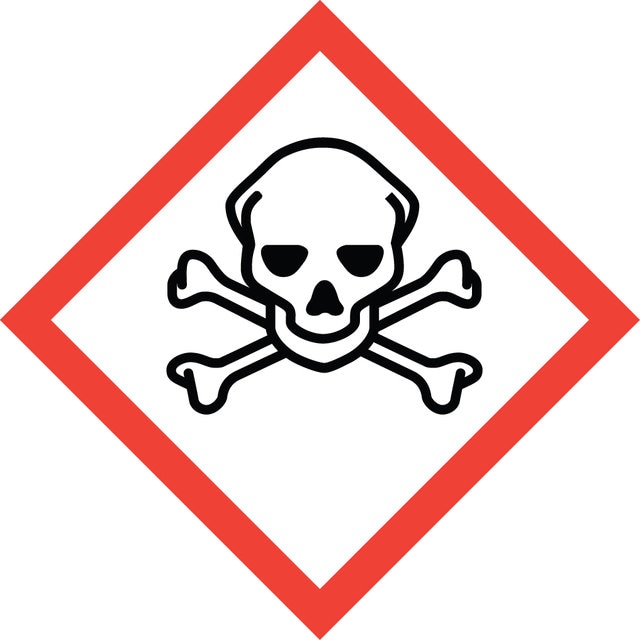
Danger
Kody zagrożeń
Ostrzeżenia
Hazard Classifications
Acute Tox. 1 Oral
Klasa składowania
6.1A - Combustible acute toxic Cat. 1 and 2 / very toxic hazardous materials
PPE (środki ochrony indywidualnej)
Eyeshields, Faceshields, Gloves, type P3 (EN 143) respirator cartridges
Temperatura zapłonu (°F)
No data available
Temperatura zapłonu (°C)
No data available
Wybierz jedną z najnowszych wersji:
Masz już ten produkt?
Dokumenty związane z niedawno zakupionymi produktami zostały zamieszczone w Bibliotece dokumentów.
-
Is it possible to store the product at -20/30°C for extended storage?
1 answer-
Helpful?
-
-
What is the molecular weight for T7765 product ?
1 answer-
The molecular weight of the product is lot-specific. Each homolog has a specific molecular weight: A = 817, B = 831, C = 845, and D = 859. The lot-specific Certificate of Analysis (COA) provides the percentage contribution for each homolog.
Helpful?
-