

The particle size or mesh size of this material is not determined on a lot-to-lot basis. However, historical data indicates particle size ranges as follows:
150µm/100 mesh - 212µm/70 mesh = 10%
45µm/325 mesh -150µm/100 mesh = 65-85%
<45µm/<325-400 mesh = 5-25%
12310

Eisen
≥99%, powder (fine), reduced
Synonym(e):
Fe
Anmelden Preise für Organisationen und Verträge anzeigen
Größe auswählen
500 G
€ 53,60
1 KG
€ 102,00
2.5 KG
€ 196,00
6 X 1 KG
€ 616,00
Über diesen Artikel
Lineare Formel:
Fe
CAS-Nummer:
Molekulargewicht:
55.85
EG-Nummer:
MDL-Nummer:
UNSPSC-Code:
11101713
PubChem Substanz-ID:
NACRES:
NA.22
Fortfahren mit
Technischer Dienst
Benötigen Sie Hilfe? Unser Team von erfahrenen Wissenschaftlern ist für Sie da.
Unterstützung erhaltenProduktname
Eisen, ≥99%, reduced, powder (fine)
Assay
≥99%
Form
powder (fine)
Qualität
reduced
Eignung der Reaktion
core: iron
reagent type: catalyst
Widerstandsfähigkeit
9.71 μΩ-cm
Verunreinigungen
≤0.5% insoluble in HCl
bp
2750 °C (lit.)
mp (Schmelzpunkt)
1535 °C (lit.)
Dichte
7.86 g/mL at 25 °C (lit.)
Anionenspuren
chloride (Cl-): ≤20 mg/kg
sulfide (S2-): ≤100 mg/kg
Kationenspuren
As: ≤5 mg/kg
Cu: ≤100 mg/kg
Mn: ≤1000 mg/kg
Ni: ≤500 mg/kg
Pb: ≤20 mg/kg
Zn: ≤50 mg/kg
SMILES String
[Fe]
InChI
1S/Fe
InChIKey
XEEYBQQBJWHFJM-UHFFFAOYSA-N
Verwandte Kategorien
1 of 4
Dieser Artikel | 209309 | 44890 | 413054 |
|---|---|---|---|
| reaction suitability core: iron, reagent type: catalyst | reaction suitability core: iron, reagent type: catalyst | reaction suitability core: iron, reagent type: catalyst | reaction suitability - |
| assay ≥99% | assay 97% | assay ≥99.5% (RT) | assay >99.99% trace metals basis |
| form powder (fine) | form powder | form - | form granular |
| Quality Level 200 | Quality Level 100 | Quality Level 100 | Quality Level 200 |
| cation traces As: ≤5 mg/kg, Mn: ≤1000 mg/kg, Pb: ≤20 mg/kg, Cu: ≤100 mg/kg, Zn: ≤50 mg/kg, Ni: ≤500 mg/kg | cation traces - | cation traces As: ≤2 mg/kg, Ca: ≤50 mg/kg, Cd: ≤10 mg/kg, Co: ≤50 mg/kg, Cr: ≤10 mg/kg, Cu: ≤50 mg/kg, K: ≤50 mg/kg, Mg: ≤5 mg/kg, Mn: ≤10 mg/kg, Na: ≤50 mg/kg, Ni: ≤50 mg/kg, Pb: ≤50 mg/kg, Zn: ≤50 mg/kg | cation traces - |
| density 7.86 g/mL at 25 °C (lit.) | density 7.86 g/mL at 25 °C (lit.) | density 7.86 g/mL at 25 °C (lit.) | density 7.86 g/mL at 25 °C (lit.) |
Allgemeine Beschreibung
Reduced iron powder, also known as iron sponge, is a fine powdered form of iron that is commonly used in chemical synthesis processes. It is produced by the reduction of iron oxide in a controlled environment, typically through the use of hydrogen or carbon monoxide gas.
In chemical synthesis, reduced iron powder can be employed as a reducing agent, catalyst, or precursor in a wide range of reactions. It is commonly used to convert organic functional groups, such as aldehydes, ketones, and nitro compounds, into their corresponding reduced forms. It is also known to facilitate hydrogenation reactions.
Reduced iron powder finds applications in the production of iron-based catalysts, magnetic materials, pigments, and metal alloys. It is commonly used in pharmaceutical synthesis, organic chemistry, and industrial manufacturing. It is important to handle reduced iron powder with care due to its potential reactivity with moisture and oxygen, which may cause oxidation and result in changes to its properties. Proper storage and handling procedures should be followed to maintain its quality and prevent unwanted reactions.
In chemical synthesis, reduced iron powder can be employed as a reducing agent, catalyst, or precursor in a wide range of reactions. It is commonly used to convert organic functional groups, such as aldehydes, ketones, and nitro compounds, into their corresponding reduced forms. It is also known to facilitate hydrogenation reactions.
Reduced iron powder finds applications in the production of iron-based catalysts, magnetic materials, pigments, and metal alloys. It is commonly used in pharmaceutical synthesis, organic chemistry, and industrial manufacturing. It is important to handle reduced iron powder with care due to its potential reactivity with moisture and oxygen, which may cause oxidation and result in changes to its properties. Proper storage and handling procedures should be followed to maintain its quality and prevent unwanted reactions.
Anwendung
- Sodium-Ion Batteries: Research demonstrated the use of iron-based Na(4)FeV(PO(4))(3) nanoparticles in pine pollen derived carbon matrices as a cost-effective cathode for sodium-ion batteries, emphasizing sustainable energy solutions and materials chemistry (Wang et al., 2024).
Signalwort
Danger
H-Sätze
Gefahreneinstufungen
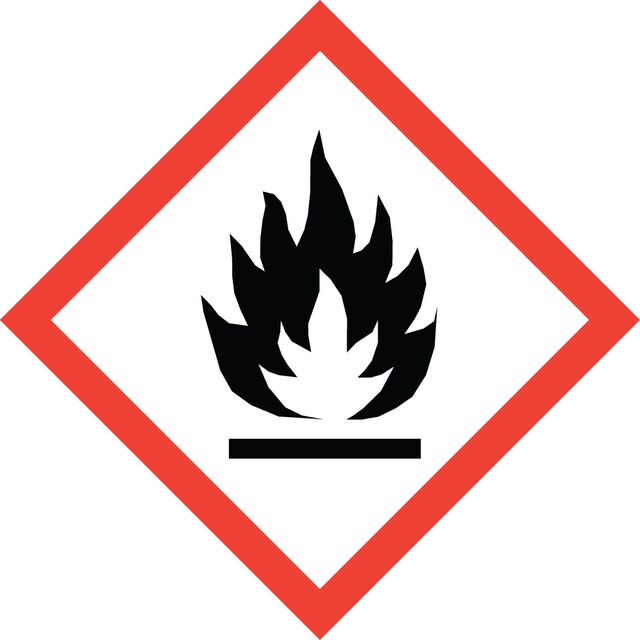
Flam. Sol. 1 - Self-heat. 1
Lagerklassenschlüssel
4.2 - Pyrophoric and self-heating hazardous materials
WGK
nwg
Flammpunkt (°F)
Not applicable
Flammpunkt (°C)
Not applicable
Persönliche Schutzausrüstung
Eyeshields, Gloves, type N95 (US)
Hier finden Sie alle aktuellen Versionen:
Besitzen Sie dieses Produkt bereits?
In der Dokumentenbibliothek finden Sie die Dokumentation zu den Produkten, die Sie kürzlich erworben haben.
Elzbieta Krzesiek et al.
Polski merkuriusz lekarski : organ Polskiego Towarzystwa Lekarskiego, 34(203), 289-292 (2013-07-31)
Anemia is a frequent symptom of diseases of alimentary tract, also in children. Among others, inflammatory bowel disease, celiac disease and Helicobacter pylori are most often complicated by anemia. Not infrequently these disorders are accompanied by more than one type
Iron fortification and malaria risk in children.
Andrew M Prentice et al.
JAMA, 310(9), 914-915 (2013-09-05)
Shaun D Wong et al.
Nature, 499(7458), 320-323 (2013-07-23)
Mononuclear non-haem iron (NHFe) enzymes catalyse a broad range of oxidative reactions, including halogenation, hydroxylation, ring closure, desaturation and aromatic ring cleavage reactions. They are involved in a number of biological processes, including phenylalanine metabolism, the production of neurotransmitters, the
Stanley Zlotkin et al.
JAMA, 310(9), 938-947 (2013-09-05)
In sub-Saharan Africa, malaria is a leading cause of childhood morbidity and iron deficiency is among the most prevalent nutritional deficiencies. In 2006, the World Health Organization and the United Nations Children's Fund released a joint statement that recommended limiting
M Thomas Record et al.
Faraday discussions, 160, 9-44 (2013-06-26)
Understanding how Hofmeister salt ions and other solutes interact with proteins, nucleic acids, other biopolymers and water and thereby affect protein and nucleic acid processes as well as model processes (e.g. solubility of model compounds) in aqueous solution is a
-
powder 입자 사이즈가 몇 Mesh 인가요?
1 answer-
Helpful?
-
-
How can I determine the shelf life / expiration / retest date of this product?
1 answer-
If this product has an expiration or retest date, it will be shown on the Certificate of Analysis (COA, CofA). If there is no retest or expiration date listed on the product's COA, we do not have suitable stability data to determine a shelf life. For these products, the only date on the COA will be the release date; a retest, expiration, or use-by-date will not be displayed.
For all products, we recommend handling per defined conditions as printed in our product literature and website product descriptions. We recommend that products should be routinely inspected by customers to ensure they perform as expected.
For products without retest or expiration dates, our standard warranty of 1 year from the date of shipment is applicable.
For more information, please refer to the Product Dating Information document: https://www.sigmaaldrich.com/deepweb/assets/sigmaaldrich/marketing/global/documents/418/501/product-dating-information-06-25-mk.pdfHelpful?
-
-
How is shipping temperature determined? And how is it related to the product storage temperature?
1 answer-
Products may be shipped at a different temperature than the recommended long-term storage temperature. If the product quality is sensitive to short-term exposure to conditions other than the recommended long-term storage, it will be shipped on wet or dry-ice. If the product quality is NOT affected by short-term exposure to conditions other than the recommended long-term storage, it will be shipped at ambient temperature. As shipping routes are configured for minimum transit times, shipping at ambient temperature helps control shipping costs for our customers. For more information, please refer to the Storage and Transport Conditions document: https://www.sigmaaldrich.com/deepweb/assets/sigmaaldrich/marketing/global/documents/316/622/storage-transport-conditions-mk.pdf
Helpful?
-
-
¿Cuál es el tamaño de partícula máxima?
1 answer-
The particle size distribution is as follows:
>212µm = 0%
150µm- 212µm = 10%
45µm-150µm = 65-85%
<45µm = 5-25%Helpful?
-
Active Filters
Unser Team von Wissenschaftlern verfügt über Erfahrung in allen Forschungsbereichen einschließlich Life Science, Materialwissenschaften, chemischer Synthese, Chromatographie, Analytik und vielen mehr..
Setzen Sie sich mit dem technischen Dienst in Verbindung