Direkt zum Inhalt
Merck

437379

2-Ethylhexylsalicylat

99%

Synonym(e):

Octisalat, Octyl-salicylat

Anmelden zur Ansicht der Organisations- und Vertragspreise.

Größe auswählen

100 ML

€ 50,80

€ 50,80


Warenkorb auf Verfügbarkeit prüfen

Großbestellung anfragen

Über diesen Artikel

Lineare Formel:
(HO)C6H4CO2CH2CH(C2H5)(CH2)3CH3
CAS-Nummer:
Molekulargewicht:
250.33
UNSPSC Code:
12162002
NACRES:
NA.23
PubChem Substance ID:
EC Number:
204-263-4
Beilstein/REAXYS Number:
2730664
MDL number:

Fortfahren mit

Technischer Dienst
Benötigen Sie Hilfe? Unser Team von erfahrenen Wissenschaftlern ist für Sie da.
Unterstützung erhalten

Produktname

2-Ethylhexylsalicylat, 99%

InChI key

FMRHJJZUHUTGKE-UHFFFAOYSA-N

InChI

1S/C15H22O3/c1-3-5-8-12(4-2)11-18-15(17)13-9-6-7-10-14(13)16/h6-7,9-10,12,16H,3-5,8,11H2,1-2H3

SMILES string

CCCCC(CC)COC(=O)c1ccccc1O

assay

99%

form

liquid

refractive index

n20/D 1.502 (lit.)

bp

189-190 °C/21 mmHg (lit.)

density

1.014 g/mL at 25 °C (lit.)

Quality Level

Suchen Sie nach ähnlichen Produkten? Aufrufen Leitfaden zum Produktvergleich

Ähnliche Artikel vergleichen

Vollständigen Vergleich anzeigen

Unterschiede anzeigen

1 of 4

Dieser Artikel
W514500147794352184
Octisalat United States Pharmacopeia (USP) Reference Standard

USP

1477943

Octisalat

assay

99%

assay

≥99%

assay

-

assay

≥98.0% (HPLC)

density

1.014 g/mL at 25 °C (lit.)

density

1.014 g/mL at 25 °C (lit.)

density

1.014 g/mL at 25 °C (lit.)

density

1.014 g/mL at 25 °C (lit.)

form

liquid

form

-

form

-

form

-

bp

189-190 °C/21 mmHg (lit.)

bp

189-190 °C/21 mmHg (lit.)

bp

189-190 °C/21 mmHg (lit.)

bp

189-190 °C/21 mmHg (lit.)

refractive index

n20/D 1.502 (lit.)

refractive index

n20/D 1.502 (lit.)

refractive index

n20/D 1.502 (lit.)

refractive index

n/D 1.501-1.503, n20/D 1.502 (lit.)

Quality Level

100

Quality Level

400

Quality Level

-

Quality Level

-

Application

EHS is a salicylic ester which can be used as an UV filter in sunscreen based creams.[1][2]

General description

2-Ethylhexyl salicylate(EHS) is an organic ultraviolet(UV) absorber that can be used as a photostable ingredient in cosmetic formulations. It shows an absorption spectra in the range of 280-320 nm in the UV region.[3]

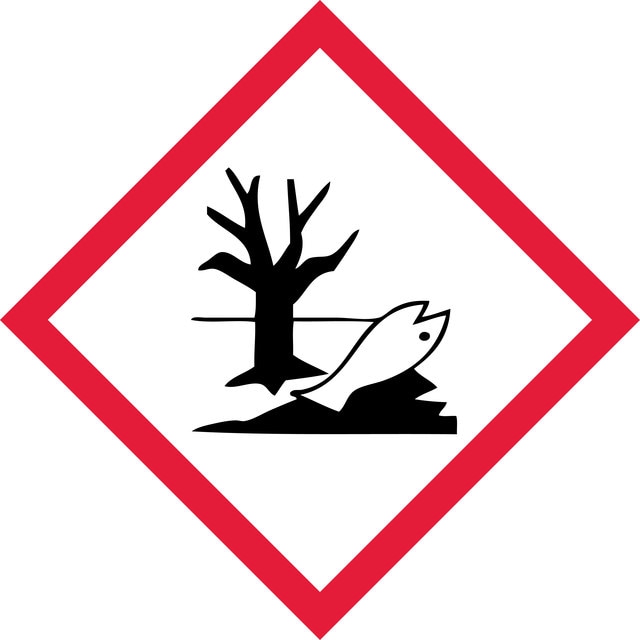
pictograms

Environment

signalword

Warning

hcodes

Hazard Classifications

Aquatic Chronic 1

Lagerklasse

10 - Combustible liquids

wgk

WGK 2

flash_point_f

323.6 °F - closed cup

flash_point_c

162 °C - closed cup

ppe

Eyeshields, Gloves, multi-purpose combination respirator cartridge (US)


Hier finden Sie alle aktuellen Versionen:

Analysenzertifikate (COA)

Lot/Batch Number

Die passende Version wird nicht angezeigt?

Wenn Sie eine bestimmte Version benötigen, können Sie anhand der Lot- oder Chargennummer nach einem spezifischen Zertifikat suchen.

Besitzen Sie dieses Produkt bereits?

In der Dokumentenbibliothek finden Sie die Dokumentation zu den Produkten, die Sie kürzlich erworben haben.

Die Dokumentenbibliothek aufrufen

Optical and electron paramagnetic resonance studies of the excited triplet states of UV-B absorbers: 2-ethylhexyl salicylate and homomenthyl salicylate.
Sugiyama K, et al.
Photochemical & Photobiological Sciences : Official Journal of the European Photochemistry Association and the European Society for Photobiology, 14(9), 1651-1659 (2015)
A pendant peptide endows a sunscreen with water-resistance.
Ellison AJ and Raines RT
Organic & Biomolecular Chemistry, 16(39), 7139-7142 (2018)
R Jiang et al.
Journal of pharmaceutical sciences, 86(7), 791-796 (1997-07-01)
This study provides an investigation of the availability of octyl salicylate (OS), a common sunscreen agent, from liquid paraffin and the effect of OS on skin permeability. A model membrane system to isolate the vehicle effect from membrane permeability has
M McVean et al.
Molecular carcinogenesis, 24(3), 169-176 (1999-04-16)
Topical application of alpha-tocopherol (alphaTH), the most prominent naturally occurring form of vitamin E, inhibits ultraviolet (UV) B-induced photocarcinogenesis and DNA photodamage in C3H mice in vivo. In this study, we compared alphaTH with other vitamin E compounds and with
M McVean et al.
Carcinogenesis, 18(8), 1617-1622 (1997-08-01)
Ultraviolet B (UVB, 290-320 nm) exposure results in a variety of cellular insults including induction of cyclobutane pyrimidine dimers in DNA. Accumulation of these lesions can lead to mutations in critical genes and contribute to the development of nonmelanoma skin

Questions

Reviews

No rating value

Active Filters

Unser Team von Wissenschaftlern verfügt über Erfahrung in allen Forschungsbereichen einschließlich Life Science, Materialwissenschaften, chemischer Synthese, Chromatographie, Analytik und vielen mehr..

Setzen Sie sich mit dem technischen Dienst in Verbindung