

If this product has an expiration or retest date, it will be shown on the Certificate of Analysis (COA, CofA). If there is no retest or expiration date listed on the product's COA, we do not have suitable stability data to determine a shelf life. For these products, the only date on the COA will be the release date; a retest, expiration, or use-by-date will not be displayed.
For all products, we recommend handling per defined conditions as printed in our product literature and website product descriptions. We recommend that products should be routinely inspected by customers to ensure they perform as expected.
For products without retest or expiration dates, our standard warranty of 1 year from the date of shipment is applicable.
For more information, please refer to the Product Dating Information document: https://www.sigmaaldrich.com/deepweb/assets/sigmaaldrich/marketing/global/documents/418/501/product-dating-information-06-25-mk.pdf
471364

1-Dodecanthiol
≥98%
Synonym(e):
n-Dodecylmercaptan, Dodecylmercaptan, Laurylmercaptan, Mercaptan C12
Größe auswählen
Über diesen Artikel
Fortfahren mit
Produktname
1-Dodecanthiol, ≥98%
assay
≥98%
InChI key
WNAHIZMDSQCWRP-UHFFFAOYSA-N
InChI
1S/C12H26S/c1-2-3-4-5-6-7-8-9-10-11-12-13/h13H,2-12H2,1H3
SMILES string
CCCCCCCCCCCCS
vapor density
7 (vs air)
refractive index
n20/D 1.459 (lit.)
bp
266-283 °C (lit.)
density
0.845 g/mL at 25 °C (lit.)
Quality Level
Suchen Sie nach ähnlichen Produkten? Aufrufen Leitfaden zum Produktvergleich
Application
General description
signalword
Danger
hcodes
Hazard Classifications
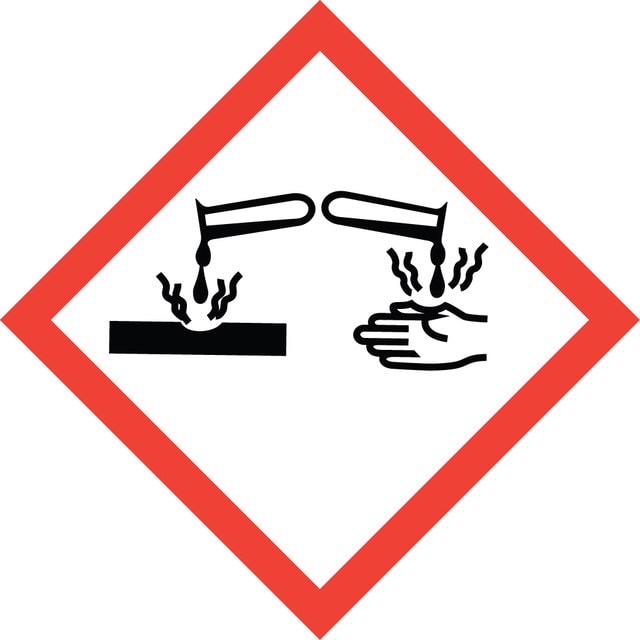
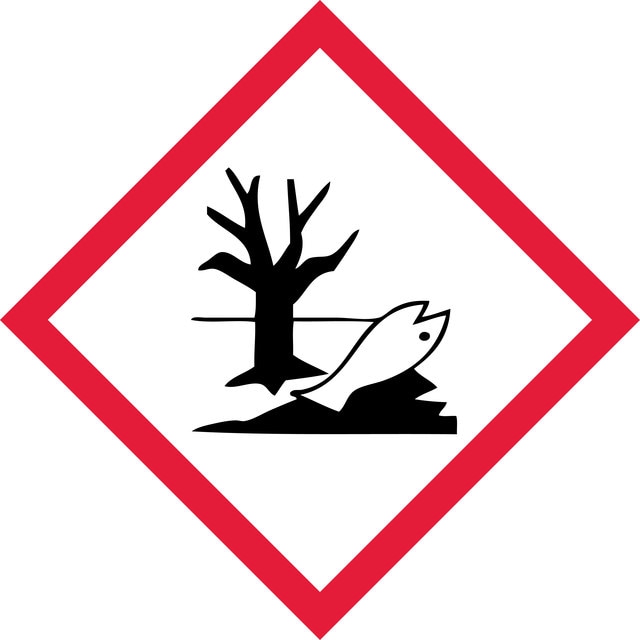
Aquatic Acute 1 - Aquatic Chronic 1 - Eye Dam. 1 - Skin Corr. 1C - Skin Sens. 1A
Lagerklasse
8A - Combustible corrosive hazardous materials
wgk
WGK 3
flash_point_f
262.4 °F - closed cup
flash_point_c
128 °C - closed cup
ppe
Eyeshields, Faceshields, Gloves, type ABEK (EN14387) respirator filter
Hier finden Sie alle aktuellen Versionen:
Besitzen Sie dieses Produkt bereits?
In der Dokumentenbibliothek finden Sie die Dokumentation zu den Produkten, die Sie kürzlich erworben haben.
Artikel
Self-assembled monolayers (SAMs) have diverse applications; article compares benefits of alkylthiolates on gold SAM systems.
Solvothermal synthesis of nanoparticles: applications from nanocircuits and nano-optical circuits to nanomagnetics and biotech.
Single molecule electronics is the endeavour of constructing electronic circuitry with single molecules as the fundamental building block.
To keep pace with Moore′s Law, there is a continuing need in the semiconductor industry to achieve higher circuit density in microelectronic devices.
Verwandter Inhalt
-
How can I determine the shelf life / expiration / retest date of this product?
1 answer-
Helpful?
-
-
How do you coat copper foil with a single layer of 1-Dodecanethiol molecules on one surface only. Shielding the other surface with a tape does not work, because removing the tape can bend the foil and damage the coating.
1 answer-
Following surface preparation and oxidation removal, a solution of 1-Dodecanethiol in a suitable solvent, such as toluene or ethanol, should be prepared at a concentration typically between 1 and 10 mM. To achieve selective coating on one surface, a physical mask (e.g., tape or a polymer film) can be used to cover the areas of the copper foil that are not to be coated before immersing it in the 1-Dodecanethiol solution. Alternatively, a drop casting method can be used, whereby a drop of the 1-Dodecanethiol solution would be applied directly onto the desired surface and it would be allowed to spread out evenly. This method requires careful control to avoid spreading to the other side. The copper foil should then be immersed in the solution for a specified time (typically several hours) to allow the 1-Dodecanethiol molecules to self-assemble onto the exposed surface. After the desired time, the copper foil should be removed and rinsed gently with the same solvent used for the solution to remove any unbound thiol molecules.
Helpful?
-
-
How is shipping temperature determined? And how is it related to the product storage temperature?
1 answer-
Products may be shipped at a different temperature than the recommended long-term storage temperature. If the product quality is sensitive to short-term exposure to conditions other than the recommended long-term storage, it will be shipped on wet or dry-ice. If the product quality is NOT affected by short-term exposure to conditions other than the recommended long-term storage, it will be shipped at ambient temperature. As shipping routes are configured for minimum transit times, shipping at ambient temperature helps control shipping costs for our customers. For more information, please refer to the Storage and Transport Conditions document: https://www.sigmaaldrich.com/deepweb/assets/sigmaaldrich/marketing/global/documents/316/622/storage-transport-conditions-mk.pdf
Helpful?
-
Active Filters
Unser Team von Wissenschaftlern verfügt über Erfahrung in allen Forschungsbereichen einschließlich Life Science, Materialwissenschaften, chemischer Synthese, Chromatographie, Analytik und vielen mehr..
Setzen Sie sich mit dem technischen Dienst in Verbindung