Direkt zum Inhalt
Merck

36524

8-Hydroxychinolin

PESTANAL®, analytical standard

Synonym(e):

8-Chinolinol, 8-Oxychinolin, Oxin

Anmelden zur Ansicht der Organisations- und Vertragspreise.

Größe auswählen


Über diesen Artikel

Empirische Formel (Hill-System):
C9H7NO
CAS-Nummer:
Molekulargewicht:
145.16
UNSPSC Code:
41116107
NACRES:
NA.24
PubChem Substance ID:
EC Number:
205-711-1
Beilstein/REAXYS Number:
114512
MDL number:
Technischer Dienst
Benötigen Sie Hilfe? Unser Team von erfahrenen Wissenschaftlern ist für Sie da.
Unterstützung erhalten
Technischer Dienst
Benötigen Sie Hilfe? Unser Team von erfahrenen Wissenschaftlern ist für Sie da.
Unterstützung erhalten

Produktname

8-Hydroxychinolin, PESTANAL®, analytical standard

InChI key

MCJGNVYPOGVAJF-UHFFFAOYSA-N

InChI

1S/C9H7NO/c11-8-5-1-3-7-4-2-6-10-9(7)8/h1-6,11H

SMILES string

Oc1cccc2cccnc12

grade

analytical standard

product line

PESTANAL®

assay

98-100% (GC)

shelf life

limited shelf life, expiry date on the label

technique(s)

HPLC: suitable
gas chromatography (GC): suitable

mp

72.5-74.0 °C

antibiotic activity spectrum

fungi

application(s)

agriculture
cleaning products
cosmetics
environmental
food and beverages
personal care

format

neat

mode of action

DNA synthesis | interferes
enzyme | inhibits

Quality Level

Suchen Sie nach ähnlichen Produkten? Aufrufen Leitfaden zum Produktvergleich

Application

Refer to the product′s Certificate of Analysis for more information on a suitable instrument technique. Contact Technical Service for further support.

General description

Chemical structure: quinolone

Legal Information

PESTANAL is a registered trademark of Merck KGaA, Darmstadt, Germany

signalword

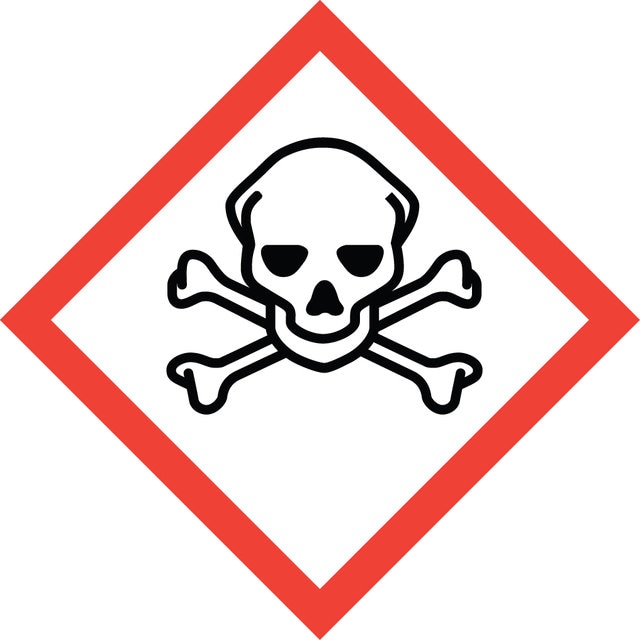
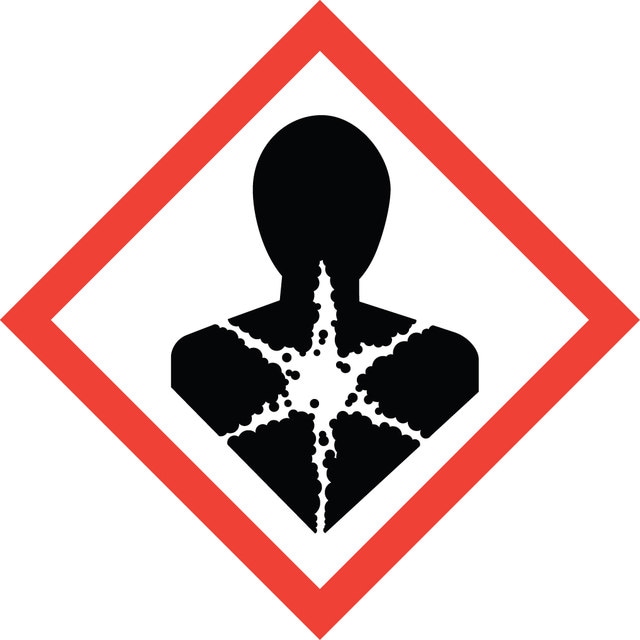
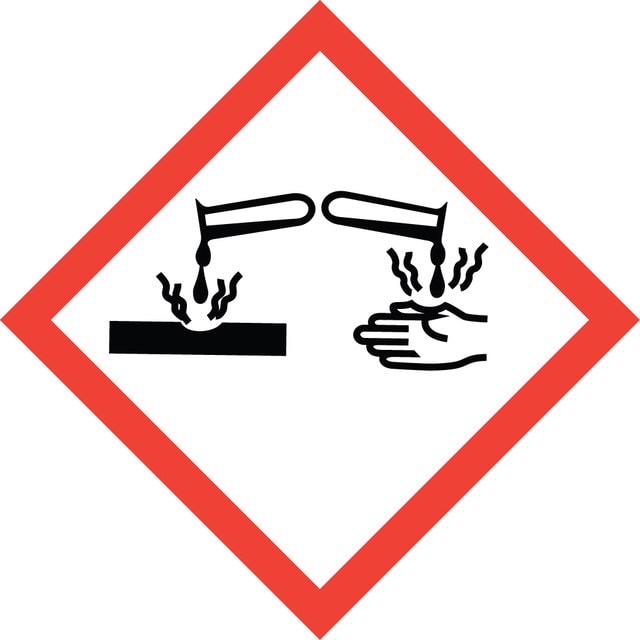
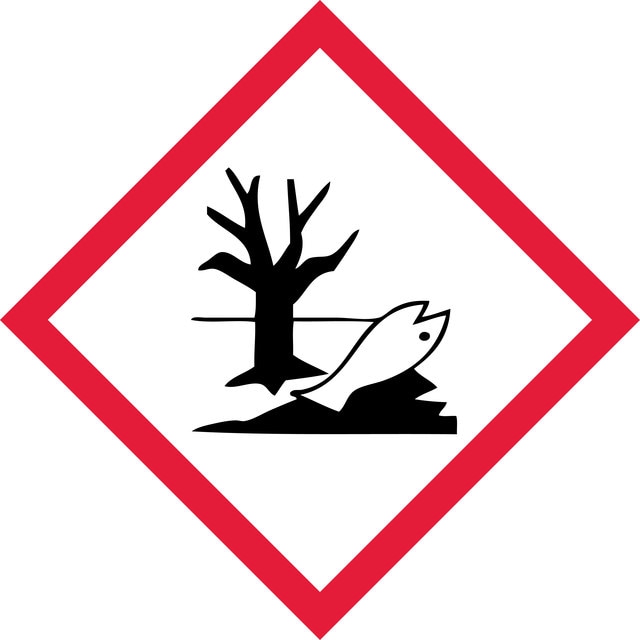
Danger

Hazard Classifications

Acute Tox. 3 Oral - Aquatic Acute 1 - Aquatic Chronic 1 - Eye Dam. 1 - Repr. 1B - Skin Sens. 1

Lagerklasse

6.1C - Combustible acute toxic Cat.3 / toxic compounds or compounds which causing chronic effects

wgk

WGK 3

flash_point_f

Not applicable

flash_point_c

Not applicable

ppe

dust mask type N95 (US), Eyeshields, Faceshields, Gloves


Hier finden Sie alle aktuellen Versionen:

Analysenzertifikate (COA)

Lot/Batch Number

Die passende Version wird nicht angezeigt?

Wenn Sie eine bestimmte Version benötigen, können Sie anhand der Lot- oder Chargennummer nach einem spezifischen Zertifikat suchen.

Besitzen Sie dieses Produkt bereits?

In der Dokumentenbibliothek finden Sie die Dokumentation zu den Produkten, die Sie kürzlich erworben haben.

Die Dokumentenbibliothek aufrufen

Mahmud Tareq Hassan Khan et al.
Journal of medicinal chemistry, 52(1), 48-61 (2008-12-17)
In the present work, 22 compounds of the U.S. NCI compound library (size 273K) were identified as putative thermolysin binders by structure based virtual screening with the ICM software (ICM-VLS). In vitro competitive binding assays confirmed that 12 were thermolysin
G L Apostoli et al.
Journal of thrombosis and haemostasis : JTH, 12(11), 1880-1889 (2014-08-29)
Nitric oxide (NO) is a critical negative regulator of platelets that is implicated in the pathology of thrombotic diseases. Platelets generate NO, but the presence and functional significance of NO synthase (NOS) in platelets is unclear. Inorganic nitrate/nitrite is increasingly
Erik H J G Aarntzen et al.
Clinical cancer research : an official journal of the American Association for Cancer Research, 19(6), 1525-1533 (2013-02-06)
Anticancer dendritic cell (DC) vaccines require the DCs to relocate to lymph nodes (LN) to trigger immune responses. However, these migration rates are typically very poor. Improving the targeting of ex vivo generated DCs to LNs might increase vaccine efficacy
Saverio Tardito et al.
Journal of medicinal chemistry, 55(23), 10448-10459 (2012-11-23)
This study reports the structure-activity relationship of a series of 8-hydroxoquinoline derivatives (8-HQs) and focuses on the cytotoxic activity of 5-Cl-7-I-8-HQ (clioquinol, CQ) copper complex (Cu(CQ)). 8-HQs alone cause a dose-dependent loss of viability of the human tumor HeLa and
Huiguo Lai et al.
Antiviral research, 97(1), 74-80 (2012-11-07)
Four serotypes of dengue virus (DENV1-4), mosquito-borne members of Flaviviridae family cause frequent epidemics causing considerable morbidity and mortality in humans throughout tropical regions of the world. There is no vaccine or antiviral therapeutics available for human use. In a

Unser Team von Wissenschaftlern verfügt über Erfahrung in allen Forschungsbereichen einschließlich Life Science, Materialwissenschaften, chemischer Synthese, Chromatographie, Analytik und vielen mehr..

Setzen Sie sich mit dem technischen Dienst in Verbindung