
47608

Formaldeide
Molecular Biology, BioReagent, ≥36.0% in H2O (T)
Sinonimo/i:
Formalina
Scegli un formato
Informazioni su questo articolo
Vai a
Grado
Molecular Biology
Livello qualitativo
Densità del vapore
1.03 (vs air)
Tensione di vapore
52 mmHg ( 37 °C)
Nome Commerciale
BioReagent
Stato
liquid
Temp. autoaccensione
572 °F
contiene
~10% methanol as stabilizer
Concentrazione
≥36.0% in H2O (T)
36.0-38.0% (aldehyde method)
tecniche
electrophoresis: suitable
Impurezze
≤0.03% free acid (as HCOOH)
Residuo alla calcinazione
≤0.05% (as SO4)
pH
2.8-4.0
Densità
1.09 g/mL at 20 °C
1.09 g/mL at 25 °C (lit.)
Anioni in tracce
chloride (Cl-): ≤10 mg/kg
sulfate (SO42-): ≤20 mg/kg
Cationi in tracce
Ca: ≤5 mg/kg
Cd: ≤1 mg/kg
Co: ≤1 mg/kg
Cr: ≤1 mg/kg
Cu: ≤1 mg/kg
Fe: ≤1 mg/kg
K: ≤20 mg/kg
Mg: ≤1 mg/kg
Mn: ≤1 mg/kg
Na: ≤100 mg/kg
Ni: ≤1 mg/kg
Pb: ≤1 mg/kg
Zn: ≤1 mg/mL
λ
2 M in H2O
Assorbanza UV
λ: 260 nm Amax: 0.01
λ: 280 nm Amax: 0.01
Compatibilità
in accordance for electrophoresis of RNA in agarose gels
Temperatura di conservazione
room temp
Stringa SMILE
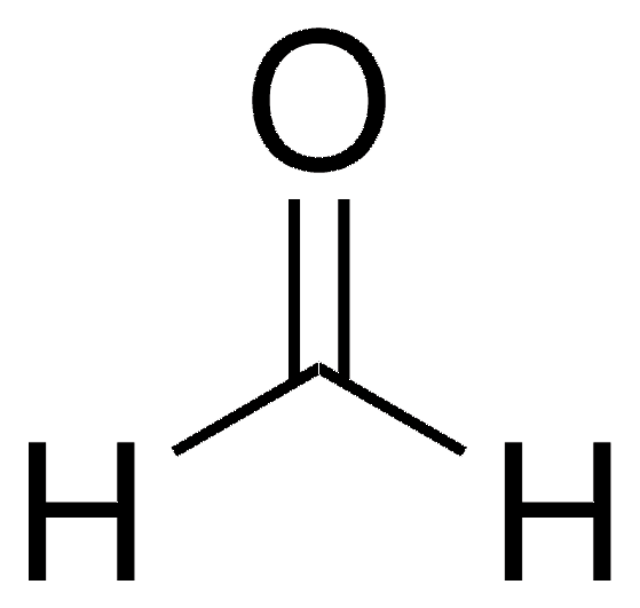
[H]C([H])=O
InChI
1S/CH2O/c1-2/h1H2
WSFSSNUMVMOOMR-UHFFFAOYSA-N
Cerchi prodotti simili? Visita Guida al confronto tra prodotti
1 of 4
Questo articolo | F8775 | 47083-U | 1.04003 |
|---|---|---|---|
| technique(s) electrophoresis: suitable | technique(s) ChIP: suitable, immunofluorescence: suitable, immunohistochemistry: suitable | technique(s) HPLC: suitable, gas chromatography (GC): suitable | technique(s) - |
| grade for molecular biology | grade for molecular biology | grade certified reference material | grade ACS reagent |
| Quality Level 100 | Quality Level 100 | Quality Level 300 | Quality Level 400 |
| form liquid | form liquid | form - | form liquid |
| density 1.09 g/mL at 20 °C, 1.09 g/mL at 25 °C (lit.) | density 1.09 g/mL at 25 °C (lit.) | density 1.09 g/mL at 25 °C (lit.) | density 1.09 g/cm3 at 20 °C, 1.09 g/mL at 25 °C (lit.) |
| cation traces Ca: ≤5 mg/kg, Co: ≤1 mg/kg, Cu: ≤1 mg/kg, K: ≤20 mg/kg, Mn: ≤1 mg/kg, Ni: ≤1 mg/kg, Zn: ≤1 mg/mL, Cd: ≤1 mg/kg, Fe: ≤1 mg/kg, Na: ≤100 mg/kg, Cr: ≤1 mg/kg, Pb: ≤1 mg/kg, Mg: ≤1 mg/kg | cation traces - | cation traces - | cation traces - |
Descrizione generale
It is an aliphatic aldehyde that is widely used in industrial applications for the synthesis of several chemicals such as melamine formaldehyde, urea-formaldehyde, phenol formaldehyde and industrial resins, paraformaldehyde, polyols, chelating agents, slow release fertilizers, 1,4-butanediol and hexamethylenetetramine.[1]
Applicazioni
- denaturation and separation of RNA molecules
- anti-bacterial treatment
- fixation of cells
Azioni biochim/fisiol
Esclusione di responsabilità
Prodotti correlati
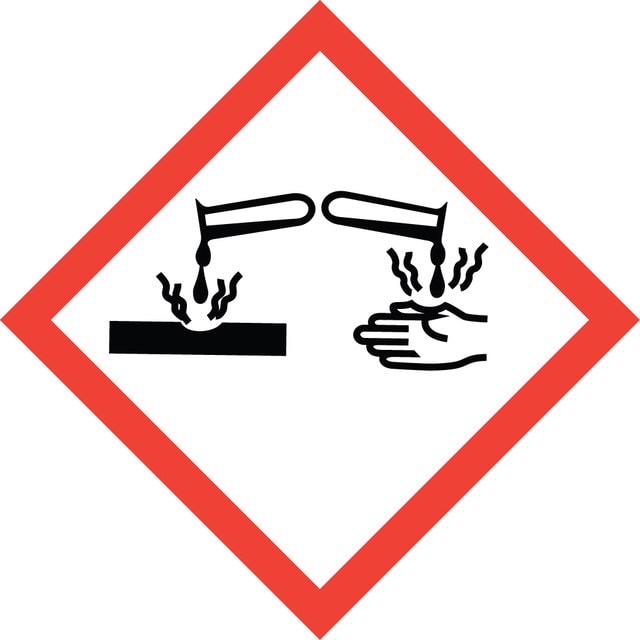
Avvertenze
Danger
Indicazioni di pericolo
Classi di pericolo
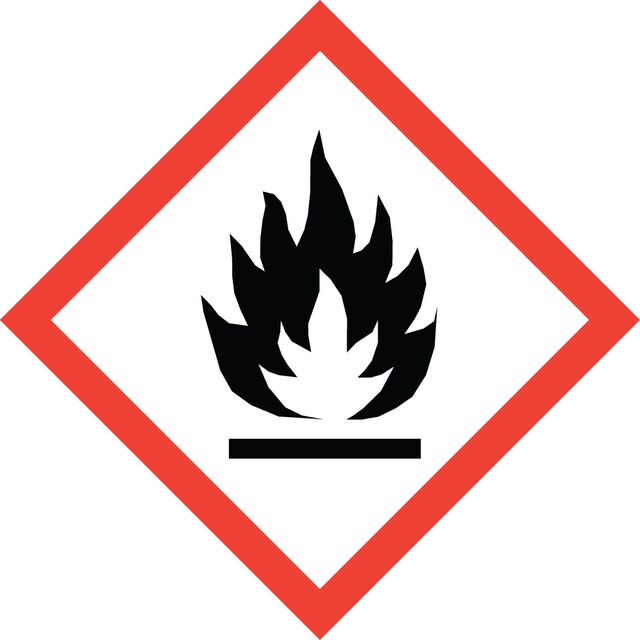
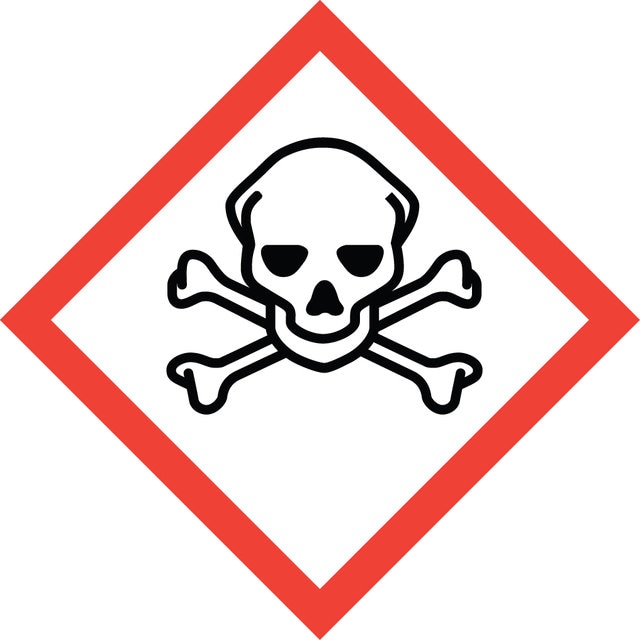
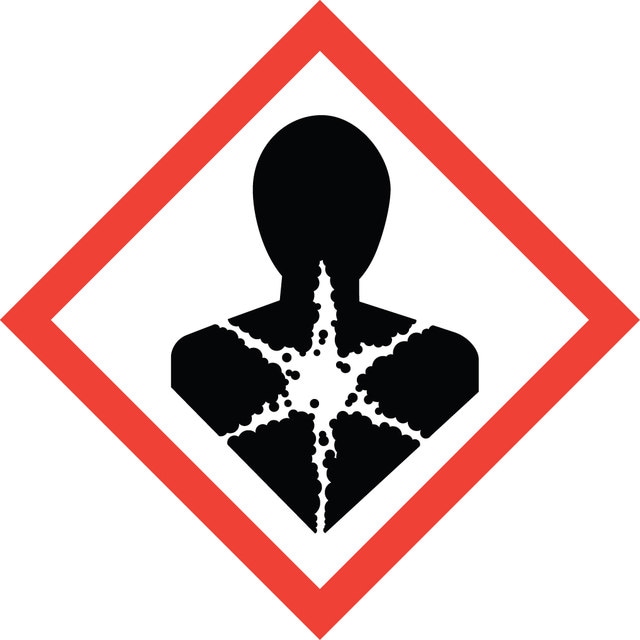
Acute Tox. 2 Inhalation - Acute Tox. 3 Dermal - Acute Tox. 3 Oral - Carc. 1B - Eye Dam. 1 - Flam. Liq. 3 - Muta. 2 - Skin Corr. 1B - Skin Sens. 1 - STOT SE 1 - STOT SE 3
Organi bersaglio
Eyes,Central nervous system, Respiratory system
Codice della classe di stoccaggio
3 - Flammable liquids
Classe di pericolosità dell'acqua (WGK)
WGK 3
Punto d’infiammabilità (°F)
133.0 °F - closed cup
Punto d’infiammabilità (°C)
56.11 °C - closed cup
Dispositivi di protezione individuale
Faceshields, Gloves, Goggles, type ABEK (EN14387) respirator filter
Scegli una delle versioni più recenti:
Possiedi già questo prodotto?
I documenti relativi ai prodotti acquistati recentemente sono disponibili nell’Archivio dei documenti.
Articoli
Organoid culture products to generate tissue and stem cell derived 3D brain, intestinal, gut, lung and cancer tumor organoid models.
Millicell® hanging cell culture inserts for staining and microscopic analysis directly from the insert. Learn to utilize hanging cell culture inserts in barrier measurements.
Contenuto correlato
Active Filters
Il team dei nostri ricercatori vanta grande esperienza in tutte le aree della ricerca quali Life Science, scienza dei materiali, sintesi chimica, cromatografia, discipline analitiche, ecc..
Contatta l'Assistenza Tecnica