Passa al contenuto
Merck

L5777

N-lauroil-sarcosina

BioXtra, ≥97% (TLC)

Sinonimo/i:

N-dodecanoil-N-metil-glicina, Sarcosil NL

Autenticati per visualizzare i prezzi organizzativi e contrattuali.

Scegli un formato

50 G

CHF 133.00

100 G

CHF 221.00

500 G

CHF 885.00

CHF 133.00


Per conoscere la disponibilità, visualizza il carrello

Richiedi un ordine in blocco

Informazioni su questo articolo

Formula condensata:
CH3(CH2)10CON(CH3)CH2COONa
Numero CAS:
Peso molecolare:
293.38
UNSPSC Code:
12161900
NACRES:
NA.25
PubChem Substance ID:
EC Number:
205-281-5
Beilstein/REAXYS Number:
5322974
MDL number:

Vai a

Servizio Tecnico
Hai bisogno di aiuto? Il nostro team di scienziati qualificati è a tua disposizione.
Permettici di aiutarti

Nome del prodotto

N-lauroil-sarcosina, BioXtra, ≥97% (TLC)

InChI key

KSAVQLQVUXSOCR-UHFFFAOYSA-M

InChI

1S/C15H29NO3.Na/c1-3-4-5-6-7-8-9-10-11-12-14(17)16(2)13-15(18)19;/h3-13H2,1-2H3,(H,18,19);/q;+1/p-1

SMILES string

[Na+].CCCCCCCCCCCC(=O)N(C)CC([O-])=O

description

anionic

product line

BioXtra

assay

≥97% (TLC)

form

powder

mol wt

micellar avg mol wt 600
average mol wt 600

aggregation number

2

impurities

≤0.1% Insoluble matter
≤0.1% Phosphorus (P)

CMC

14.6 mM (20-25°C)

solubility

H2O: 0.1 M, clear, colorless to very faintly yellow

density

(1,14 g/cm3 at 20 °C )

cation traces

Al: ≤0.0005%
Ca: ≤0.01%
Cu: ≤0.0005%
Fe: ≤0.005%
K: ≤0.01%
Mg: ≤0.005%
NH4+: ≤0.05%
Pb: ≤0.01%
Zn: ≤0.0005%

Quality Level

Cerchi prodotti simili? Visita Guida al confronto tra prodotti

Confronta articoli simili

Visualizza il confronto per intero

Mostra le differenze

1 of 4

Questo articolo
6174561743L9150
form

powder

form

powder

form

powder

form

powder

assay

≥97% (TLC)

assay

≥97.0% (HPLC)

assay

≥99.0% (HPLC)

assay

≥94%

aggregation number

2

aggregation number

2

aggregation number

2

aggregation number

2

impurities

≤0.1% Insoluble matter, ≤0.1% Phosphorus (P)

impurities

≤7% water

impurities

DNases, none detected, RNases, none detected, insoluble matter, passes filter test, phosphatases, none detected, proteases, none detected

impurities

-

solubility

H2O: 0.1 M, clear, colorless to very faintly yellow

solubility

H2O: very soluble 293 g/L at 20 °C

solubility

H2O: 1 M at 20 °C, clear, colorless

solubility

H2O: 100 mg/mL, clear to slightly hazy, colorless to faintly yellow

description

anionic

description

anionic

description

anionic

description

anionic

Application

Il sale sodico N-lauroil-sarcosina è stato usato in uno studio per seguire l′influenza dell‘istamina rilasciata da cheratinociti epidermali. [1] Usato in uno studio di sviluppo di un metodo semplice per estrarre DNA da oocisti Cryptosporidium. [2]

General description

Il sale sodico dell′acido N-Lauroil-sarcosina è un tensioattivo anionico.

Other Notes

Tensioattivo anionico.

pictograms

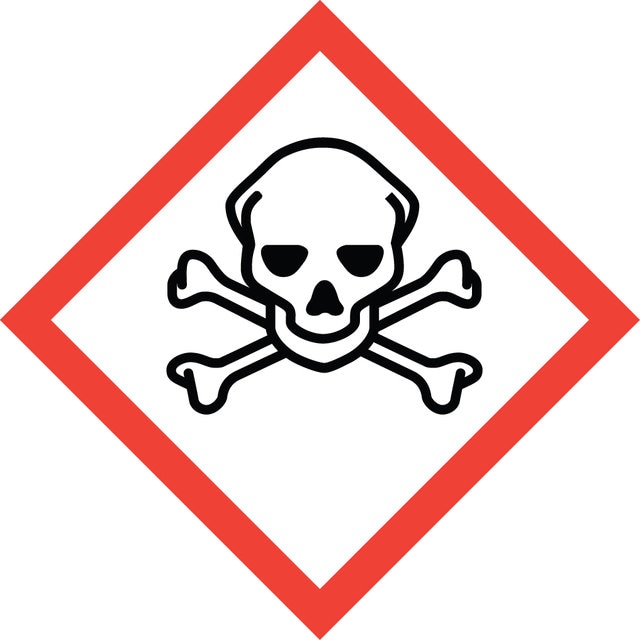
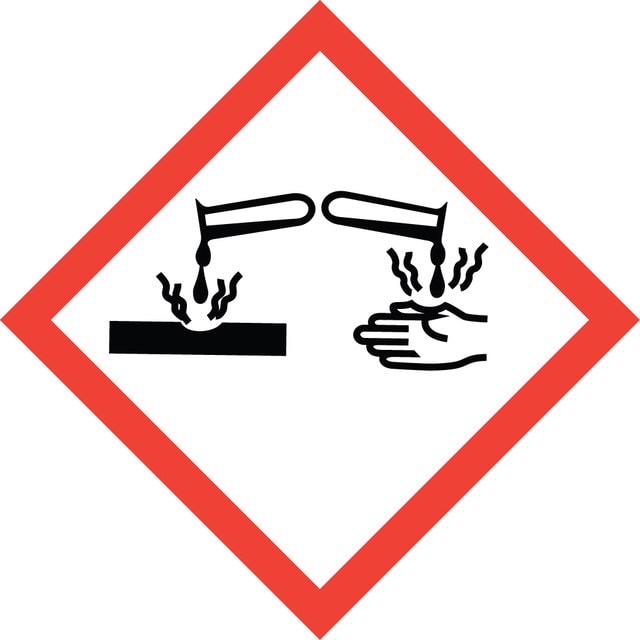
Skull and crossbonesCorrosion

signalword

Danger

Hazard Classifications

Acute Tox. 2 Inhalation - Eye Dam. 1 - Skin Irrit. 2

Classe di stoccaggio

6.1A - Combustible acute toxic Cat. 1 and 2 / very toxic hazardous materials

wgk

WGK 1

flash_point_f

512.6 °F - closed cup

flash_point_c

267 °C - closed cup

ppe

Eyeshields, Gloves, type N95 (US)


Scegli una delle versioni più recenti:

Certificati d'analisi (COA)

Lot/Batch Number

Non trovi la versione di tuo interesse?

Se hai bisogno di una versione specifica, puoi cercare il certificato tramite il numero di lotto.

Possiedi già questo prodotto?

I documenti relativi ai prodotti acquistati recentemente sono disponibili nell’Archivio dei documenti.

Visita l’Archivio dei documenti

Takahiro Sekikawa et al.
New biotechnology, 29(1), 139-143 (2011-09-20)
Detection of low amounts of Cryptosporidium oocysts in raw water sources is considered an important component in the management, prevention and control of Cryptosporidium in drinking water supplies as Cryptosporidium causes massive waterborne outbreaks worldwide. As Cryptosporidium has a robust
Yoshihiro Inami et al.
Yakugaku zasshi : Journal of the Pharmaceutical Society of Japan, 132(11), 1225-1230 (2012-11-06)
The primary function of surfactants is to remove dirt, exfoliated corneum cells, and microorganisms from the skin. However, the use of toiletries such as soaps and shampoos containing surfactants may cause adverse effects such as cutaneous irritation, dryness, and itching.
Gültekin Tamgüney et al.
Proceedings of the National Academy of Sciences of the United States of America, 106(35), 15002-15006 (2009-08-27)
Prions are infectious proteins that cause fatal neurodegenerative diseases. Because astrocytic gliosis marked by the deposition of fibrils composed of GFAP is a prominent feature of prion disease, we asked whether GFAP might be used as a surrogate marker for
Linda A Terry et al.
Veterinary research, 42, 65-65 (2011-05-20)
Classical scrapie is a naturally transmitted prion disease of sheep and goats. Contaminated environments may contribute to the spread of disease and evidence from animal models has implicated urine, blood, saliva, placenta and faeces as possible sources of the infection.
Sang Su Kwak et al.
Nature communications, 11(1), 1377-1377 (2020-03-15)
The relationship between amyloid-β (Aβ) species and tau pathology in Alzheimer's disease (AD) is not fully understood. Here, we provide direct evidence that Aβ42/40 ratio, not total Aβ level, plays a critical role in inducing neurofibrillary tangles (NTFs) in human

Questions

Reviews

No rating value

Active Filters

Il team dei nostri ricercatori vanta grande esperienza in tutte le aree della ricerca quali Life Science, scienza dei materiali, sintesi chimica, cromatografia, discipline analitiche, ecc..

Contatta l'Assistenza Tecnica