
A5665

Adenine
BioReagent, suitable for plant cell culture, ≥99%
Synonym(s):
6-Aminopurine, Vitamin B4
Select a Size
HUF 52,200.00
HUF 174,000.00
About This Item
Skip To
Product Name
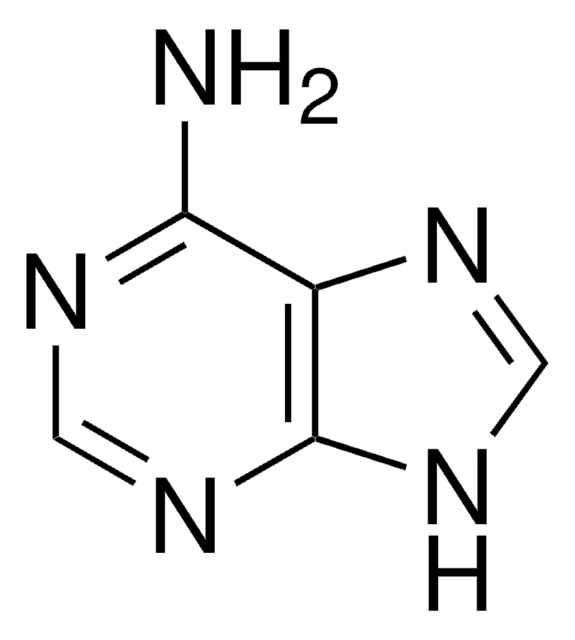
Adenine, BioReagent, suitable for plant cell culture, ≥99%
InChI key
GFFGJBXGBJISGV-UHFFFAOYSA-N
InChI
1S/C5H5N5/c6-4-3-5(9-1-7-3)10-2-8-4/h1-2H,(H3,6,7,8,9,10)
SMILES string
Nc1ncnc2[nH]cnc12
product line
BioReagent
assay
≥99%
form
powder
mol wt
Mw 135.13 g/mol
technique(s)
cell culture | plant: suitable
color
white to off-white
mp
>360 °C (lit.)
solubility
0.5 M HCl: soluble 20 mg/mL, clear to slightly hazy, colorless to faintly yellow
application(s)
agriculture
Quality Level
Gene Information
human ... AKT1(207), GSK3B(2932), LCK(3932), MAP3K1(4214), MAPK14(1432), MAPK8(5599), MAPK9(5601), MAPKAPK2(9261), PRKACA(5566), PRKCA(5578), RAF1(5894), ROCK2(9475)
mouse ... Mapk1(26413)
rat ... Camk2a(25400), Mapk10(25272)
Looking for similar products? Visit Product Comparison Guide
1 of 4
This Item | A8626 | A2786 | PHR1383 |
|---|---|---|---|
| technique(s) cell culture | plant: suitable | technique(s) UV/Vis spectroscopy: suitable | technique(s) cell culture | mammalian: suitable | technique(s) HPLC: suitable, gas chromatography (GC): suitable |
| assay ≥99% | assay ≥99% | assay ≥99% | assay - |
| application(s) agriculture | application(s) - | application(s) - | application(s) pharmaceutical (small molecule) |
| form powder | form powder | form powder | form - |
| solubility 0.5 M HCl: soluble 20 mg/mL, clear to slightly hazy, colorless to faintly yellow | solubility 0.5 M HCl: soluble 20 mg/mL, Grade III, colorless to faint yellow or tan | solubility 0.5 M HCl: soluble 20 mg/mL, clear to slightly hazy, colorless to faintly yellow | solubility - |
| mp >360 °C (lit.) | mp >360 °C (lit.) | mp >360 °C (lit.) | mp >360 °C (lit.) |
Application
General description
signalword
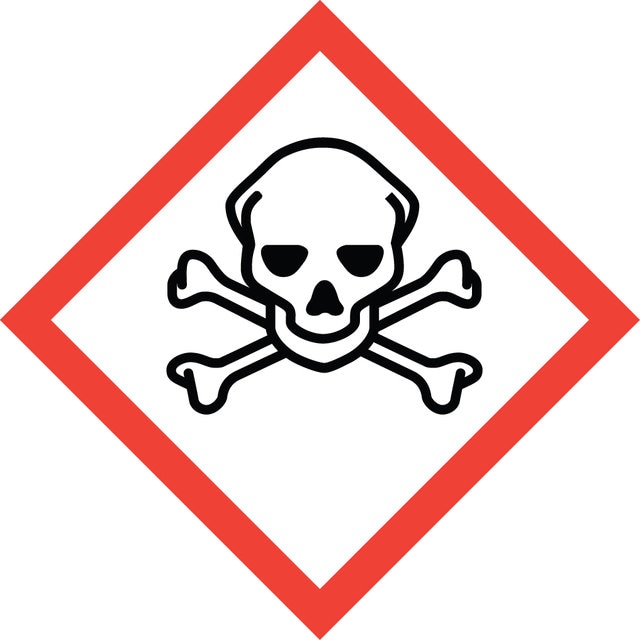
Danger
hcodes
pcodes
Hazard Classifications
Acute Tox. 3 Oral
Storage Class
6.1D - Non-combustible acute toxic Cat.3 / toxic hazardous materials or hazardous materials causing chronic effects
wgk
WGK 3
flash_point_f
Not applicable
flash_point_c
Not applicable
ppe
dust mask type N95 (US), Eyeshields, Faceshields, Gloves
Choose from one of the most recent versions:
Already Own This Product?
Find documentation for the products that you have recently purchased in the Document Library.
Related Content
Active Filters
Our team of scientists has experience in all areas of research including Life Science, Material Science, Chemical Synthesis, Chromatography, Analytical and many others.
Contact Technical Service