Skip to Content
Merck

R2625

Retinoic acid

≥98% (HPLC), powder, RAR and RXR ligand

Synonym(s):

ATRA, Tretinoin, Vitamin A acid, all-trans-Retinoic acid

Sign In to View Organizational & Contract Pricing.

Select a Size

50 MG

HUF 22,800.00

100 MG

HUF 38,400.00

500 MG

HUF 48,800.00

1 G

HUF 83,900.00

5 G

HUF 332,000.00

HUF 22,800.00


Please contact Customer Service for Availability

Request a Bulk Order

About This Item

Empirical Formula (Hill Notation):
C20H28O2
CAS Number:
Molecular Weight:
300.44
NACRES:
NA.77
PubChem Substance ID:
UNSPSC Code:
12352106
EC Number:
206-129-0
MDL number:
Beilstein/REAXYS Number:
2057223

Skip To

Technical Service
Need help? Our team of experienced scientists is here for you.
Let Us Assist

Product Name

Retinoic acid, ≥98% (HPLC), powder

SMILES string

CC1=C(\C=C\C(C)=C\C=C\C(C)=C\C(O)=O)C(C)(C)CCC1

InChI

1S/C20H28O2/c1-15(8-6-9-16(2)14-19(21)22)11-12-18-17(3)10-7-13-20(18,4)5/h6,8-9,11-12,14H,7,10,13H2,1-5H3,(H,21,22)/b9-6+,12-11+,15-8+,16-14+

InChI key

SHGAZHPCJJPHSC-YCNIQYBTSA-N

biological source

synthetic (organic)

assay

≥98% (HPLC)

form

powder

technique(s)

cell culture | mammalian: suitable

color

yellow

mp

180-181 °C (lit.)

solubility

chloroform: 50 mg/mL

storage temp.

−20°C

Quality Level

Looking for similar products? Visit Product Comparison Guide

Compare Similar Items

View Full Comparison

Show Differences

1 of 4

This Item
R46439514417772
assay

≥98% (HPLC)

assay

≥98% (HPLC)

assay

≥97.5% (HPLC)

assay

≥95.0% (HPLC)

form

powder

form

powder

form

(Powder or Powder with Lumps)

form

(Powder or Crystal with Lumps)

technique(s)

cell culture | mammalian: suitable

technique(s)

HPLC: suitable

technique(s)

-

technique(s)

-

Quality Level

200

Quality Level

200

Quality Level

200

Quality Level

100

storage temp.

−20°C

storage temp.

−20°C

storage temp.

−20°C

storage temp.

−20°C

solubility

chloroform: 50 mg/mL

solubility

-

solubility

-

solubility

-

Application

  • Retinoic acid (RA) has been used for the differentiation of embryonic stem cells into motor neurons.[1]
  • It has been used for the differentiation of Xenopus ectoderm into pancreas.[2]
  • It has also been used to study epigenetic regulation by RARα (retinoic acid receptor α).[3]
  • It has been used to study RA signaling of prospermatogonia transition into spermatogonia.[4]

Biochem/physiol Actions

all−trans−Retinoic acid (ATRA) is a ligand for both the retinoic acid receptor (RAR) and the retinoid X receptor (RXR). The bound RAR and RXR act as transcription factors that regulate the growth and differentiation of both normal and malignant cells. Cytochromes P450 (CYPs) catalyze the 4-hydroxylation of ATRA. Retinoic acid primes embryonic stem cells to become neurons.
Ligand for both the retinoic acid receptor (RAR) and the retinoid X receptor (RXR); primes embryonic stem cells to become neurons.

Features and Benefits

This compound is featured on the Nuclear Receptors (Non-Steroids) page of the Handbook of Receptor Classification and Signal Transduction. To browse other handbook pages, click here.

General description

Retinoic acid (RA), a retinoid, exerts a broad range of biological effects. It plays a role in regulating cellular differentiation and proliferation in both normal and transformed cells, potentially influencing oncogenes.[5] All-trans retinoic acid (ATRA) is regarded as the most pertinent and functionally active metabolite of Vitamin-A.[6] RA may serve as a type of signal molecule through a nuclear receptor to regulate regional differentiation in the central nervous system. Moreover, at a concentration of 1 nM (with maximal differentiation at 1 µM), RA induces morphological and functional terminal differentiation in a cell line of human promyelocyte leukemia, indicating its potential involvement in the differentiation of specific hematopoietic cells. Additionally, RA can indirectly impact neuronal differentiation by modifying the expression of neuronal cell surface receptors to peptide growth factors.[7]

Furthermore, RA and other retinoids can also inhibit cellular proliferation and stimulate tyrosinase activity in a human melanoma cell line,[8] while also inhibiting cell-substrate adhesion and motility in melanocytes. ATRA plays a vital role in the formation of the mammalian vascular system. Specifically, it regulates endothelial cell proliferation and vascular remodeling throughout tissue angiogenesis.[6]

signalword

Danger

Hazard Classifications

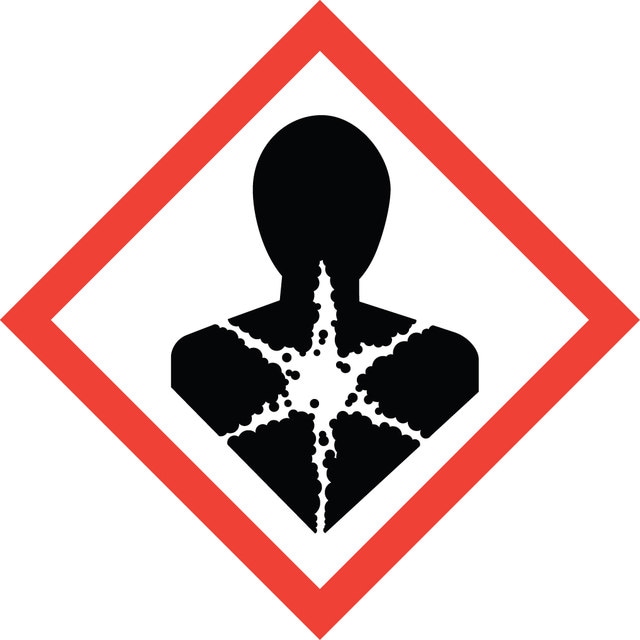
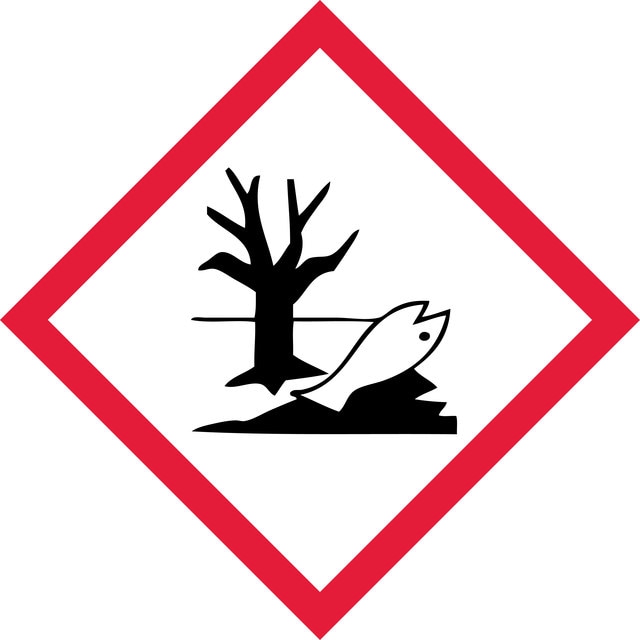
Acute Tox. 4 Oral - Aquatic Acute 1 - Aquatic Chronic 1 - Repr. 1B - Skin Irrit. 2

Storage Class

6.1C - Combustible acute toxic Cat.3 / toxic compounds or compounds which causing chronic effects

wgk

WGK 2

flash_point_f

Not applicable

flash_point_c

Not applicable

ppe

dust mask type N95 (US), Eyeshields, Gloves


Choose from one of the most recent versions:

Certificates of Analysis (COA)

Lot/Batch Number

Don't see the Right Version?

If you require a particular version, you can look up a specific certificate by the Lot or Batch number.

Already Own This Product?

Find documentation for the products that you have recently purchased in the Document Library.

Visit the Document Library

Li Deng et al.
Journal of stroke and cerebrovascular diseases : the official journal of National Stroke Association, 28(9), 2555-2562 (2019-06-30)
The present study aimed to investigate the effects of Mesenchymal stem cells/glial cell line derived neurotrophic factor (MSCs/GDNF) transplantation on nerve reconstruction in rats with intracerebral hemorrhage. GDNF transduction to MSCs was using adenovirus vector pAdEasy-1-pAdTrack-CMV prepared. Intracerebral hemorrhage (ICH)
Lijun Ling et al.
AIDS (London, England), 33(4), F1-F12 (2019-03-05)
The combined combination antiretroviral therapy (cART) and anti-α4β7 RM-Act-1 antibody therapy allows macaques to durably control simian immunodeficiency virus (SIV) rebound after withdrawal of the interventions. Here, we aimed to investigate whether vedolizumab (VDZ), a clinical-grade humanized anti-α4β7 antibody, would
Retinoic acid regulates both expression of the nerve growth factor receptor and sensitivity to nerve growth factor.
Scheibe RJ and Wagner JA
The Journal of Biological Chemistry, 267, 17611-17616 (1992)
Epigenetic regulation by RARa maintains ligand-independent transcriptional activity.
Laursen KB et al.
Nucleic Acids Research, 40, 102-102 (2012)
Retinoic acid induces multiple hallmarks of the prospermatogonia-to-spermatogonia transition in the neonatal mouse.
Busada JT et al.
Biology of Reproduction, 90, 64-64 (2014)

Articles

Derivation and characterization of functional human neural stem cell derived oligodendrocyte progenitor cells (OPCs) that efficiently myelinate primary neurons in culture.

Protocols

Step-by-step culture protocols for neural stem cell culture including NSC isolation, expansion, differentiation and characterization.

Questions

1–10 of 15 Questions  
  1. It was mentioned that the storing temperature is -20. How long can I store the powder in -20 and also how long can I store the 100mM diluted in DMSO in -80 degree?

    1 answer
    1. When stored as recommended, the lyophilized retinoic acid is expected maintain stability at least until the recommended retest date printed on the lot specific certificate of analysis:
      https://www.sigmaaldrich.com/product/sigma/r2625#product-documentation

      Storage of retinoic acid in DMSO at -80c has not evaluated. Protecting the vials from light, and storing the solution under an inert gas will help to extend the stability.

      Helpful?

  2. Can RA solutions be filtered with 0.22 uM filters?

    1 answer
    1. Yes, the RA solutions can be filtered with 0.22 uM filters.
      The Product Information Sheet also mentions: Perform sterile filtering RA solutions before addition to suspension cells.
      https://www.sigmaaldrich.com/deepweb/assets/sigmaaldrich/product/documents/366/983/r2625pis-ms.pdf

      Helpful?

  3. How long can I storage RA in DMSO? (in -70ºC and 4ºC)

    1 answer
    1. To assure optimal performance, solutions should be prepared fresh. However, 40 mg/ml in DMSO or 3.0 mg/ml in ethanol (vortexing may be needed) have been stored at -70°C or -20°C for up to two weeks. Solution should be prepared and stored protected from light and under inert gas. Note that aqueous solutions deteriorate quickly.

      Helpful?

  4. Is it possible to dilute RA in alcohol?

    1 answer
    1. This product is soluble in 95% Ethanol at 2.7mg/mL and in absolute ethanol at 3mg/mL. Please see the link below to review the product datasheet for additional solvents and solution storage information:
      https://www.sigmaaldrich.com/deepweb/assets/sigmaaldrich/product/documents/231/812/r2625pis.pdf

      Helpful?

  5. Can I dissolve retinoic acid in PEG 1500?

    1 answer
    1. This compound has not been tested for solubility in PEG 1500. Various sources report that retinoic acid is slightly soluble in PEG 400. This information has not been validated. Other solvents include DMSO at 25 mg/mL, ethanol at 10 mg/mL, DMF at 20 mg/mL, chloroform at 40 mg/mL, and acetone at 30 mg/mL. Please see the link below to review the product datasheet which includes additional information on solubility and stability:
      https://www.sigmaaldrich.com/deepweb/assets/sigmaaldrich/product/documents/231/812/r2625pis.pdf

      Helpful?

  6. After dissolving the Retinoic acid in DMSO to create a 20mM stock concentration, I diluted it 1,000 times to achieve a final concentration of 20μM. Crystals have formed in the cell culture dishes where I added this solution but not in the DMSO vehicle dishes. Could there be an issue with this lot, or are there other reasons why crystals are forming?

    1 answer
    1. The product R2625 is soluble at around 40 mg/ml in DMSO, yielding a clear solution. Although the stock seems fine, adding the DMSO solution to the media causes crystals to form. This is common when diluting a high-concentration stock made in organic solvents into aqueous media. To address this, try reducing the stock solution to lower concentrations in DMSO multiple times before adding it to the media to ensure an adequate organic environment around the product. There is nothing wrong with the product itself.

      Helpful?

  7. Can I reconstitute retinoic acid in water instead of chlorofrom? What is its solubility in water?

    1 answer
    1. The solubility of each Lot of Retinoic Acid is tested in chloroform as shown on the specification sheet.
      https://www.sigmaaldrich.com/specification-sheets/150/073/R2625-BULK________SIGMA____.pdf

      The Product Information Sheet provides additional solvents, however, water is not recommended:
      "RA is more sensitive to light, heat, and air in solution. It is practically insoluble in water; slightly soluble in alcohol and chloroform, sparingly soluble in ether, and soluble in methylene chloride. RA is soluble at about 40 mg/ml in DMSO and at about 2.7 mg/ml in 95% ethanol (vortexing may be needed). "
      https://www.sigmaaldrich.com/deepweb/assets/sigmaaldrich/product/documents/231/812/r2625pis.pdf

      Helpful?

  8. How long can you store RA in solution?

    1 answer
    1. Stock solutions can be stored at -70 °C for up to two weeks.

      Helpful?

  9. I bought 1 gram. How do I crush the vial? I can't break it with force.

    1 answer
    1. The 1 G pack size is packaged in a 5 mL glass ampule. This packaging may be opened using ampule breakers. Kindly review the following links: https://www.sigmaaldrich.com/US/en/product/aldrich/z693847 and https://www.sigmaaldrich.com/US/en/product/aldrich/z122890.

      Helpful?

  10. Could we reconstitute Retinoic Acid 30mM in DMSO instead of chloroform?

    1 answer
    1. Yes, this product is soluble in DMSO at 25 mg/mL.

      Helpful?

1–10 of 15 Questions  

Reviews

No rating value

Active Filters

Our team of scientists has experience in all areas of research including Life Science, Material Science, Chemical Synthesis, Chromatography, Analytical and many others.

Contact Technical Service