




If this product has an expiration or retest date, it will be shown on the Certificate of Analysis (COA, CofA). If there is no retest or expiration date listed on the product's COA, we do not have suitable stability data to determine a shelf life. For these products, the only date on the COA will be the release date; a retest, expiration, or use-by-date will not be displayed.
For all products, we recommend handling per defined conditions as printed in our product literature and website product descriptions. We recommend that products should be routinely inspected by customers to ensure they perform as expected.
For products without retest or expiration dates, our standard warranty of 1 year from the date of shipment is applicable.
For more information, please refer to the Product Dating Information document: https://www.sigmaaldrich.com/deepweb/assets/sigmaaldrich/marketing/global/documents/418/501/product-dating-information-06-25-mk.pdf
A5486

Azoxymethane
13.4 M, ≥98%
Synonym(s):
AOM
Select a Size
| Size/SKU | Availability | Price |
|---|---|---|
25 mg | Check Cart for Availability | $504.00 |
100 mg | Check Cart for Availability | $1,530.00 |
About This Item
Quality Segment
assay
≥98%
form
liquid
composition
methylene chloride, ≤1%
storage condition
(Keep container tightly closed in a dry and well-ventilated place.)
concentration
13.4 M
color
colorless
bp
97-99 °C (lit.)
density
0.991 g/mL at 25 °C (lit.)
application(s)
genomic analysis
storage temp.
−20°C
SMILES string
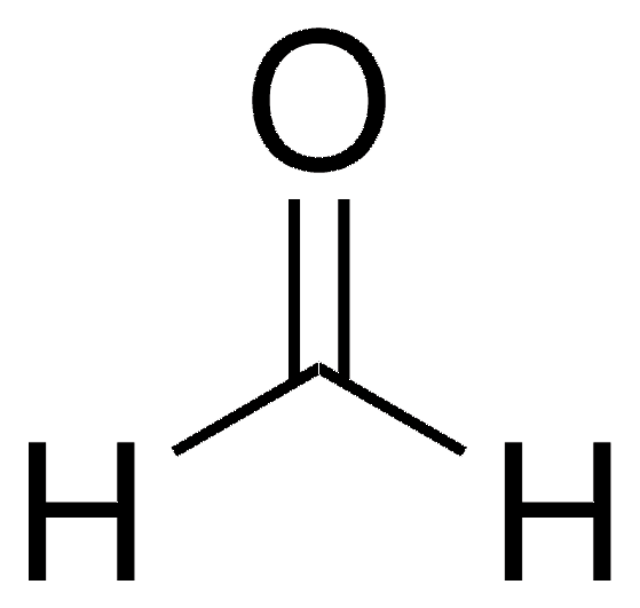
C\N=[N+](/C)[O-]
InChI
1S/C2H6N2O/c1-3-4(2)5/h1-2H3/b4-3+
InChI key
DGAKHGXRMXWHBX-ONEGZZNKSA-N
General description
Application
Biochem/physiol Actions
Features and Benefits
Other Notes
1 of 1
This Item | |||
|---|---|---|---|
| description 13.4 M, ≥98% | description Molecular Biology, 36.5-38% in H2O | description ≥90% (LC/MS-ELSD) | description ≥90% (LC/MS-ELSD) |
| assay ≥98% | assay - | assay ≥90% (LC/MS-ELSD) | assay ≥90% (LC/MS-ELSD) |
| form liquid | form liquid | form solid | form solid |
| Quality Level 200 | Quality Level 100 | Quality Level - | Quality Level - |
| storage temp. −20°C | storage temp. 15-25°C | storage temp. −20°C | storage temp. −20°C |
| storage condition (Keep container tightly closed in a dry and well-ventilated place.) | storage condition - | storage condition - | storage condition - |
| color colorless | color - | color - | color - |
Signal Word
Danger
Hazard Codes
Precautionary Statements
Hazard Classifications
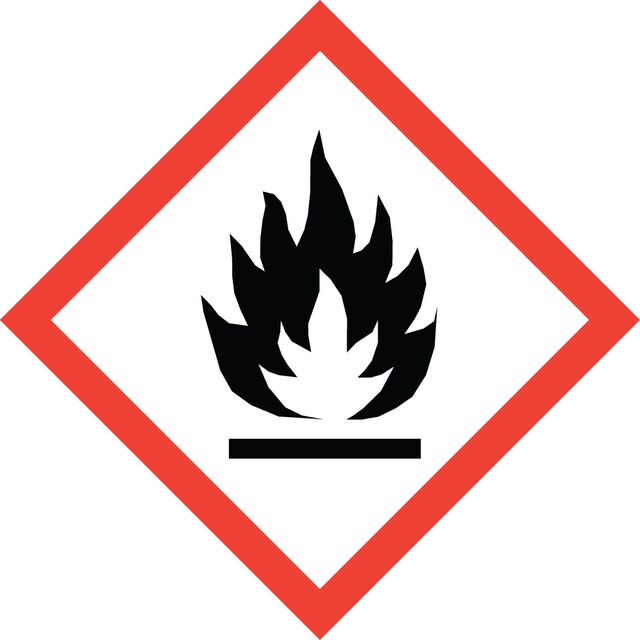
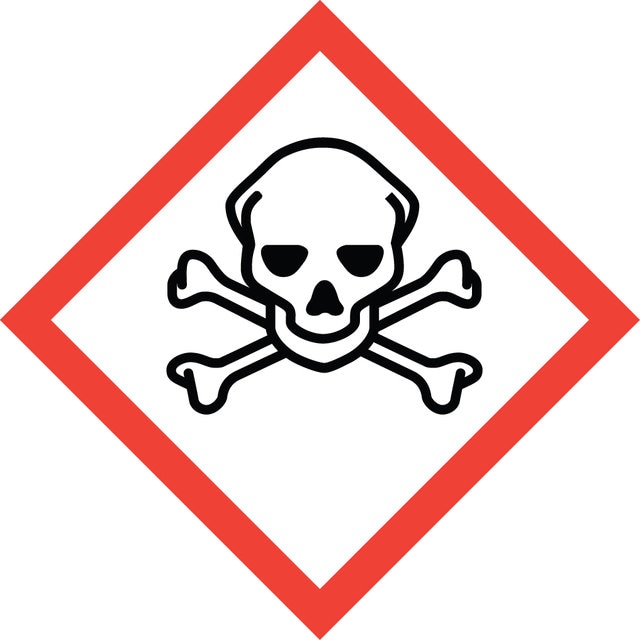
Acute Tox. 2 Oral - Carc. 1B - Eye Irrit. 2 - Flam. Liq. 3 - Skin Irrit. 2
Storage Class
3 - Flammable liquids
WGK
WGK 3
Flash Point (°F)
75.2 °F
Flash Point (°C)
24 °C
Choose from one of the most recent versions:
Already Own This Product?
Find documentation for the products that you have recently purchased in the Document Library.
-
How can I determine the shelf life / expiration / retest date of this product?
1 answer-
Helpful?
-
-
How is shipping temperature determined? And how is it related to the product storage temperature?
1 answer-
Products may be shipped at a different temperature than the recommended long-term storage temperature. If the product quality is sensitive to short-term exposure to conditions other than the recommended long-term storage, it will be shipped on wet or dry-ice. If the product quality is NOT affected by short-term exposure to conditions other than the recommended long-term storage, it will be shipped at ambient temperature. As shipping routes are configured for minimum transit times, shipping at ambient temperature helps control shipping costs for our customers. For more information, please refer to the Storage and Transport Conditions document: https://www.sigmaaldrich.com/deepweb/assets/sigmaaldrich/marketing/global/documents/316/622/storage-transport-conditions-mk.pdf
Helpful?
-
-
What is the solubility of product A5486 (Azoxymethane, CAS number 25843-45-2)?
1 answer-
The solubility of Azoxymethane (CAS 25843-45-2) is as follows:
• Water solubility: approximately 100mg/mL
• DMSO solubility: approximately 100mg/mL
• Ethanol (95%) solubility: approximately 100mg/mL
• Acetone solubility: approximately 100mg/mLHelpful?
-
-
Could I know the concentration (mg/ml) and volume of Azoxymethane 13.4M in A5486-100MG?
1 answer-
This product is considered to be a pure/neat chemical (not in solution), with a purity specification of at least 98%. The g/mL would be the density, of 0.991 g/mL. The volume of 100 mg is going to be approximately 100.9 microliters, but products are often over-filled by a few percent, so it would be recommended to still weigh the material during or prior to use.
Helpful?
-
-
Is Axozymethane volatile?
1 answer-
Yes, this compound is considered to be a volatile substance. Please review the entire Safety Data Sheet before handling it.
Helpful?
-
-
How should stock solutions of Azoxymethane be stored, and for how long can they be kept?
1 answer-
No solution stability studies have been performed by Sigma-Aldrich. Because the solution stability is unknown, solutions should be prepared fresh for use.
Helpful?
-
-
What is the Department of Transportation shipping information for this product?
1 answer-
Transportation information can be found in Section 14 of the product's (M)SDS.To access the shipping information for this material, use the link on the product detail page for the product.
Helpful?
-
-
What are the approximate volumes for the of 25 mg and 100 mg, package sizes of Product No. A5486, Azoxymethane?
1 answer-
Using the literature value for density of approximately 0.991 g/mL (at 25 °C), the approximate volumes are 25 μL for the 25 mg package size and 100 μl for the 100 mg package size.
Helpful?
-
-
How does the storage temperature relate to shipping conditions?
1 answer-
The storage conditions that a Sigma-Aldrich catalog and label recommend for products are deliberately conservative. For many products, long-term storage at low temperatures will increase the time during which they are expected to remain in specification and therefore are labeled accordingly. Where short-term storage, shipping time frame, or exposure to conditions other than those recommended for long-term storage will not affect product quality, Sigma-Aldrich will ship at ambient temperature. The products sensitive to short-term exposure to conditions other than their recommended long-term storage are shipped on wet or dry ice. Ambient temperature shipping helps to control shipping costs for our customers. At any time, our customers can request wet- or dry-ice shipment, but the special handling is at customer expense if our product history indicates that the product is stable for regular shipment.
Helpful?
-
-
How does azoxymethane act to cause cancers?
1 answer-
Azoxymethane is a methylating agent which forms 6-O-methylguanine in DNA. Unless this methylated base is repaired by cellular enzymes, it results in a base mismatch that subsequently causes tumors in the tissue.
Helpful?
-