



If this product has an expiration or retest date, it will be shown on the Certificate of Analysis (COA, CofA). If there is no retest or expiration date listed on the product's COA, we do not have suitable stability data to determine a shelf life. For these products, the only date on the COA will be the release date; a retest, expiration, or use-by-date will not be displayed.
For all products, we recommend handling per defined conditions as printed in our product literature and website product descriptions. We recommend that products should be routinely inspected by customers to ensure they perform as expected.
For products without retest or expiration dates, our standard warranty of 1 year from the date of shipment is applicable.
For more information, please refer to the Product Dating Information document: https://www.sigmaaldrich.com/deepweb/assets/sigmaaldrich/marketing/global/documents/418/501/product-dating-information-06-25-mk.pdf
D8638

Dodecyltrimethylammonium bromide
≥98%
Synonym(s):
Lauryltrimethylammonium bromide
Select a Size
| Size/SKU | Availability | Price |
|---|---|---|
25 g | Available to ship TODAY | $171.00 |
100 g | Available to ship TODAY | $442.00 |
About This Item
$171.00
Available to ship TODAYDetails
biological source
synthetic (oragnic)
Quality Segment
description
cationic
assay
≥98%
form
powder
mol wt
308.34 g/mol
mp
246 °C (dec.) (lit.)
solubility
954 g/L at 20 °C
density
1.17 g/cm3 at 20 °C (68 °F)
application(s)
(Solubilizing proteins, cell lysis)
SMILES string
[Br-].CCCCCCCCCCCC[N+](C)(C)C
InChI
1S/C15H34N.BrH/c1-5-6-7-8-9-10-11-12-13-14-15-16(2,3)4;/h5-15H2,1-4H3;1H/q+1;/p-1
InChI key
XJWSAJYUBXQQDR-UHFFFAOYSA-M
General description
Beyond protein solubilization, this cationic detergent also finds application in DNA extraction procedures. Its ability to interact with DNA and alter its conformation facilitates the release of DNA from cellular components, enabling its subsequent purification and analysis. This property is particularly useful in the isolation of DNA from various biological samples, including tissues, cells, and microorganisms. Furthermore, DTAB demonstrates effectiveness in cell lysis processes. Its ability to disrupt cell membranes and release intracellular components makes it a valuable tool for breaking down cells and accessing their contents. This property has applications in various biological studies, including protein extraction, enzyme assays, and cellular component analysis.
Dodecyltrimethylammonium bromide (DTAB) stands as a versatile and widely applicable surfactant with a diverse range of applications in proteomics research, cell biology, and biochemical research. Its ability to solubilize proteins and peptides, extract DNA, and lyse cells makes it an essential tool for various biological studies and analytical techniques.
Application
Features and Benefits
Other Notes
1 of 1
This Item | |||
|---|---|---|---|
| description ≥98% | description suitable for ion pair chromatography, LiChropur™, ≥98.5% (AT) | description BioXtra, ~99% | description ≥98% |
| form powder | form liquid | form crystals | form (solids) |
| assay ≥98% | assay ≥98.5% (AT) | assay ~99% | assay ≥98% |
| application(s) (Solubilizing proteins, cell lysis) | application(s) - | application(s) - | application(s) genomic analysis |
| Quality Level 200 | Quality Level 100 | Quality Level 200 | Quality Level 300 |
| biological source synthetic (oragnic) | biological source - | biological source - | biological source - |
| mp 246 °C (dec.) (lit.) | mp 246 °C (dec.) (lit.) | mp 246 °C (dec.) (lit.) | mp 248-251 °C (lit.) |
Still not finding the right product?
Explore all of our products under Dodecyltrimethylammonium bromide
Signal Word
Danger
Hazard Codes
Precautionary Statements
Hazard Classifications
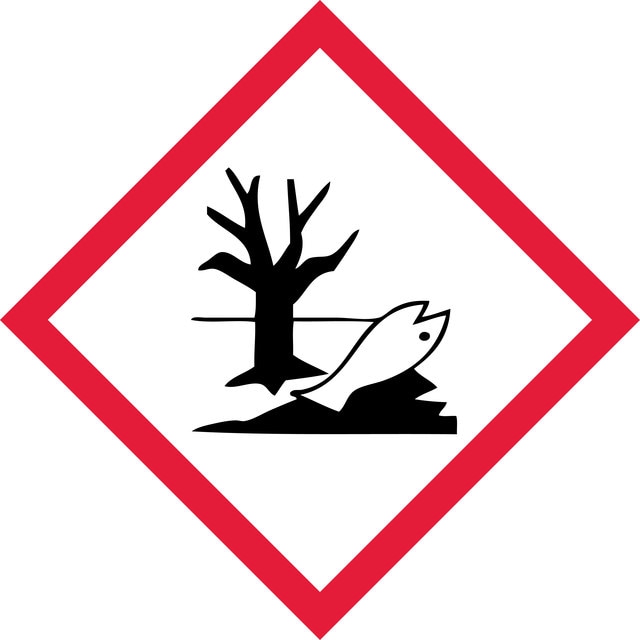
Acute Tox. 3 Oral - Aquatic Acute 1 - Aquatic Chronic 1 - Eye Irrit. 2 - Skin Irrit. 2
Storage Class
6.1C - Combustible acute toxic Cat.3 / toxic compounds or compounds which causing chronic effects
WGK
WGK 3
Flash Point (°F)
Not applicable
Flash Point (°C)
Not applicable
PPE (personal protective equipment)
dust mask type N95 (US), Eyeshields, Gloves
Choose from one of the most recent versions:
Already Own This Product?
Find documentation for the products that you have recently purchased in the Document Library.
-
How can I determine the shelf life / expiration / retest date of this product?
1 answer-
Helpful?
-
-
How is shipping temperature determined? And how is it related to the product storage temperature?
1 answer-
Products may be shipped at a different temperature than the recommended long-term storage temperature. If the product quality is sensitive to short-term exposure to conditions other than the recommended long-term storage, it will be shipped on wet or dry-ice. If the product quality is NOT affected by short-term exposure to conditions other than the recommended long-term storage, it will be shipped at ambient temperature. As shipping routes are configured for minimum transit times, shipping at ambient temperature helps control shipping costs for our customers. For more information, please refer to the Storage and Transport Conditions document: https://www.sigmaaldrich.com/deepweb/assets/sigmaaldrich/marketing/global/documents/316/622/storage-transport-conditions-mk.pdf
Helpful?
-