


If this product has an expiration or retest date, it will be shown on the Certificate of Analysis (COA, CofA). If there is no retest or expiration date listed on the product's COA, we do not have suitable stability data to determine a shelf life. For these products, the only date on the COA will be the release date; a retest, expiration, or use-by-date will not be displayed.
For all products, we recommend handling per defined conditions as printed in our product literature and website product descriptions. We recommend that products should be routinely inspected by customers to ensure they perform as expected.
For products without retest or expiration dates, our standard warranty of 1 year from the date of shipment is applicable.
For more information, please refer to the Product Dating Information document: https://www.sigmaaldrich.com/deepweb/assets/sigmaaldrich/marketing/global/documents/418/501/product-dating-information-06-25-mk.pdf
205273

Titan(IV)isopropoxid
97%
Synonym(e):
TTIP, Orthotitansäure-tetraisopropylester, Titan(IV)-isopropylat
Größe auswählen
Über diesen Artikel
Fortfahren mit
Produktname
Titan(IV)isopropoxid, 97%
InChI key
VXUYXOFXAQZZMF-UHFFFAOYSA-N
InChI
1S/4C3H7O.Ti/c4*1-3(2)4;/h4*3H,1-2H3;/q4*-1;+4
SMILES string
CC(C)O[Ti](OC(C)C)(OC(C)C)OC(C)C
assay
97%
form
liquid
reaction suitability
core: titanium
reagent type: catalyst
refractive index
n20/D 1.464 (lit.)
bp
232 °C (lit.)
mp
14-17 °C (lit.)
density
0.96 g/mL at 20 °C (lit.)
Quality Level
Suchen Sie nach ähnlichen Produkten? Aufrufen Leitfaden zum Produktvergleich
1 of 4
Dieser Artikel | 87560 | 377996 | 687502 |
|---|---|---|---|
| assay 97% | assay ≥97.0% | assay 99.999% trace metals basis | assay 99.999% |
| reaction suitability core: titanium, reagent type: catalyst | reaction suitability core: titanium, reagent type: Lewis acid, reagent type: catalyst | reaction suitability core: titanium, reagent type: catalyst | reaction suitability core: titanium, reagent type: catalyst |
| form liquid | form liquid | form liquid | form liquid |
| Quality Level 200 | Quality Level 200 | Quality Level 200 | Quality Level 100 |
| mp 14-17 °C (lit.) | mp 14-17 °C (lit.) | mp 14-17 °C (lit.) | mp 14-17 °C (lit.) |
| bp 232 °C (lit.) | bp 232 °C (lit.) | bp 232 °C (lit.) | bp 232 °C (lit.) |
Application
General description
Legal Information
Packaging
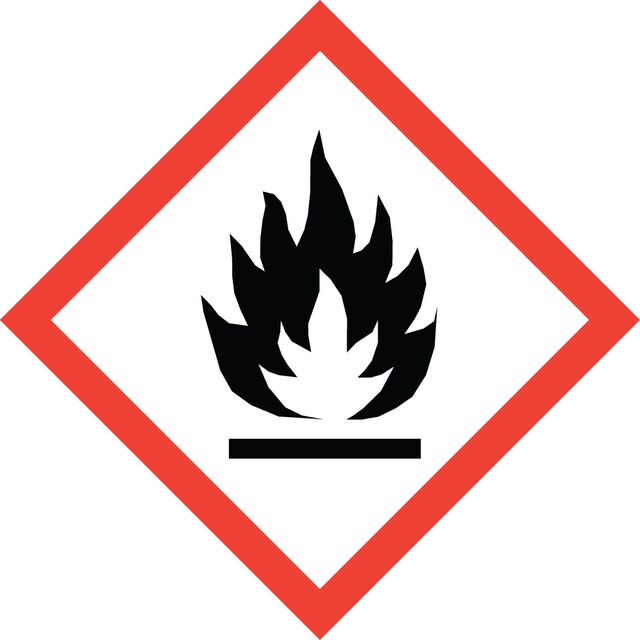
signalword
Warning
hcodes
Hazard Classifications
Eye Irrit. 2 - Flam. Liq. 3 - STOT SE 3
target_organs
Central nervous system
Lagerklasse
3 - Flammable liquids
wgk
WGK 1
flash_point_f
105.8 °F - Pensky-Martens closed cup
flash_point_c
41 °C - Pensky-Martens closed cup
ppe
Eyeshields, Faceshields, Gloves, type ABEK (EN14387) respirator filter
Hier finden Sie alle aktuellen Versionen:
Besitzen Sie dieses Produkt bereits?
In der Dokumentenbibliothek finden Sie die Dokumentation zu den Produkten, die Sie kürzlich erworben haben.
Artikel
Few Monolayer Atomic Layer Deposition (ALD) on Surfaces and Interfaces for Energy Applications
Electrospinning technique applications discussed, emphasizing control of nanofibers and assembly into 3D architectures.
Titanium dioxide applications: Semiconducting material characteristics and diverse functionalities.
-
How can I determine the shelf life / expiration / retest date of this product?
1 answer-
Helpful?
-
-
How is shipping temperature determined? And how is it related to the product storage temperature?
1 answer-
Products may be shipped at a different temperature than the recommended long-term storage temperature. If the product quality is sensitive to short-term exposure to conditions other than the recommended long-term storage, it will be shipped on wet or dry-ice. If the product quality is NOT affected by short-term exposure to conditions other than the recommended long-term storage, it will be shipped at ambient temperature. As shipping routes are configured for minimum transit times, shipping at ambient temperature helps control shipping costs for our customers. For more information, please refer to the Storage and Transport Conditions document: https://www.sigmaaldrich.com/deepweb/assets/sigmaaldrich/marketing/global/documents/316/622/storage-transport-conditions-mk.pdf
Helpful?
-
-
Buongiorno, utilizziamo questo reagente per determinare la presenza di acqua nei solventi acquistati. Sapreste dirmi qual è la quantità minima di acqua che è possibile rilevare?
1 answer-
While this material will react with water to form TiO2, the product is not specifically tested or used as a water scavenger. Unfortunately, there is no internal method or information available regarding this reaction. A brief search of the literature did not reveal any additional information.
Helpful?
-
-
What is the equivalent weight of ttip
1 answer-
The equivalent weight of this product can be calculated by dividing the molecular weight by the net positive valence. It has 284.22 grams of Titanium(IV) isopropoxide per mole of titanium, and 71.055 grams of Titanium(IV) isopropoxide per mole of isopropoxide. The equivalent weight would depend on the source. That is, if you are looking at the material as a source of Titanium(IV), you would use 284.22 grams. But if they are looking at it as a source of the strong base (isopropoxide ion), you would use 71.055 grams. When looking at the Titanium(IV) isopropoxide per mole of titanium, there are +4 positively charged valence electrons which resulted 71.055 for the equivalent weight.
Helpful?
-
-
What is the difference between this and 87560 ttip?
1 answer-
Products 205273 and 87560 have the same Chemical Abstract Service (CAS) number
546-68-9, which means chemically they are the same substance. The difference between the two products are the product specifications. The product specification sheets for each product are linked below to facilitate a comparison for the specific application needs.https://www.sigmaaldrich.com/specification-sheet/ALDRICH/87560
https://www.sigmaaldrich.com/specification-sheets/355/956/205273-BULK.pdfHelpful?
-
-
What is the viscosity of Product 205273, Titanium (IV) Isopropoxide?
1 answer-
The viscosity of titanium (IV) isopropoxide is 4.5 centipoise at 25 deg C.
Helpful?
-
-
What is the Department of Transportation shipping information for this product?
1 answer-
Transportation information can be found in Section 14 of the product's (M)SDS.To access the shipping information for this material, use the link on the product detail page for the product.
Helpful?
-
-
What needs to be done if Product 205273, Titanium (IV) Isopropoxide is a solid instead of a liquid?
1 answer-
The material will melt/freeze at 18-20 deg C, therefore the material can freeze when shipped during the winter months. It can be warmed in a water bath to about 30 deg C to change the state without harming the chemical.
Helpful?
-
-
What is Product 205273, Titanium (IV) Isopropoxide soluble in?
1 answer-
This chemical is very soluble in ethanol, carbon tetrachloride, hexane, benzene, or isopropanol. Water is not recommended as a solvent because titanium (IV) isopropoxide will hydrolyze. (Precautions should be taken to make sure the solvents used do not contain any water - anhydrous grades would be recommended).
Helpful?
-
Active Filters
Unser Team von Wissenschaftlern verfügt über Erfahrung in allen Forschungsbereichen einschließlich Life Science, Materialwissenschaften, chemischer Synthese, Chromatographie, Analytik und vielen mehr..
Setzen Sie sich mit dem technischen Dienst in Verbindung