


A usage protocol for the kit's usage in measuring antioxidant capacity in the seminal plasma of fish sperm has not been developed by Technical Service. Please review this article for a protocol.
http://dx.doi.org/10.1016/j.aquaculture.2013.03.010
CS0790

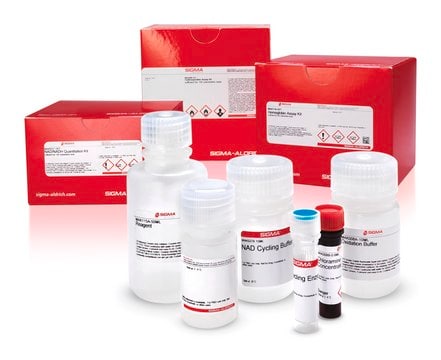
Antioxidant Assay Kit
sufficient for 200 tests
Synonym(s):
Oxidative Stress Detection Kit
Sign In to View Organizational & Contract Pricing.
Select a Size
Change View
| Size/SKU | Availability | Price |
|---|---|---|
1 kit | Check Cart for Availability | $935.00 |
About This Item
NACRES:
NA.84
UNSPSC Code:
12161503
usage
sufficient for 200 tests
Quality Segment
detection method
colorimetric
shipped in
wet ice
storage temp.
2-8°C
General description
Free radicals or reactive oxygen species (ROS) are produced during biochemical redox reactions as part of normal physiological cell metabolism (protection from infectious organisms) and as a response to environmental factors such as UV light, cigarette smoke, environmental pollutants, and g-radiation. Once formed, ROS attack cellular components causing damage to lipids, proteins, and DNA, which can initiate numerous diseases, including cancer, atherosclerosis, rheumatoid arthritis, diabetes, liver damage, and central nervous system disorders.
In the presence of antioxidants the radical cation is suppressed to an extent dependent on the activity of the antioxidant and the color intensity is decreased proportionally. Trolox, a water-soluble vitamin E analogue, serves as a standard or a control antioxidant.
Application
It was tested on A431 and CHO cell lysates; rat brain, liver, and kidney lysates; human plasma, serum, urine, and saliva.
Suitable for the measurement of the total antioxidant capacity of plasma, serum, urine, saliva, cells, and tissue lysates
Antioxidant assay kit provides all of the reagents required for an efficient measurement of the total antioxidant capacity of plasma, serum, urine, saliva, cells, and tissue lysates. It has also been used to measure the radical cation (2,2′-azino-di-[3-ethylbenzthiazoline sulphonate]) (ABTS+) scavenging capacity.
Biochem/physiol Actions
The principle of the antioxidant assay is formation of a ferryl myoglobin radical from metmyoglobin and hydrogen peroxide, which oxidizes the ABTS (2,2¢-azino-bis(3-ethylbenzthiazoline-6-sulfonic acid) to produce a radical cation, ABTS·+ , a soluble chromogen that is green in color and can be determined spectrophotometrically at 405 nm.
Preparation Note
Myoglobin Solutions are to be stored at -20 °C after reconstitution.
Trolox Working Solution is to be stored at -20 °C after reconstitution.
ABTS Substrate Solution is to be stored at 4 °C for 2 weeks or at -20 °C for 1 month.
Trolox Working Solution is to be stored at -20 °C after reconstitution.
ABTS Substrate Solution is to be stored at 4 °C for 2 weeks or at -20 °C for 1 month.
Reagents are to be prepared with ultrapure water.
Legal Information
1 of 1
This Item | |||
|---|---|---|---|
| description sufficient for 200 tests | description sufficient for 100 colorimetric tests | description sufficient for 250 colorimetric tests | description sufficient for 100 colorimetric tests |
| Quality Level 200 | Quality Level - | Quality Level - | Quality Level 100 |
| usage sufficient for 200 tests | usage sufficient for 100 colorimetric tests | usage - | usage - |
| detection method colorimetric | detection method colorimetric | detection method colorimetric | detection method colorimetric |
| shipped in wet ice | shipped in - | shipped in - | shipped in ambient |
| storage temp. 2-8°C | storage temp. - | storage temp. 2-8°C | storage temp. −20°C |
Still not finding the right product?
Explore all of our products under Antioxidant Assay Kit
Kit Components Only
Product No.
Description
- Assay Buffer 10X 30 mL
- Stop Solution 20 mL
- Hydrogen Peroxide, 3% solution 1 mL
- Myoglobin from horse heart 2 x 1
- (±)-6-Hydroxy-2,5,7,8-tetramethylchromane-2-carboxylic acid (Trolox®) 2 x 1
- ABTS, 10 mg tablets 4 tab
- Phosphate-Citrate Buffer, pH 5 4 tab
Signal Word
Danger
Precautionary Statements
Target Organs
Respiratory system
Storage Class
10 - Combustible liquids
WGK
WGK 3
Flash Point (°F)
Not applicable
Flash Point (°C)
Not applicable
Hazard Codes
Hazard Classifications
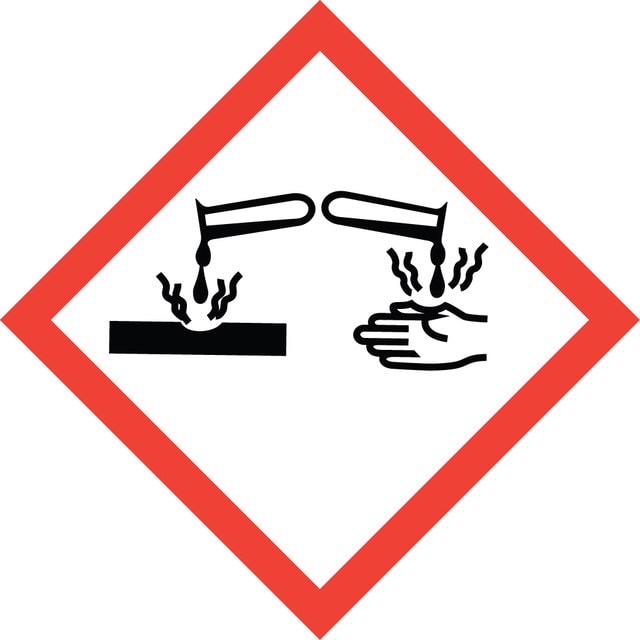
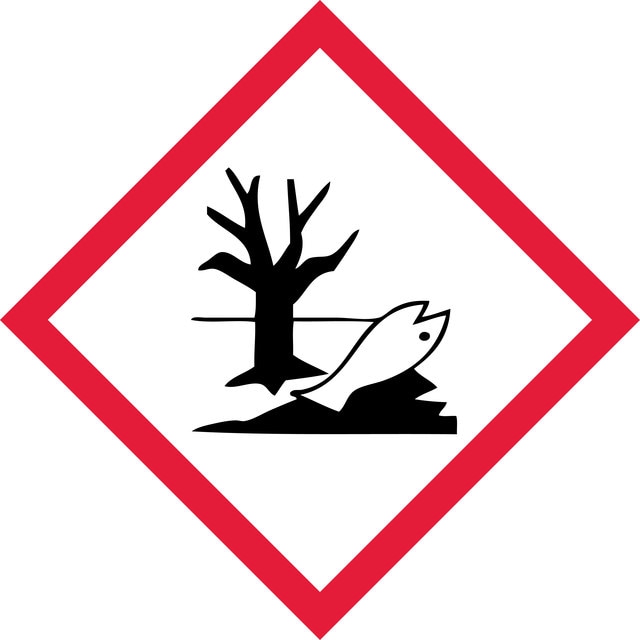
Acute Tox. 4 Oral - Aquatic Acute 1 - Aquatic Chronic 3 - Eye Dam. 1 - Skin Irrit. 2 - STOT SE 3
Choose from one of the most recent versions:
Already Own This Product?
Find documentation for the products that you have recently purchased in the Document Library.
-
is it possible to use this particular Assay Kit for measuring antioxident capacity in the seminal plasma of fish sperm ??
1 answer-
Helpful?
-
-
How can I determine the shelf life / expiration / retest date of this product?
1 answer-
If this product has an expiration or retest date, it will be shown on the Certificate of Analysis (COA, CofA). If there is no retest or expiration date listed on the product's COA, we do not have suitable stability data to determine a shelf life. For these products, the only date on the COA will be the release date; a retest, expiration, or use-by-date will not be displayed.
For all products, we recommend handling per defined conditions as printed in our product literature and website product descriptions. We recommend that products should be routinely inspected by customers to ensure they perform as expected.
For products without retest or expiration dates, our standard warranty of 1 year from the date of shipment is applicable.
For more information, please refer to the Product Dating Information document: https://www.sigmaaldrich.com/deepweb/assets/sigmaaldrich/marketing/global/documents/418/501/product-dating-information-06-25-mk.pdfHelpful?
-
-
How is shipping temperature determined? And how is it related to the product storage temperature?
1 answer-
Products may be shipped at a different temperature than the recommended long-term storage temperature. If the product quality is sensitive to short-term exposure to conditions other than the recommended long-term storage, it will be shipped on wet or dry-ice. If the product quality is NOT affected by short-term exposure to conditions other than the recommended long-term storage, it will be shipped at ambient temperature. As shipping routes are configured for minimum transit times, shipping at ambient temperature helps control shipping costs for our customers. For more information, please refer to the Storage and Transport Conditions document: https://www.sigmaaldrich.com/deepweb/assets/sigmaaldrich/marketing/global/documents/316/622/storage-transport-conditions-mk.pdf
Helpful?
-
-
Can CS0790 be used for antioxidant capacity assessment in colored media without interference in the colorimetric assay?
1 answer-
The kit functions by measuring antioxidant activity through the inhibition of ABTC oxidation. Oxidation of ABTC results in a green color reaction, which is reduced in the presence of antioxidants. Myoglobin is necessary for the oxidation of ABTC as it serves as a source of a radical cation. The types of samples suitable for use with this kit are detailed in the kit's bulletin, but it should be noted that bacterial culture media and oils are not included among them.
Helpful?
-
-
how is this test performed? can it use a HACH instrument? can this test identify BHT Butylated Hydroxy Toluene, 400-1000 ppm.
1 answer-
Please see the kit's usage instructions posted here:
https://www.sigmaaldrich.com/deepweb/assets/sigmaaldrich/product/documents/281/332/cs0790bul.pdfThe kit should be able to detect the antioxidant capacity of BHT (Butylated Hydroxy Toluene).
If the HACH instrument is capable of reading absorbances in a 96-well plate at the required wavelength of 405 nm, it should be suitable for use with the kit.
Helpful?
-
-
What is the Department of Transportation shipping information for this product?
1 answer-
Transportation information can be found in Section 14 of the product's (M)SDS.To access the shipping information for this material, use the link on the product detail page for the product.
Helpful?
-
-
What is the pH of kit component A3605 in the Antioxidant Assay Kit, product CS0790?
1 answer-
The pH of kit component A3605 in the Antioxidant Assay Kit, product CS0790, is approximately 5, at 25°C. The adequacy/suitability of the pH of the assay buffer is assessed via the assay itself, and is tested for each lot of kits.
Helpful?
-