


In many instances, the salt form of a compound tends to be more stable that the free base form. However, side by side studies comparing the free base product with this 35% solution in water have not been performed. Nicotine is very hygroscopic and sensitive to light and oxygen. The brown color is due to exposure to either of these components. The product may be stored at ambient temperature. The freeze/thaw stability of this item has not been investigated.
N1019

(−)-Nicotine hemisulfate salt
≥95% (TLC), ~35 % (w/v) in H2O (based on free base)
Promotion Available
Synonym(s):
(−)-1-Methyl-2-(3-pyridyl)pyrrolidine
Sign In to View Organizational & Contract Pricing.
Select a Size
Change View
| Size/SKU | Availability | Price |
|---|---|---|
25 mL | Available to ship TODAY | $71.20 |
100 mL | Estimated to ship onOctober 26, 2026fromMILWAUKEE | $161.00 |
About This Item
Linear Formula:
(C10H14N2)2 · H2SO4
CAS Number:
Molecular Weight:
422.54
NACRES:
NA.77
PubChem Substance ID:
UNSPSC Code:
12352210
MDL number:
Assay:
≥95% (TLC)
Form:
liquid
$71.20
Available to ship TODAYDetails
New
Ships Every 4 weeks
Quality Segment
assay
≥95% (TLC)
form
liquid
concentration
~35 % (w/v) in H2O (based on free base)
color
dark brown
SMILES string
OS(O)(=O)=O.CN1CCC[C@H]1c2cccnc2.CN3CCC[C@H]3c4cccnc4
InChI
1S/2C10H14N2.H2O4S/c2*1-12-7-3-5-10(12)9-4-2-6-11-8-9;1-5(2,3)4/h2*2,4,6,8,10H,3,5,7H2,1H3;(H2,1,2,3,4)/t2*10-;/m00./s1
InChI key
IECQULMJVNSKDB-RCWTXCDDSA-N
Gene Information
human ... CHRNA4(1137), CHRNB2(1141)
General description
Nicotine is found in the leaves of Nicotiana species. It binds to nicotinic acetylcholine receptors and inhibits endogenous neurotransmitters. Nicotine is associated with lung cancer development and reduces the efficiency of chemotherapeutic agents. It is used to treat Alzheimer′s and Parkinson′s disease.
Application
(−)-Nicotine hemisulfate salt has been used to study the influence of nicotine on the severity of choroidal neovascularization (CNV). It also has been used as a natural nectar alkaloid to study the effect of self-medication in bumblebees.
Biochem/physiol Actions
Prototype nicotinic acetylcholine receptor agonist; naturally occurring isomer.
Analysis Note
Mixture of nicotine base and nicotine sulfate.
Disclaimer
Shelf-life of the solution as supplied is at least six years when stored at room temperature.
1 of 1
This Item | |||
|---|---|---|---|
| description ≥95% (TLC), ~35 % (w/v) in H2O (based on free base) | description PESTANAL®, analytical standard | description ≥99% (GC), liquid | description 1.0 mg/mL, analytical standard, for drug analysis |
| form liquid | form - | form liquid | form - |
| assay ≥95% (TLC) | assay - | assay ≥99% (GC) | assay - |
| Quality Level 100 | Quality Level 100 | Quality Level 200 | Quality Level 200 |
| color dark brown | color - | color yellow | color - |
| concentration ~35 % (w/v) in H2O (based on free base) | concentration - | concentration - | concentration 1.0 mg/mL in methanol |
| Gene Information human ... CHRNA4(1137), CHRNB2(1141) | Gene Information human ... CHRNA2(1135), CHRNA4(1137), CHRNB2(1141) | Gene Information human ... CHRNA2(1135), CHRNA3(1136), CHRNA4(1137), CHRNB2(1141), CHRNB4(1143), CYP2A6(1548), KCNH1(3756) | Gene Information human ... CHRNA3(1136), CHRNA4(1137), CHRNB2(1141), CHRNB4(1143), CYP2A6(1548), KCNH1(3756) |
Signal Word
Danger
Hazard Codes
Precautionary Statements
Hazard Classifications
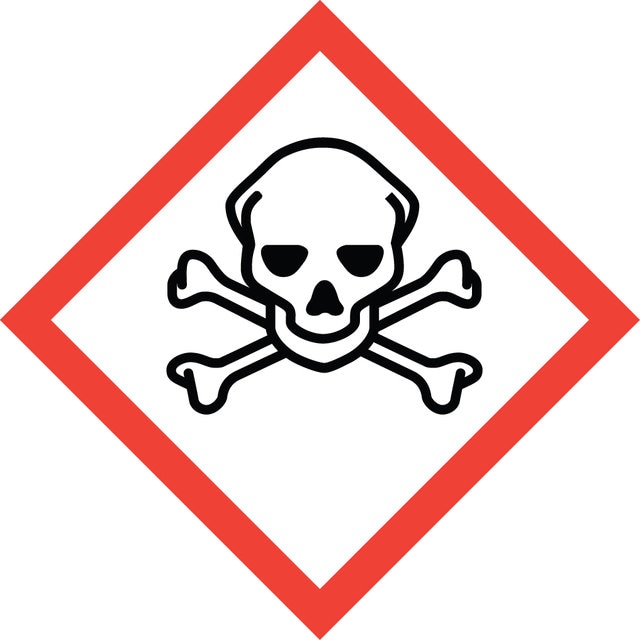
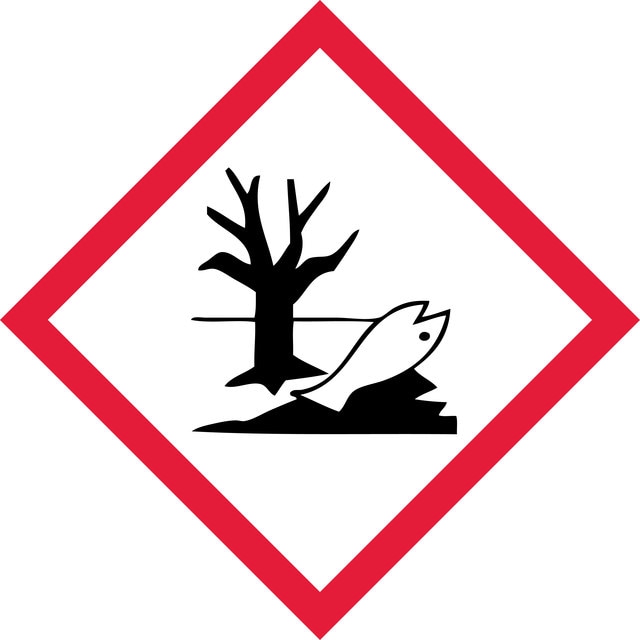
Acute Tox. 2 Dermal - Acute Tox. 2 Inhalation - Acute Tox. 3 Oral - Aquatic Chronic 2
Storage Class
6.1A - Combustible acute toxic Cat. 1 and 2 / very toxic hazardous materials
WGK
WGK 3
Choose from one of the most recent versions:
Already Own This Product?
Find documentation for the products that you have recently purchased in the Document Library.
-
Is this solution more stable than nicotine liquid alone? Does the brown colour imply the presence of oxidation of the free base nicotine? Is it sensitive to freeze-thaw cycles when diluted in distilled water and kept at -20? Thank you very much.
1 answer-
Helpful?
-