


If this product has an expiration or retest date, it will be shown on the Certificate of Analysis (COA, CofA). If there is no retest or expiration date listed on the product's COA, we do not have suitable stability data to determine a shelf life. For these products, the only date on the COA will be the release date; a retest, expiration, or use-by-date will not be displayed.
For all products, we recommend handling per defined conditions as printed in our product literature and website product descriptions. We recommend that products should be routinely inspected by customers to ensure they perform as expected.
For products without retest or expiration dates, our standard warranty of 1 year from the date of shipment is applicable.
For more information, please refer to the Product Dating Information document: https://www.sigmaaldrich.com/deepweb/assets/sigmaaldrich/marketing/global/documents/418/501/product-dating-information-06-25-mk.pdf
292206

2-Methyl-1,3-dioxolane
97%
Sinonimo/i:
Acetaldehyde ethylene acetal
Scegli un formato
37,00 €
90,10 €
37,00 €
Informazioni su questo articolo
Vai a
Nome del prodotto
2-Methyl-1,3-dioxolane, 97%
InChI key
HTWIZMNMTWYQRN-UHFFFAOYSA-N
InChI
1S/C4H8O2/c1-4-5-2-3-6-4/h4H,2-3H2,1H3
SMILES string
CC1OCCO1
assay
97%
refractive index
n20/D 1.398 (lit.)
bp
82-83 °C (lit.)
density
0.982 g/mL at 25 °C (lit.)
functional group
ether
Quality Level
Cerchi prodotti simili? Visita Guida al confronto tra prodotti
Categorie correlate
1 of 4
Questo articolo | D155624 | 329991 | 226122 |
|---|---|---|---|
| assay 97% | assay 98% | assay 97% | assay 96% |
| Quality Level 100 | Quality Level 200 | Quality Level 100 | Quality Level 200 |
| bp 82-83 °C (lit.) | bp 92-93 °C (lit.) | bp 157-158 °C (lit.) | bp 80-82 °C/27 mmHg (lit.) |
| refractive index n20/D 1.398 (lit.) | refractive index n20/D 1.398 (lit.) | refractive index n20/D 1.449 (lit.) | refractive index n20/D 1.482 (lit.) |
| density 0.982 g/mL at 25 °C (lit.) | density 0.926 g/mL at 25 °C (lit.) | density 1.234 g/mL at 25 °C (lit.) | density 1.613 g/mL at 25 °C (lit.) |
| functional group ether | functional group - | functional group chloro, ether | functional group bromo, ether |
General description
signalword
Danger
hcodes
Hazard Classifications
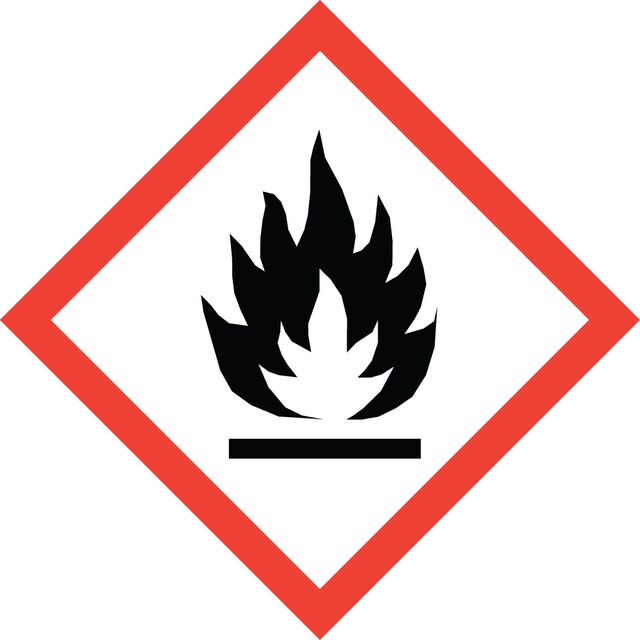
Flam. Liq. 2
Classe di stoccaggio
3 - Flammable liquids
wgk
WGK 2
flash_point_f
28.4 °F - closed cup
flash_point_c
-2 °C - closed cup
ppe
Eyeshields, Faceshields, Gloves, type ABEK (EN14387) respirator filter
Scegli una delle versioni più recenti:
Possiedi già questo prodotto?
I documenti relativi ai prodotti acquistati recentemente sono disponibili nell’Archivio dei documenti.
-
How can I determine the shelf life / expiration / retest date of this product?
1 risposta-
Utile?
-
-
How is shipping temperature determined? And how is it related to the product storage temperature?
1 risposta-
Products may be shipped at a different temperature than the recommended long-term storage temperature. If the product quality is sensitive to short-term exposure to conditions other than the recommended long-term storage, it will be shipped on wet or dry-ice. If the product quality is NOT affected by short-term exposure to conditions other than the recommended long-term storage, it will be shipped at ambient temperature. As shipping routes are configured for minimum transit times, shipping at ambient temperature helps control shipping costs for our customers. For more information, please refer to the Storage and Transport Conditions document: https://www.sigmaaldrich.com/deepweb/assets/sigmaaldrich/marketing/global/documents/316/622/storage-transport-conditions-mk.pdf
Utile?
-
Filtri attivi
Il team dei nostri ricercatori vanta grande esperienza in tutte le aree della ricerca quali Life Science, scienza dei materiali, sintesi chimica, cromatografia, discipline analitiche, ecc..
Contatta l'Assistenza Tecnica