
ABS547

Anti-Pancreatic Lipase/PNLIP Antibody
serum, from rabbit
Sinonimo/i:
Pancreatic triacylglycerol lipase, PL, PTL, Pancreatic lipa, Pancreatic Lipase/PNLIP
Scegli un formato
355,00 €
Informazioni su questo articolo
Vai a
Origine biologica
rabbit
Livello qualitativo
Coniugato
unconjugated
Forma dell’anticorpo
serum
Tipo di anticorpo
primary antibodies
Clone
polyclonal
Reattività contro le specie
mouse, rat, human
tecniche
neutralization: suitable
western blot: suitable
N° accesso NCBI
N° accesso UniProt
Condizioni di spedizione
wet ice
modifica post-traduzionali bersaglio
unmodified
Informazioni sul gene
human ... PNLIP(5406)
1 of 4
Questo articolo | SAB1406269 | AV33851 | HPA062494 |
|---|---|---|---|
| antibody form serum | antibody form purified immunoglobulin | antibody form IgG fraction of antiserum | antibody form affinity isolated antibody |
| Quality Level 100 | Quality Level 100 | Quality Level 100 | Quality Level 100 |
| biological source rabbit | biological source mouse | biological source rabbit | biological source rabbit |
| shipped in wet ice | shipped in dry ice | shipped in wet ice | shipped in wet ice |
| Gene Information human ... PNLIP(5406) | Gene Information human ... PNLIP(5406) | Gene Information human ... PNLIP(5406) | Gene Information human ... PNLIP(5406) |
| UniProt accession no. | UniProt accession no. | UniProt accession no. | UniProt accession no. |


Descrizione generale
Immunogeno
Applicazioni
Signaling
Signaling Neuroscience
Western Blotting Analysis: A representative lot detected both wild-type and W340X mutated recombinant human pancreatic lipase-related protein-2 (PLRP2) in culture media and lysates from transfected 293T and COS-7 cells (Xiao, X., et al. (2011) J. Biol. Chem. 286(30):26353-26363).
Neutralizing Analysis: A representative lot inhibited colipase-dependent pancreatic lipase-related protein-2 (PLRP2) enzymatic activity in pancreas extracts from 4-day old mice (D′Agostino D, and Lowe ME. (2004) J. Nutr. 134(1):132-134).
Azioni biochim/fisiol
Stato fisico
Nota sulla preparazione
Handling Recommendations: Upon receipt and prior to removing the cap, centrifuge the vial and gently mix the solution. Aliquot into microcentrifuge tubes and store at -20°C. Avoid repeated freeze/thaw cycles, which may damage IgG and affect product performance.
Risultati analitici
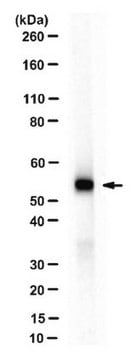
Western Blotting Analysis: A 1:5,000 dilution of this antibody detected Pancreatic Lipase/PNLIP in 10 µg of human pancreas tissue lysate.
Altre note
Esclusione di responsabilità
Non trovi il prodotto giusto?
Prova il nostro Motore di ricerca dei prodotti.
Codice della classe di stoccaggio
10 - Combustible liquids
Classe di pericolosità dell'acqua (WGK)
WGK 1
Certificati d'analisi (COA)
Cerca il Certificati d'analisi (COA) digitando il numero di lotto/batch corrispondente. I numeri di lotto o di batch sono stampati sull'etichetta dei prodotti dopo la parola ‘Lotto’ o ‘Batch’.
Possiedi già questo prodotto?
I documenti relativi ai prodotti acquistati recentemente sono disponibili nell’Archivio dei documenti.
Contenuto correlato
A major focus of breast cancer research is to understand the mechanisms responsible for disease progression and drug resistance. Toward that end, it has been found that approximately two thirds of all human breast carcinomas overexpress the Estrogen Receptor α (ERα) protein and it remains the primary pharmacological target for endocrine therapy1,2. The normal cellular function of ERα is as a transcription factor that mediates a wide variety of physiological processes, many of which are dependent upon phosphorylation of the receptor at specific amino acid residues3,4. Indeed, ERα is known to be phosphorylated at a multitude of different sites, yet how these all correlate to disease remains unclear5. Here, we interrogated multiple sites of ERα for phosphorylation status by screening an extensive panel of different breast cancer patient samples and other non-breast cancer tissue microarray (TMA) slide samples to determine their relevance to disease.
Filtri attivi
Il team dei nostri ricercatori vanta grande esperienza in tutte le aree della ricerca quali Life Science, scienza dei materiali, sintesi chimica, cromatografia, discipline analitiche, ecc..
Contatta l'Assistenza Tecnica