Passa al contenuto
Merck

HCVD1MAG-67K

MILLIPLEX® Human Cardiovascular Disease (CVD) Magnetic Bead Panel 1 - Cardiovascular Disease Multiplex Assay

The analytes available for this multiplex kit are: BNP, NT-proBNP, CK-MB, CXCL6/GCP-2, CXCL16, Endocan-1 (ESM-1), FABP3, FABP4, LIGHT, Oncostatin (OSM), Placental Growth Factor (PlGF), Troponin I (TnI).

Autenticati per visualizzare i prezzi riservati alla tua organizzazione & contrattuali

Informazioni su questo articolo

Codice UNSPSC:
12161503
eCl@ss:
32161000
NACRES:
NA.84

To order a Milliplex® kit, please search for your analyte of interest.

Vai a

Servizio Tecnico
Hai bisogno di aiuto? Il nostro team di scienziati qualificati è a tua disposizione.
Permettici di aiutarti

Livello qualitativo

Reattività contro le specie

human

Produttore/marchio commerciale

Milliplex®

assay range

accuracy: 100%
(CK-MB)

accuracy: 102%
(LIGHT)

accuracy: 102%
(Oncostatin (OSM))

accuracy: 103%
(CXCL6/GCP-2)

accuracy: 96%
(FABP3)

accuracy: 96%
(Placental Growth Factor (PlGF))

accuracy: 97%
(NT proBNP)

standard curve range: 137.2-100,000 pg/mL
(FABP3)

standard curve range: 2.7-2,000 pg/mL
(Placental Growth Factor (PlGF))

standard curve range: 34.3-25,000 pg/mL
(NT proBNP, CXCL16, Endocan-1 (ESM-1), LIGHT)

standard curve range: 6.9-5,000 pg/mL
(CXCL6, Oncostatin (OSM))

standard curve range: 68.6-50,000 pg/mL
(BNP, CK-MB, Troponin I (TnI))

standard curve range: 685.9-500,000 pg/mL
(FABP4)

inter-assay cv: <20%
intra-assay cv: <10%

tecniche

multiplexing: suitable

Metodo di rivelazione

fluorometric (Luminex® xMAP® technology)

Condizioni di spedizione

wet ice

Confronta articoli simili

Visualizza il confronto per intero

Mostra le differenze

1 of 4

Questo articolo
HCVD4MAG-67KHCVD3MAG-67KHCVD2MAG-67K
species reactivity

human

species reactivity

human

species reactivity

human

species reactivity

human

manufacturer/tradename

Milliplex®

manufacturer/tradename

Milliplex®

manufacturer/tradename

Milliplex®

manufacturer/tradename

Milliplex®

assay range

accuracy: 100%
(CK-MB), accuracy: 102%
(Oncostatin (OSM)), accuracy: 96%
(FABP3), accuracy: 97%
(NT proBNP), standard curve range: 2.7-2,000 pg/mL
(Placental Growth Factor (PlGF)), standard curve range: 6.9-5,000 pg/mL
(CXCL6, Oncostatin (OSM)), standard curve range: 685.9-500,000 pg/mL
(FABP4), inter-assay cv: <20%
intra-assay cv: <10%, accuracy: 102%
(LIGHT), accuracy: 96%
(Placental Growth Factor (PlGF)), standard curve range: 34.3-25,000 pg/mL
(NT proBNP, CXCL16, Endocan-1 (ESM-1), LIGHT), accuracy: 103%
(CXCL6/GCP-2), standard curve range: 68.6-50,000 pg/mL
(BNP, CK-MB, Troponin I (TnI)), standard curve range: 137.2-100,000 pg/mL
(FABP3)

assay range

accuracy: 103%
(Thrombomodulin), accuracy: 104%
(Pentraxin-3 (PTX3)), accuracy: 104%
(Tissue Factor (TF)), accuracy: 106%
(Pecam-1), accuracy: 109%
(sE-Selectin), standard curve range: 0.01-5 ng/mL
(Troponin T (TnT)), standard curve range: 0.04-30 ng/mL
(Follistatin (FST)), standard curve range: 0.14-100 ng/mL
(Pentraxin-3 (PTX3) & Tissue Factor (TF)), standard curve range: 0.27-200 ng/mL
(Pecam-1), standard curve range: 0.34-250 ng/mL
(Thrombomodulin), standard curve range: 2.7-2,000 ng/mL
(sE-Selectin), inter-assay cv: <20%
intra-assay cv: <10%

assay range

accuracy: 102%
(Haptoglobin), accuracy: 109%
(AGP), accuracy: 113%
(Platelet Factor-4), accuracy: 117%
(Adipsin), standard curve range: 0.004-15 ng/mL
(L-Selectin & SAP), standard curve range: 0.012-50 ng/mL
(CRP), standard curve range: 0.037-150 ng/mL
(PF4), standard curve range: 0.061-250 ng/mL
(HPTGN), standard curve range: 0.098-400 ng/mL
(AGP & Adipsin), standard curve range: 0.244-1,000 ng/mL
(Fetuin A & vWF), standard curve range: 0.488-2,000 ng/mL
(A2M)

assay range

accuracy: 88%
(Myoglobin), accuracy: 90%
(P-selectin), accuracy: 98%
(GDF-15), standard curve range: 0.0005-2.5 ng/mL
(GDF-15), standard curve range: 0.012-50 ng/mL
(Lipocalcin-2/NGAL), standard curve range: 0.024-100 ng/mL
(Myoglobin & MPO), standard curve range: 0.085-350 ng/mL
(sICAM-1), standard curve range: 0.122-500 ng/mL
(sVCAM-1), standard curve range: 0.244-1,000 ng/mL
(D-dimer, SAA & P-selectin), standard curve range: 1.221-5,000 ng/mL
(ADAMTS 13), inter-assay cv: <20%
intra-assay cv: <15%

Quality Level

200

Quality Level

200

Quality Level

200

Quality Level

200

shipped in

wet ice

shipped in

wet ice

shipped in

wet ice

shipped in

wet ice

detection method

fluorometric (Luminex xMAP)

detection method

fluorometric (Luminex xMAP)

detection method

fluorometric (Luminex xMAP)

detection method

fluorometric (Luminex xMAP)

Descrizione generale

Cardiovascular disease, particularly atherosclerotic vascular disease, is a leading cause of global mortality, accounting for 30% of all global deaths (WHO, 2010). Inflammatory mechanisms play a vital role in the initiation, maintenance, and progression of vascular disease with a strong correlation between inflammatory markers and prognosis in acute and chronic coronary artery disease. Numerous studies have demonstrated an association of obesity and diabetes with cardiovascular risk factors.

The MILLIPLEX® Human Cardiovascular Disease (CVD) Panel 1 is a 12-plex kit to be used for the simultaneous quantification of any or all of the following analytes in human serum, plasma, or tissue/cell lysate and culture supernatant samples: BNP, NTproBNP, CK-MB, CXCL6, CXCL16, Endocan-1 (ESM-1), FABP3, FABP4, LIGHT, Oncostatin-M (OSM), Placental Growth Factor (PlGF), and Troponin I. This kit uses a 96-well format, contains a lyophilized standard cocktail, two internal assay quality controls and can measure up to 38 samples in duplicate.

The Luminex® xMAP® platform uses a magnetic bead immunoassay format for ideal speed and sensitivity to quantitate multiple analytes simultaneously, dramatically improving productivity while conserving valuable sample volume.

Panel Type: Cardiovascular

Applicazioni

  • Analytes: BNP, CK-MB, CXCL6/GCP-2, CXCL16, Endocan-1 (ESM-1), FABP3, FABP4, LIGHT, NT-proBNP, Oncostatin M (OSM), Placental Growth Factor (PlGF), Troponin I (TnI)
  • Recommended Sample Type: Human serum, plasma, or tissue/cell culture supernatants and lysates
  • Recommended Sample Dilution: 25 μL per well of undiluted serum or plasma; tissue/cell culture samples may require dilution in appropriate control medium
  • Assay Run Time: Overnight (16-18 hours) at 2-8°C
  • Research Category: Cardiovascular Disease
  • Research Subcategory: Metabolic Disorders

Azioni biochim/fisiol

Cross Reactivty
There was no or negligible cross-reactivity between the antibodies for an analyte and any of the other analytes in this panel.

Caratteristiche e vantaggi

Design your multiplex kit by choosing available analytes within this panel.

Altre note

Please contact Technical Service for linearity of dilution.
Sensitivity: See kit protocol for individual analytes sensitive’s.

Note legali

Luminex is a registered trademark of Luminex Corp
MILLIPLEX is a registered trademark of Merck KGaA, Darmstadt, Germany
xMAP is a registered trademark of Luminex Corp

Esclusione di responsabilità

Unless otherwise stated in our catalog or other company documentation accompanying the product(s), our products are intended for research use only and are not to be used for any other purpose, which includes but is not limited to, unauthorized commercial uses, in vitro diagnostic uses, ex vivo or in vivo therapeutic uses or any type of consumption or application to humans or animals.

Avvertenze

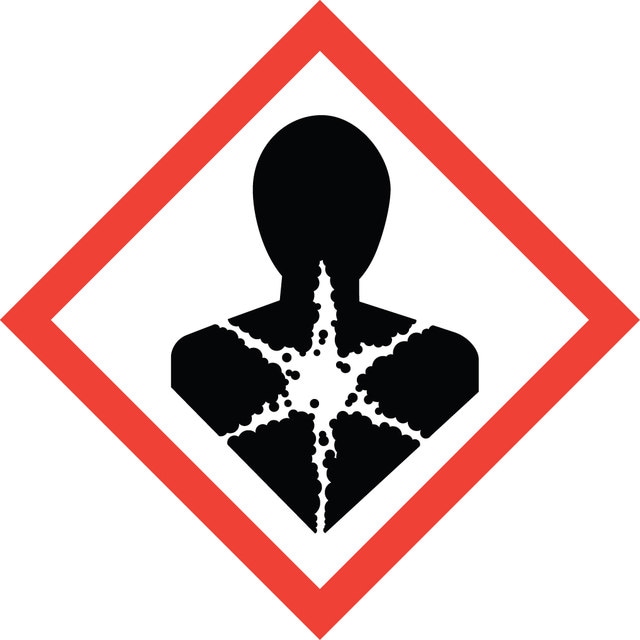
Danger

Classi di pericolo

Acute Tox. 4 Dermal - Acute Tox. 4 Inhalation - Acute Tox. 4 Oral - Aquatic Chronic 2 - Eye Dam. 1 - Skin Sens. 1 - STOT RE 2

Organi bersaglio

Respiratory Tract

Codice della classe di stoccaggio

10 - Combustible liquids


Certificati d'analisi (COA)

Cerca il Certificati d'analisi (COA) digitando il numero di lotto/batch corrispondente. I numeri di lotto o di batch sono stampati sull'etichetta dei prodotti dopo la parola ‘Lotto’ o ‘Batch’.

Possiedi già questo prodotto?

I documenti relativi ai prodotti acquistati recentemente sono disponibili nell’Archivio dei documenti.

Visita l’Archivio dei documenti

Andrew J Swift et al.
Thorax, 76(10), 1032-1035 (2021-02-27)
End points that are repeatable and sensitive to change are important in pulmonary arterial hypertension (PAH) for clinical practice and trials of new therapies. In 42 patients with PAH, test-retest repeatability was assessed using the intraclass correlation coefficient and treatment
Luca Di Antonio et al.
Scientific reports, 8(1), 15631-15631 (2018-10-26)
The aim of the study was to assess retinal vascular changes using optical coherence tomography angiography (OCTA) and aqueous humour changes of vascular endothelial growth factor (VEGF) and placental growth factor (PIGF) levels in treatment-naïve myopic choroidal neovascularization (mCNV) after
Li-Rong Yu et al.
Experimental biology and medicine (Maywood, N.J.), 243(3), 248-255 (2017-12-12)
Cancer treatment with doxorubicin (DOX) can induce cumulative dose-dependent cardiotoxicity. Currently, there are no specific biomarkers that can identify patients at risk during the initial doses of chemotherapy. The aim of this study was to examine plasma cytokines/chemokines and potential
Seungwon An et al.
The ocular surface, 17(3), 589-614 (2019-04-10)
To investigate the role of neutrophil extracellular traps (NETs) and NET-associated proteins in the pathogenesis of oGVHD and whether dismantling of NETs with heparin reduces those changes. Ocular surface washings from oGVHD patients and healthy subjects were analyzed. Isolated peripheral
Kévin Contrepois et al.
Cell, 181(5), 1112-1130 (2020-05-30)
Acute physical activity leads to several changes in metabolic, cardiovascular, and immune pathways. Although studies have examined selected changes in these pathways, the system-wide molecular response to an acute bout of exercise has not been fully characterized. We performed longitudinal

Contenuto correlato

Simplify protein biomarker discovery with the MILLIPLEX® PLEXpedition 115-Plex Multiplex Screening Panel. Effortlessly screen cytokines and other markers with Luminex® technology.

Learn about biomarkers of cardiovascular disease (CVD) and discover how multiplex CVD panels, such as MILLIPLEX® multiplex assays, are being used to increase the efficiency of biomarker discovery for CVD research.

Vedi tutto

Domande

Recensioni

Nessuna valutazione

Filtri attivi

Il team dei nostri ricercatori vanta grande esperienza in tutte le aree della ricerca quali Life Science, scienza dei materiali, sintesi chimica, cromatografia, discipline analitiche, ecc..

Contatta l'Assistenza Tecnica