
If this product has an expiration or retest date, it will be shown on the Certificate of Analysis (COA, CofA). If there is no retest or expiration date listed on the product's COA, we do not have suitable stability data to determine a shelf life. For these products, the only date on the COA will be the release date; a retest, expiration, or use-by-date will not be displayed.
For all products, we recommend handling per defined conditions as printed in our product literature and website product descriptions. We recommend that products should be routinely inspected by customers to ensure they perform as expected.
For products without retest or expiration dates, our standard warranty of 1 year from the date of shipment is applicable.
For more information, please refer to the Product Dating Information document: https://www.sigmaaldrich.com/deepweb/assets/sigmaaldrich/marketing/global/documents/418/501/product-dating-information-06-25-mk.pdf
252549

Formaldeide
37 wt. % in H₂O, solution, ACS reagent grade,contains 10-15% methanol as stabilizer (to prevent polymerization)
Sinonimo/i:
Formalina
Scegli un formato
20,90 €
23,30 €
26,90 €
48,40 €
97,60 €
138,00 €
230,00 €
20,90 €
Informazioni su questo articolo
Vai a
Nome del prodotto
Formaldeide, ACS reagent, 37 wt. % in H2O, contains 10-15% Methanol as stabilizer (to prevent polymerization)
InChI
1S/CH2O/c1-2/h1H2
SMILES string
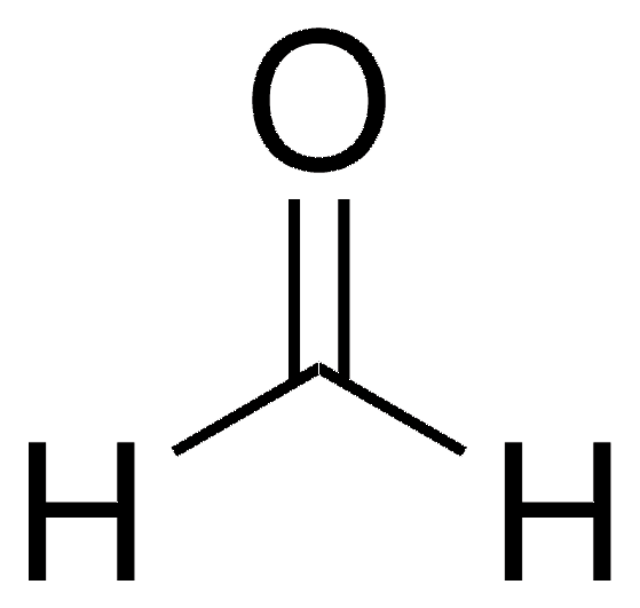
[H]C([H])=O
InChI key
WSFSSNUMVMOOMR-UHFFFAOYSA-N
grade
ACS reagent
vapor density
1.03 (vs air)
vapor pressure
52 mmHg ( 37 °C)
52 mmHg ( 37 °C)
form
liquid
autoignition temp.
572 °F
contains
10-15% Methanol as stabilizer (to prevent polymerization)
concentration
36.5-38.0%
37 wt. % in H2O
impurities
≤0.006 meq/g Titr. acid
ign. residue
≤0.005%
color
APHA: ≤10
refractive index
n20/D 1.3765
solubility
water: soluble
density
1.09 g/mL at 25 °C (lit.)
anion traces
chloride (Cl-): ≤5 ppm
sulfate (SO42-): ≤0.002%
cation traces
Fe: ≤5 ppm
heavy metals: ≤5 ppm (by ICP-OES)
suitability
suitable for manufacturing use (Laboratory chemicals)
Quality Level
Cerchi prodotti simili? Visita Guida al confronto tra prodotti
Categorie correlate
1 of 4
Questo articolo | F1635 | 47608 | F8775 |
|---|---|---|---|
| solubility water: soluble | solubility - | solubility - | solubility - |
| Quality Level 200 | Quality Level 200 | Quality Level 100 | Quality Level 100 |
| refractive index n20/D 1.3765 | refractive index - | refractive index - | refractive index - |
| form liquid | form liquid | form liquid | form liquid |
| density 1.09 g/mL at 25 °C (lit.) | density 1.09 g/mL at 25 °C (lit.) | density 1.09 g/mL at 20 °C, 1.09 g/mL at 25 °C (lit.) | density 1.09 g/mL at 25 °C (lit.) |
| grade ACS reagent | grade - | grade for molecular biology | grade for molecular biology |
Application
General description
Physical form
Related product
signalword
Danger
Hazard Classifications
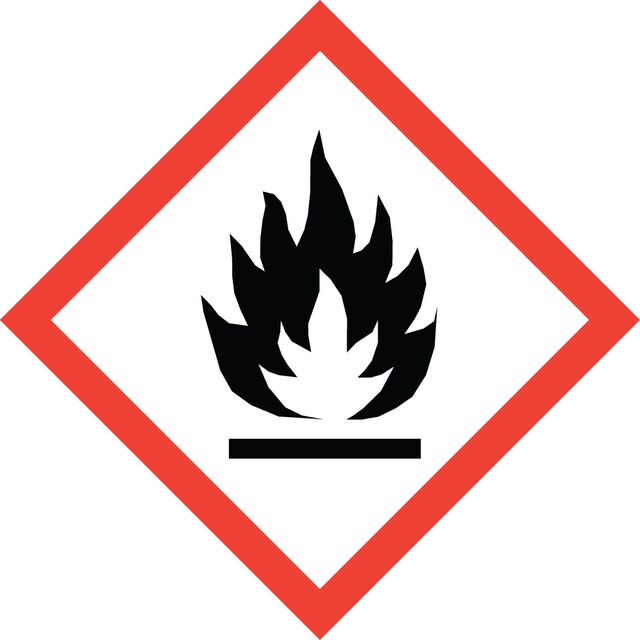
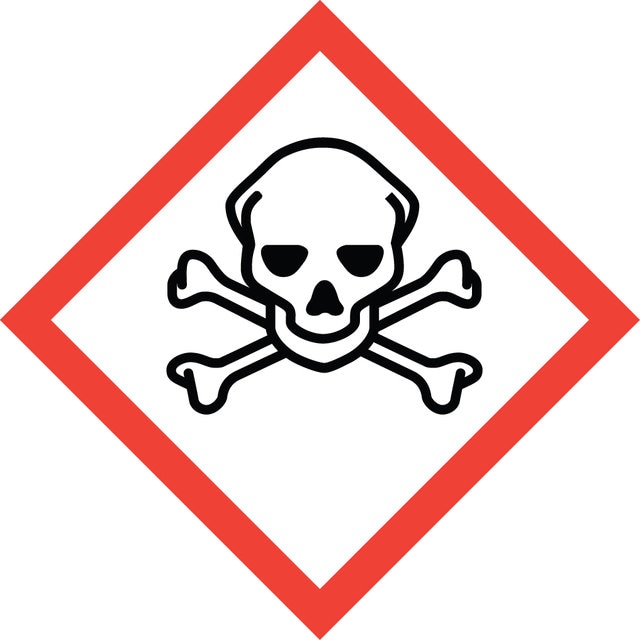
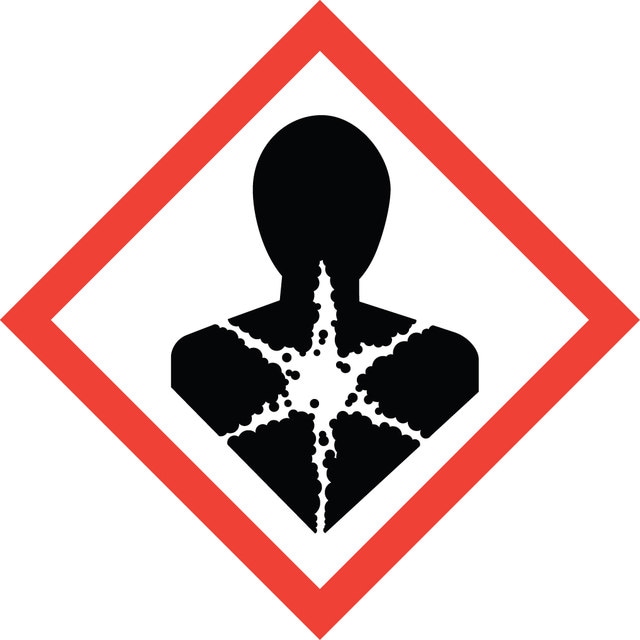
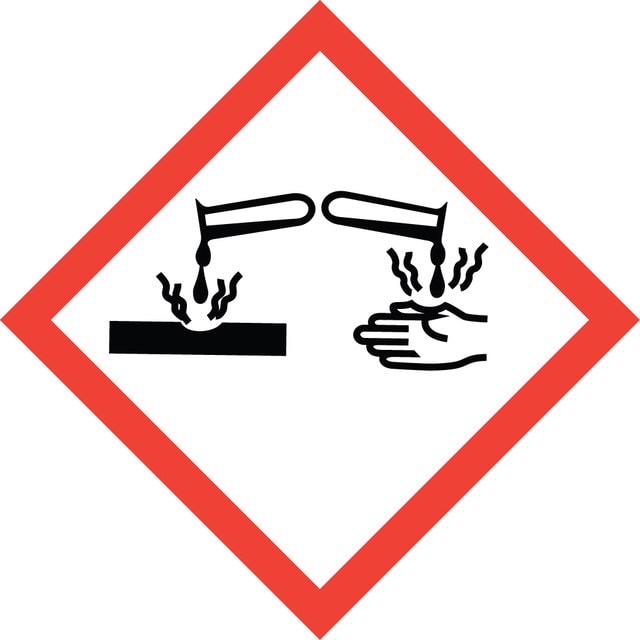
Acute Tox. 2 Inhalation - Acute Tox. 3 Dermal - Acute Tox. 3 Oral - Carc. 1B - Eye Dam. 1 - Flam. Liq. 3 - Muta. 2 - Skin Corr. 1B - Skin Sens. 1 - STOT SE 1 - STOT SE 3
target_organs
Eyes,Central nervous system, Respiratory system
Classe di stoccaggio
3 - Flammable liquids
wgk
WGK 3
flash_point_f
132.8 °F - closed cup
flash_point_c
56 °C - closed cup
Scegli una delle versioni più recenti:
Possiedi già questo prodotto?
I documenti relativi ai prodotti acquistati recentemente sono disponibili nell’Archivio dei documenti.
-
How can I determine the shelf life / expiration / retest date of this product?
1 risposta-
Utile?
-
-
Hi! My formaldehyde solution presents a white precipitate, and I think it can be paraformaldehyde. Can it still be used as formaldehyde, or is there a way to redisolve it and make it functional again? Thanks!
1 risposta-
White precipitation occurs due to the formation of paraformaldehyde, a common phenomenon in formaldehyde solutions. This product contains 10-15% methanol as a stabilizer to slow down the process. Ideally, storage should be at 25°C, as lower temperatures accelerate polymerization. The formation of paraformaldehyde is reversible, so the product may still be usable. To achieve a clear solution, gently heat the cloudy solution up to 30°C for 1 to 2 hours, taking care not to overheat, as this can cause degradation.
Utile?
-
-
How is shipping temperature determined? And how is it related to the product storage temperature?
1 risposta-
Products may be shipped at a different temperature than the recommended long-term storage temperature. If the product quality is sensitive to short-term exposure to conditions other than the recommended long-term storage, it will be shipped on wet or dry-ice. If the product quality is NOT affected by short-term exposure to conditions other than the recommended long-term storage, it will be shipped at ambient temperature. As shipping routes are configured for minimum transit times, shipping at ambient temperature helps control shipping costs for our customers. For more information, please refer to the Storage and Transport Conditions document: https://www.sigmaaldrich.com/deepweb/assets/sigmaaldrich/marketing/global/documents/316/622/storage-transport-conditions-mk.pdf
Utile?
-
-
Can you store formaldehyde in plastic?
1 risposta-
This product is packaged in glass bottles. Generally, formaldehyde solution can be used in plastic containers. However, it is advised that the unused material be preserved in its original packaging.
Utile?
-
-
What type of packaging for different packages?
1 risposta-
This product is packaged in amber glass bottles with polypropylene caps with HDPE liners. The bottle sizes are as follows:
252549-25 ML in 50 ml bottles
252549-100 ML in 100 ml bottles
252549-500ML in 500 ml bottles
252549-1L in 1L bottles
252549- 4L in 4L bottlesUtile?
-
-
Can formaldehyde solution 37% be diluted to 10% formalin for fixing cells for staining? Do you dilute it with around 2.7 part water? Thank you!
1 risposta-
How much water should be added to 100mL of a 37% solution to reduce its strength to a 10% solution?
Use C1 x V1= C2 x V2
37% x 100ml = 10% x V2
Therefore V2 = (37% x 100ml) / 10%
= 370 mLSubtract the total original volume from the new volume.
370 mL - 100 mL = 270 mL
So to reduce 100mL of 37% to 10% solution, add 270 mL of water to 100 mL of Formaldehyde solution - 252549-25ML.Utile?
-
-
Which formaldehyde solution is recommended for use with the HT102A Reticulum kit?
1 risposta-
When a silver stain procedure recommends a 10% formalin solution, it is referring to a 10% aqueous formalin solution, which is prepared by diluting 1 part of 37% to 40% formaldehyde with 9 parts deionized water. For histology, it is advisable to use ACS reagents when the product meets ACS Specifications. Suitable products for this purpose would be product numbers 252549 or FX0410. If a 37% to 40% formaldehyde solution is available, it should work; however, it's important to avoid using old bottles of this solution that have been in the lab for several years, as impurities can form over time. Solutions used in histological procedures should typically be replaced every 2 years to ensure effectiveness.
Utile?
-
-
Is the methanol content in the CoA expressed as volume percent or weight percent?
1 risposta-
The methanol content is expressed as weight percent.
Utile?
-
-
What is the difference between formaldehyde and paraformaldehyde?
1 risposta-
Paraformaldehyde is the polymeric form of formaldehyde. Paraformaldehyde is a solid, and formaldehyde is a gas. Formaldehyde solutions consist of formaldehyde gas dissolved in a solvent of some kind.
Utile?
-
-
What is a common application for Product No. 252549, Formaldehyde solution?
1 risposta-
Formaldehyde can be used in multiple applications in different fields. One common application is that this product is a common building block for the synthesis of more complex compounds and materials.
Utile?
-
Filtri attivi
Il team dei nostri ricercatori vanta grande esperienza in tutte le aree della ricerca quali Life Science, scienza dei materiali, sintesi chimica, cromatografia, discipline analitiche, ecc..
Contatta l'Assistenza Tecnica