



If this product has an expiration or retest date, it will be shown on the Certificate of Analysis (COA, CofA). If there is no retest or expiration date listed on the product's COA, we do not have suitable stability data to determine a shelf life. For these products, the only date on the COA will be the release date; a retest, expiration, or use-by-date will not be displayed.
For all products, we recommend handling per defined conditions as printed in our product literature and website product descriptions. We recommend that products should be routinely inspected by customers to ensure they perform as expected.
For products without retest or expiration dates, our standard warranty of 1 year from the date of shipment is applicable.
For more information, please refer to the Product Dating Information document: https://www.sigmaaldrich.com/deepweb/assets/sigmaaldrich/marketing/global/documents/418/501/product-dating-information-06-25-mk.pdf
650552

Esano
≥95%, HPLC Plus, for residue analysis, suitable for gas chromatography (GC) and HPLC, suitable for EPA 1613, EPA ACB B21-02, EPA OTM-45, and EPA ACB B23-05b
Sinonimo/i:
n-esano
Scegli un formato
146,00 €
146,00 €
Informazioni su questo articolo
Vai a
Nome del prodotto
Esano, HPLC Plus, for HPLC, GC, and residue analysis, ≥95%
Grado
HPLC Plus
agenzia
suitable for EPA 1613
suitable for EPA ACB B21-02
suitable for EPA ACB B23-05b
suitable for EPA OTM-45
Densità del vapore
~3 (vs air)
Tensione di vapore
256 mmHg ( 37.7 °C)
5.2 psi ( 37.7 °C)
~132 mmHg ( 20 °C)
Saggio
≥95%
Stato
liquid
Temp. autoaccensione
453 °F
Limite di esplosione
7.7 %
tecniche
HPLC: suitable
gas chromatography (GC): suitable
Impurezze
≤ 1.0 ppb Fluorescence (quinine) at 365 nm
<0.01% water
Residuo dopo evaporazione
<0.0001%
Residuo alogenato
<10 ng/L (as heptachlor epoxide)
Indice di rifrazione
n20/D 1.375 (lit.)
pH
7
P. ebollizione
69 °C (lit.)
Punto di fusione
−95 °C (lit.)
Solubilità
ethanol: soluble(lit.)
Densità
0.659 g/mL at 25 °C (lit.)
Assorbanza UV
λ: 195 nm Amax: 1.00
λ: 200 nm Amax: 0.50
λ: 210 nm Amax: 0.20
λ: 220 nm Amax: 0.05
λ: 250 nm Amax: 0.01
λ: 280-400 nm Amax: 0.005
Compatibilità
suitable for residue analysis
applicazioni
food and beverages
Stringa SMILE
CCCCCC
InChI
1S/C6H14/c1-3-5-6-4-2/h3-6H2,1-2H3
VLKZOEOYAKHREP-UHFFFAOYSA-N
Cerchi prodotti simili? Visita Guida al confronto tra prodotti
1 of 4
Questo articolo | 208752 | 32293-M | 270504-M |
|---|---|---|---|
| technique(s) HPLC: suitable, gas chromatography (GC): suitable | technique(s) - | technique(s) - | technique(s) HPLC: suitable |
| application(s) food and beverages | application(s) - | application(s) peptide synthesis | application(s) - |
| Quality Level 100 | Quality Level 100 | Quality Level - | Quality Level - |
| assay ≥95% | assay ≥95% | assay ≥99% (GC) | assay ≥95% |
| grade HPLC Plus, for residue analysis | grade Laboratory Reagent | grade ACS reagent, puriss. p.a. | grade - |
| solubility ethanol: soluble(lit.) | solubility - | solubility - | solubility - |
Descrizione generale
Applicazioni
- Preparazione di catene di innesto-copolimero di poli-(dimetilsilossano)-g-poli (metilmetacrilato).[7]
- Caratterizzazione in GC/MS di olii essenziali isolati da varie fonti.[8]
- Come solvente per la preparazione di campioni e standard negli studi cromatografici.[9]
- Per estrarre gossipolo libero e totale in associazione con acetone da fiocchi di semi di cotone.[10]
Confezionamento
As a global leader in lab reagents, we are constantly looking for new ways to optimize the safety of our products. The newly developed 4L solvent bottle design features advanced sealing technology that eliminates leaks to make the handling of solvents safer and more convenient than ever before.
See all the new features here!
Avvertenze
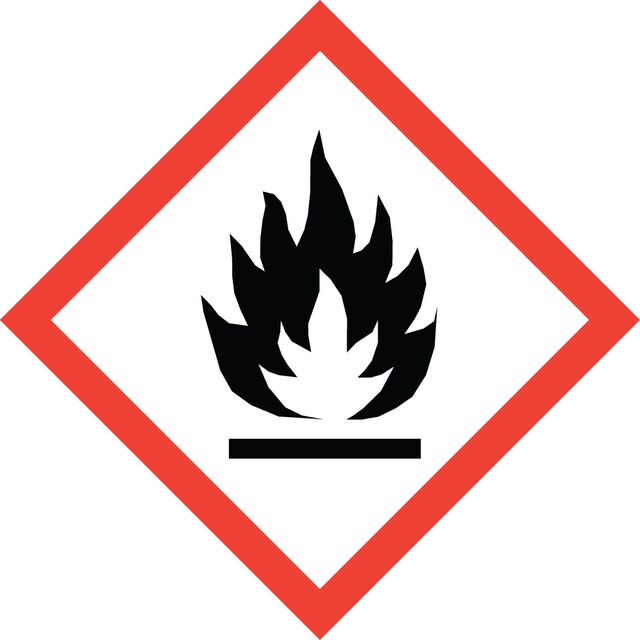
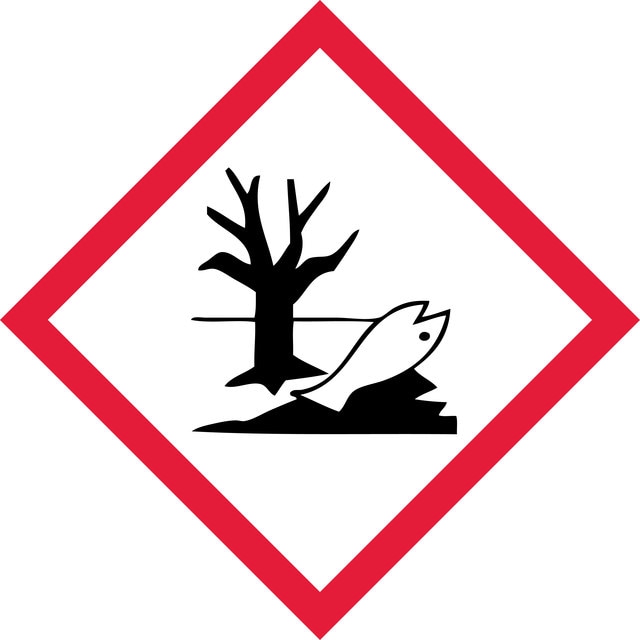
Danger
Indicazioni di pericolo
Consigli di prudenza
Classi di pericolo
Aquatic Chronic 2 - Asp. Tox. 1 - Flam. Liq. 2 - Repr. 2 - Skin Irrit. 2 - STOT RE 2 Inhalation - STOT SE 3
Organi bersaglio
Central nervous system, Nervous system
Codice della classe di stoccaggio
3 - Flammable liquids
Classe di pericolosità dell'acqua (WGK)
WGK 3
Punto d’infiammabilità (°F)
-7.6 °F - closed cup
Punto d’infiammabilità (°C)
-22 °C - closed cup
Scegli una delle versioni più recenti:
Possiedi già questo prodotto?
I documenti relativi ai prodotti acquistati recentemente sono disponibili nell’Archivio dei documenti.
Contenuto correlato
This page is intended to make it easier to find the consumables you need based on the analytical method you’re using. Methods included on this page come from the EPA, Standard Methods and ASTM.
-
How can I determine the shelf life / expiration / retest date of this product?
1 risposta-
Utile?
-
-
How is shipping temperature determined? And how is it related to the product storage temperature?
1 risposta-
Products may be shipped at a different temperature than the recommended long-term storage temperature. If the product quality is sensitive to short-term exposure to conditions other than the recommended long-term storage, it will be shipped on wet or dry-ice. If the product quality is NOT affected by short-term exposure to conditions other than the recommended long-term storage, it will be shipped at ambient temperature. As shipping routes are configured for minimum transit times, shipping at ambient temperature helps control shipping costs for our customers. For more information, please refer to the Storage and Transport Conditions document: https://www.sigmaaldrich.com/deepweb/assets/sigmaaldrich/marketing/global/documents/316/622/storage-transport-conditions-mk.pdf
Utile?
-
Filtri attivi
Il team dei nostri ricercatori vanta grande esperienza in tutte le aree della ricerca quali Life Science, scienza dei materiali, sintesi chimica, cromatografia, discipline analitiche, ecc..
Contatta l'Assistenza Tecnica