Skip to Content
MilliporeSigma

261173

Praseodymium

ingot, under oil, 99.9% trace rare earth metals basis

Sign In to View Organizational & Contract Pricing

About This Item

Empirical Formula (Hill Notation):
Pr
CAS Number:
Molecular Weight:
140.91
EC Number:
MDL number:
UNSPSC Code:
12352300
PubChem Substance ID:

Skip To

Technical Service
Need help? Our team of experienced scientists is here for you.
Let Us Assist

assay

99.9% trace rare earth metals basis

form

ingot

reaction suitability

reagent type: catalyst
core: praseodymium

resistivity

68 μΩ-cm, 20°C

bp

3520 °C (lit.)

mp

931 °C (lit.)

density

6.71 g/mL at 25 °C (lit.)

SMILES string

[Pr]

InChI

1S/Pr

InChI key

PUDIUYLPXJFUGB-UHFFFAOYSA-N

Looking for similar products? Visit Product Comparison Guide
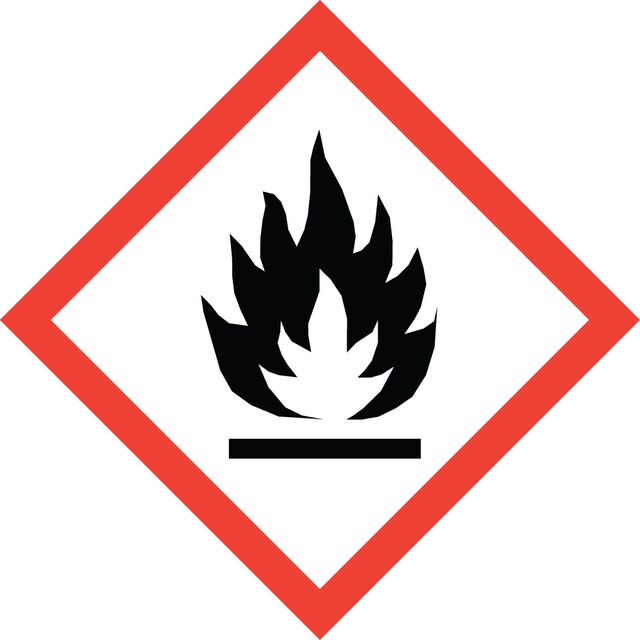
pictograms

FlameExclamation mark

signalword

Danger

Hazard Classifications

Aquatic Chronic 4 - Eye Irrit. 2 - Pyr. Sol. 1 - Skin Irrit. 2

Storage Class

4.2 - Pyrophoric and self-heating hazardous materials

wgk_germany

WGK 3

flash_point_f

Not applicable

flash_point_c

Not applicable

ppe

Eyeshields, Faceshields, Gloves, type P3 (EN 143) respirator cartridges


Choose from one of the most recent versions:

Certificates of Analysis (COA)

Lot/Batch Number

Don't see the Right Version?

If you require a particular version, you can look up a specific certificate by the Lot or Batch number.

Already Own This Product?

Find documentation for the products that you have recently purchased in the Document Library.

Visit the Document Library

D V Sunitha et al.
Spectrochimica acta. Part A, Molecular and biomolecular spectroscopy, 99, 279-287 (2012-10-23)
A series of Pr(3+) (1-9 mol%) doped CdSiO(3) nanophosphors have been prepared for the first time by a low temperature solution combustion method using oxalyldihydrizide (ODH) as a fuel. The final product was characterized by Powder X-ray diffraction (PXRD), Fourier
Makoto Tadokoro et al.
Chemical communications (Cambridge, England), 48(57), 7155-7157 (2012-06-14)
The supramolecular crystal {[Pr(DMFA)](3)[Ni(II)(Hbim)(3)](2)I}(n) with intricate chiral networks of [Ni(II)(Hbim)(3)](-) molecules is reported. It includes a cationic architecture as a guest, constructed from chiral nanotubes that penetrate I(-) chains with spiral channels wrapped by triple helices. The I(-) chains have
Liaolin Zhang et al.
Spectrochimica acta. Part A, Molecular and biomolecular spectroscopy, 93, 223-227 (2012-04-10)
We report on the spectroscopic properties of Pr(3+)-doped boro-phosphate, boro-germo-silicate and tellurite glasses. The stimulated absorption and emission cross sections were estimated. Only one emission at 596 nm and 605 nm is observed in Pr(3+)-doped boro-phosphate and boro-germo-silicate glasses, respectively
Mozhgan Khorasani-Motlagh et al.
Spectrochimica acta. Part A, Molecular and biomolecular spectroscopy, 79(5), 978-984 (2011-06-15)
The binding of neodymium(III) and praseodymium(III) complexes containing 1,10-phenanthroline, [M(phen)2Cl3·OH2] (M=Nd (1), Pr (2)), to DNA has been investigated by absorption, emission, and viscosity measurements. The complexes show absorption decreasing in charge transfer band, fluorescence decrement when bound to DNA.
N Bendangsenla et al.
Spectrochimica acta. Part A, Molecular and biomolecular spectroscopy, 103, 160-166 (2012-12-22)
The interactions of Pr(III) with nucleosides and nucleotides have been studied in different organic solvents employing absorption difference and comparative absorption spectrophotometry. The magnitudes of the variations in both energy and intensity interaction parameters were used to explore the degree

Questions

Reviews

No rating value

Active Filters

Our team of scientists has experience in all areas of research including Life Science, Material Science, Chemical Synthesis, Chromatography, Analytical and many others.

Contact Technical Service