Accéder au contenu
Merck

67309

Kovac′s reagent for indoles

suitable for microbiology

Synonyme(s) :

4-(Dimethylamino)benzaldehyde solution

Se connecter pour consulter les tarifs organisationnels et contractuels.

Sélectionner une taille de conditionnement

100 ML

77,00 €

77,00 €


Vérifier la disponibilité des articles du panier

Demander une commande groupéeDemander des informations complémentaires

A propos de cet article

Formule empirique (notation de Hill) :
C9H11NO
Numéro CAS:
Poids moléculaire :
149.19
UNSPSC Code:
41171621
NACRES:
NA.85
PubChem Substance ID:
MDL number:
Beilstein/REAXYS Number:
4132845

Passer à

Service technique
Besoin d'aide ? Notre équipe de scientifiques expérimentés est là pour vous.
Laissez-nous vous aider

Nom du produit

Kovac′s reagent for indoles, suitable for microbiology

InChI

1S/C9H11NO/c1-10(2)9-5-3-8(7-11)4-6-9/h3-7H,1-2H3

SMILES string

[H]C(=O)c1ccc(cc1)N(C)C

InChI key

BGNGWHSBYQYVRX-UHFFFAOYSA-N

agency

according to ISO 16654:2001

product line

BioChemika

shelf life

limited shelf life, expiry date on the label

composition

4-(dimethlyamino)benzaldehyde, 50 g/L
hydrochloric acid, 240 g/L
isoamylic alcohol, 710 g/L

technique(s)

microbe id | specific enzyme detection: suitable

application(s)

agriculture
clinical testing
environmental
food and beverages

microbiology

storage temp.

2-8°C

suitability

Escherichia coli
coliforms

Quality Level

Vous recherchez des produits similaires ? Visite Guide de comparaison des produits

Comparer avec des articles similaires

Voir la comparaison complète

Montrer les différences

1 of 4

Cet article
1.09293609831.11350
Quality Level

200

Quality Level

200

Quality Level

100

Quality Level

100

storage temp.

2-8°C

storage temp.

2-8°C

storage temp.

2-8°C

storage temp.

2-8°C

agency

according to ISO 16654:2001

agency

-

agency

-

agency

-

product line

BioChemika

product line

-

product line

-

product line

-

shelf life

limited shelf life, expiry date on the label

shelf life

-

shelf life

limited shelf life, expiry date on the label

shelf life

-

composition

4-(dimethlyamino)benzaldehyde, 50 g/L

composition

-

composition

n-butanol , 4-dimethylaminobenzaldehyde , hydrochloric acid

composition

(n-Butanol; Hydrochloric acid; 4 dimethylaminobenzaldehyde)

Application

In the presence of oxygen, some bacteria, like E.coli, are able to split tryptophan into indole and alpha-aminopropionic acid. This reagent is for detecting the indole and identify the indole-positive and indole-negative microorganisms.
Kovac′s reagent may be used for spot test for determination of indole by saturating filter paper with the reagent.[1] It may also be used for initial spot test for determination of indole followed by quantification by spectrophotometric assay and HPLC-UV/Vis-MS/MS methods.[2]

General description

Kovac′s reagent is prepared by mixing p-dimethylaminobenzaldehyde, isoamyl alcohol and concentrated hydrochloric acid.[3] For identification of an organism, the formation of Indole from a tryptophan substrate is a useful diagnostic tool. Indole production is a crucial test in identification of Escherichia coli. After incubation, adding the reagent will help in determination if Indole that has been produced. The reagent turns red when reacts with Indole.[4]

comparable product

Réf. du produit
Description
Tarif

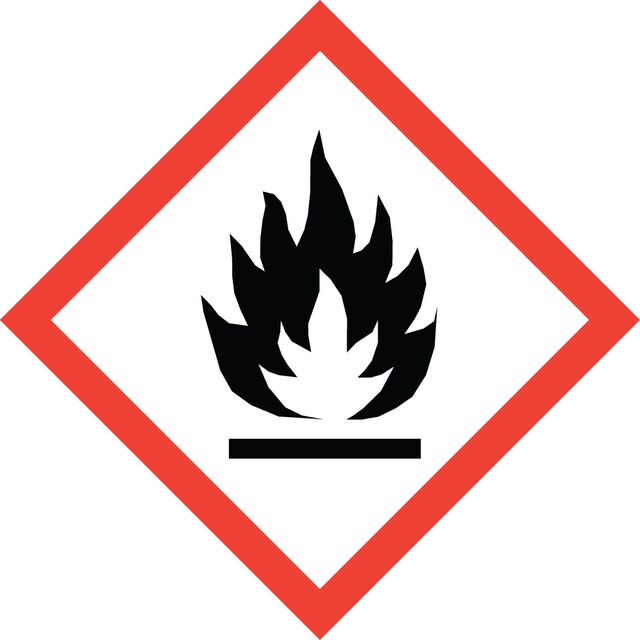
signalword

Danger

Hazard Classifications

Acute Tox. 4 Inhalation - Eye Dam. 1 - Flam. Liq. 3 - Met. Corr. 1 - Skin Corr. 1B - Skin Sens. 1 - STOT SE 3

target_organs

Respiratory system

Classe de stockage

3 - Flammable liquids

wgk

WGK 3

flash_point_f

109.4 °F

flash_point_c

43 °C

ppe

Faceshields, Gloves, Goggles, type ABEK (EN14387) respirator filter


Faites votre choix parmi les versions les plus récentes :

Certificats d'analyse (COA)

Lot/Batch Number

Vous ne trouvez pas la bonne version ?

Si vous avez besoin d'une version particulière, vous pouvez rechercher un certificat spécifique par le numéro de lot.

Déjà en possession de ce produit ?

Retrouvez la documentation relative aux produits que vous avez récemment achetés dans la Bibliothèque de documents.

Consulter la Bibliothèque de documents

Rita R. Colwell, R. Grigorova
Methods in Microbiology, 19, 27-27 (1987)
S. Harisha
An Introduction to Practical Biotechnology, 193-193 (2005)
Patrick R Porubsky et al.
Archives of biochemistry and biophysics, 475(1), 14-17 (2008-04-22)
Cytochrome P450 2A13 (CYP2A13) is a lung specific enzyme known to activate the potent tobacco procarcinogen 4-(methylnitrosamino)-1-(3-pyridyl)-1-butanone (NNK) into two carcinogenic metabolites. CYP2A13 has been crystallized and X-ray diffraction experiments illuminated the structure of this enzyme, but with an unknown
R W Trepeta et al.
Journal of clinical microbiology, 19(2), 172-174 (1984-02-01)
Escherichia coli is the most common gram-negative microbe isolated and identified in clinical microbiology laboratories. It can be identified within 1 h by oxidase, indole, lactose, and beta-glucuronidase tests. The oxidase and indole tests are performed as spot tests, and
Jun-Min Guo et al.
Journal of agricultural and food chemistry, 58(11), 6556-6561 (2010-05-15)
A simple colorimetric method for the differentiation of indoleacetic acid (IAA) and indolebutyric acid (IBA) in plant samples is described. The color change is based upon the reaction between the auxins and p-(dimethylamino)benzaldehyde (PDAB, Ehrlich reagent) following the electrophilic substitution

Articles

For microbiologists the most fundamental stain was developed in 1884 by the Danish bacteriologist Hans Christian Gram.

There are many other methods of detection to indicate the presence of E. coli. Review common tests and biochemical reactions for this contaminant.

An article concerning the detection, identification, differentiation, and cultivation of Pseudomonas species.

Clostridium perfringens can cause contamination in undercooked or improperly sterilized canned foods and water. Learn to detect, identify, and differentiate this pathogen.

Contenu apparenté

Questions

Évaluations

Aucune valeur de notation

Filtres actifs

Notre équipe de scientifiques dispose d'une expérience dans tous les secteurs de la recherche, notamment en sciences de la vie, science des matériaux, synthèse chimique, chromatographie, analyse et dans de nombreux autres domaines..

Contacter notre Service technique