
204722

Tin(II) chloride
≥99.99% trace metals basis
Sinônimo(s):
Stannous chloride
Selecione um tamanho
R$ 1.245,00
R$ 4.553,00
Sobre este item
flakes
Pular para
Nome do produto
Tin(II) chloride, ≥99.99% trace metals basis
InChI key
AXZWODMDQAVCJE-UHFFFAOYSA-L
InChI
1S/2ClH.Sn/h2*1H;/q;;+2/p-2
SMILES string
Cl[SnH2]Cl
vapor pressure
33 hPa (~429 °C)
assay
≥99.99% trace metals basis
form
crystalline powder
flakes
reaction suitability
reagent type: catalyst
core: tin
pH
2.18 (20 °C)
bp
652 °C (lit.)
mp
246 °C (lit.)
Quality Level
Procurando produtos similares? Visita Guia de comparação de produtos
Categorias relacionadas
1 of 4
Este Item | 908924 | 8.18150 | 208256 |
|---|---|---|---|
| form crystalline powder, flakes | form crystals | form powder | form crystalline, powder or flakes |
| assay ≥99.99% trace metals basis | assay 98% | assay - | assay 98% |
| Quality Level 100 | Quality Level - | Quality Level 200 | Quality Level 200 |
| mp 246 °C (lit.) | mp 246 °C (lit.) | mp 246 °C | mp 246 °C (lit.) |
| vapor pressure 33 hPa (~429 °C) | vapor pressure - | vapor pressure - | vapor pressure 33 hPa (~429 °C) |
| pH 2.18 (20 °C) | pH - | pH 2.0 (20 °C, 100 g/L in H2O) | pH 2.18 (20 °C) |

Application
- To catalyze the addition of diazo sulfones, diazo phosphine oxides and diazo phosphonates to aldehydes to form β-keto sulfones, β-keto phosphine oxides and β-keto phosphonates, respectively.[2]
- Along with trityl chloride, to catalyze the aldol reaction of silyl enol ethers with acetals or aldehydes and the Michael reaction of silyl enol ethers with α,β-unsaturated ketones.[3]
- As a promoter in the allylic amination of allylic alcohols with amines in the presence of palladium catalyst.[4]
General description
- aromatic nitro compounds
- nitriles
- cyanosilyl ethers
- organic azides
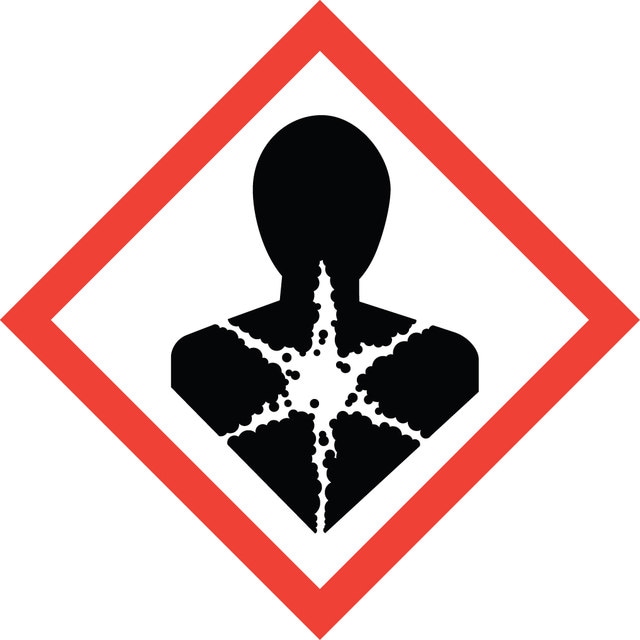
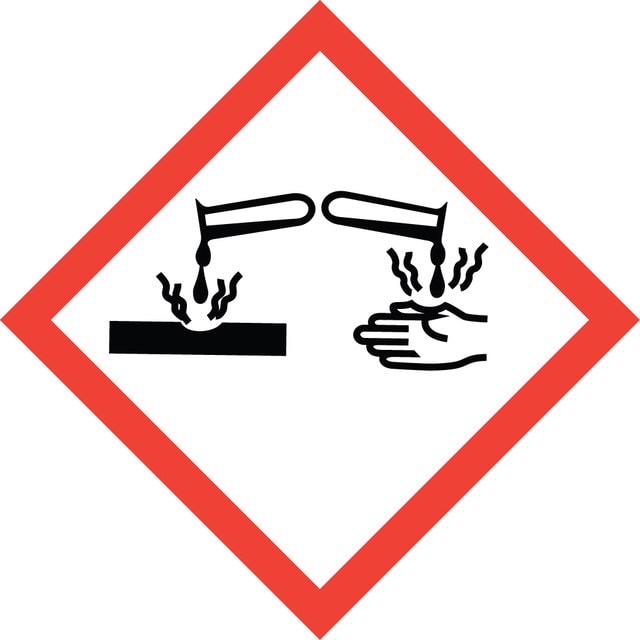

signalword
Danger
Hazard Classifications
Acute Tox. 4 Inhalation - Acute Tox. 4 Oral - Aquatic Chronic 3 - Eye Dam. 1 - Met. Corr. 1 - Skin Corr. 1B - Skin Sens. 1 - STOT RE 2 Oral - STOT SE 3
target_organs
Cardio-vascular system, Respiratory system
Classe de armazenamento
8B - Non-combustible corrosive hazardous materials
wgk
WGK 3
flash_point_f
Not applicable
flash_point_c
Not applicable
ppe
Eyeshields, Faceshields, Gloves, type P3 (EN 143) respirator cartridges
Escolha uma das versões mais recentes:
Já possui este produto?
Encontre a documentação dos produtos que você adquiriu recentemente na biblioteca de documentos.
Active Filters
Nossa equipe de cientistas tem experiência em todas as áreas de pesquisa, incluindo Life Sciences, ciência de materiais, síntese química, cromatografia, química analítica e muitas outras.
Entre em contato com a assistência técnica