

Pular para o conteúdo
Merck

61135

Crystal Violet

suitable for microscopy

Sinônimo(s):

Basic Violet 3, Gentian Violet, Hexamethylpararosaniline chloride, Methyl Violet 10B

Faça login para ver os preços organizacionais e de contrato.

Selecione um tamanho

Preço e disponibilidade não estão disponíveis no momento.

Sobre este item

Fórmula linear:
C25H30N3Cl
Número CAS:
Peso molecular:
407.98
PubChem Substance ID:
UNSPSC Code:
12171500
NACRES:
MA.02
MDL number:
Colour Index Number:
42555
Beilstein/REAXYS Number:
3580948

Pular para

Assistência Técnica
Precisa de ajuda? Nossa equipe de cientistas experientes está à sua disposição.
Estamos aqui para ajudar

Nome do produto

Crystal Violet, suitable for microscopy

SMILES string

[Cl-].CN(C)c1ccc(cc1)\C(c2ccc(cc2)N(C)C)=C3/C=C\C(C=C3)=[N+](/C)C

InChI

1S/C25H30N3.ClH/c1-26(2)22-13-7-19(8-14-22)25(20-9-15-23(16-10-20)27(3)4)21-11-17-24(18-12-21)28(5)6;/h7-18H,1-6H3;1H/q+1;/p-1

InChI key

ZXJXZNDDNMQXFV-UHFFFAOYSA-M

form

powder

technique(s)

microbe id | staining: suitable

color

green to very dark green

visual transition interval

0.1-2.0, yellow-green to blue-violet

mp

205 °C (dec.) (lit.)

density

1.190 g/cm3

ε (extinction coefficient)

≥1750 at 585-595  nm in water

suitability

suitable for microscopy (Bact., Bot., Hist., Vit.)
suitable for microscopy

antibiotic activity spectrum

fungi

application(s)

diagnostic assay manufacturing
hematology
histology

mode of action

cell membrane | interferes
enzyme | inhibits

storage temp.

room temp

Quality Level

Procurando produtos similares? Visita Guia de comparação de produtos

Comparar Itens Semelhantes

Ver Comparação Total

Mostrar diferenças

1 of 4

Este Item
32675C0775V5265
Crystal Violet suitable for microscopy

Sigma-Aldrich

61135

Crystal Violet

Crystal Violet S. No.: 785

Sigma-Aldrich

32675

Crystal Violet

Crystal Violet certified by the BSC

Sigma-Aldrich

C0775

Crystal Violet

suitability

suitable for microscopy (Bact., Bot., Hist., Vit.)

suitability

complies for sensitivity

suitability

-

suitability

-

grade

for microscopy (Bact., Bot., Hist., Vit.), indicator (pH 0.1-2.0)

grade

indicator for the determination of the redox potential

grade

certified by the Biological Stain Commission

grade

-

technique(s)

microbe id | staining: suitable

technique(s)

-

technique(s)

microbe id | staining: suitable

technique(s)

microbe id | staining: suitable

color

green to very dark green

color

S. No.: 785

color

green to very dark green

color

deep violet, purple

application(s)

diagnostic assay manufacturing
hematology
histology

application(s)

diagnostic assay manufacturing
hematology
histology

application(s)

diagnostic assay manufacturing
hematology
histology

application(s)

diagnostic assay manufacturing
hematology
histology

form

powder

form

powder

form

powder

form

aqueous solution

Application

  • Crystal violet is mainly used in Gram staining and its variants, and for staining amyloid, bacterial components, and vascular plant tissues.
  • It is used in polychrome staining of epoxy resin sections, viability staining of cultured neurons, and confocal optical sectioning to analyze meiotic structures.
  • It is also employed in the acridine orange-crystal violet staining of intracellular bacteria, microsporidian spores, and cytological smears.[1]

Biochem/physiol Actions

Gram staining is used to differentiate bacteria based on their cell wall structure. Gram-positive bacteria have a thicker cell wall with more peptidoglycan and less lipid content, while gram-negative bacteria have a thinner cell wall with less peptidoglycan and more lipid content. During the staining process, crystal violet is applied to the bacteria, followed by the iodine to form a complex that fixes the dye. A decolorizer is then used to remove the dye from gram-negative bacteria by dissolving their lipid layer. Gram-positive bacteria retain the dye due to the dehydration and shrinking of their cell walls. A counterstain, such as safranin or basic fuchsin, is applied to impart a pink color to decolorized gram-negative bacteria.
The antimicrobial properties of crystal violet are due to free radical generation and the formation of unionized dye-bacteria complexes. It inhibits bacterial protein synthesis and cell wall formation and is especially effective against Gram-positive bacteria.[2]

General description

Crystal violet, also known as Basic Violet 3 or Gentian Violet, is a basic, cationic aminoarylmethane dye. It is the N-hexamethylated derivative of pararosaniline and bears a lipophilic cation. It is primarily used in bacteriology and microscopy as the primary stain in Gram staining to classify and distinguish between Gram-positive and Gram-negative bacteria. It is indicator grade, exhibiting a color transition from yellow-green in acidic conditions to blue-violet in basic conditions. It also possesses antibacterial and antifungal properties.[1][3]

signalword

Danger

Hazard Classifications

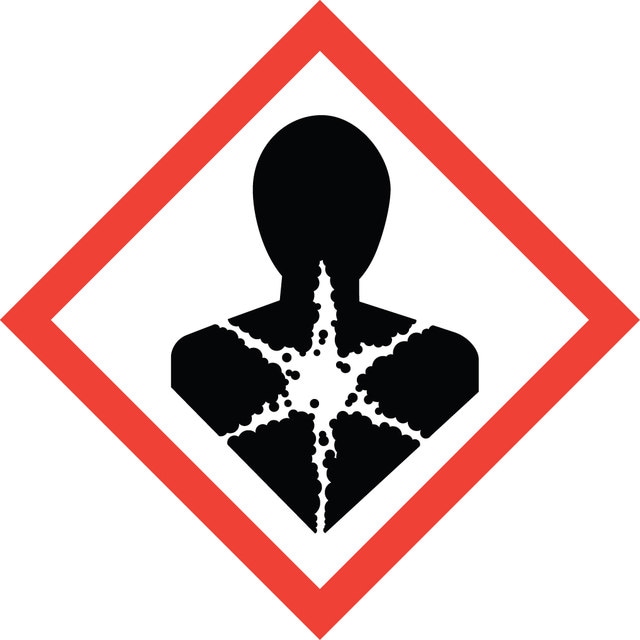
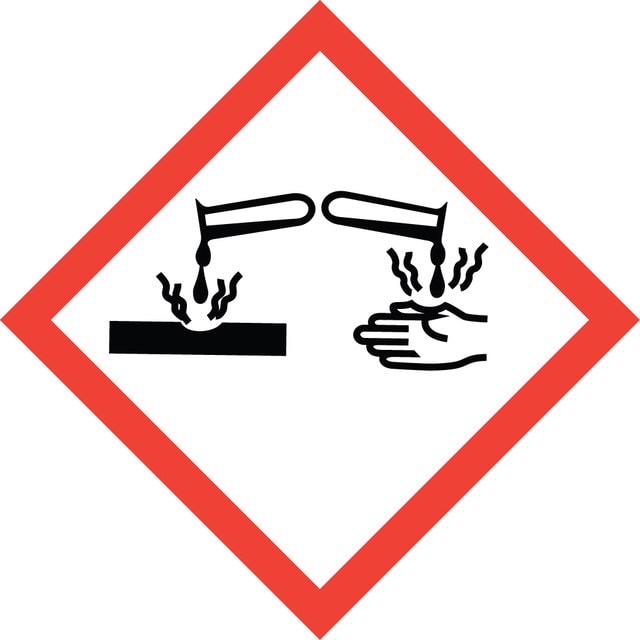
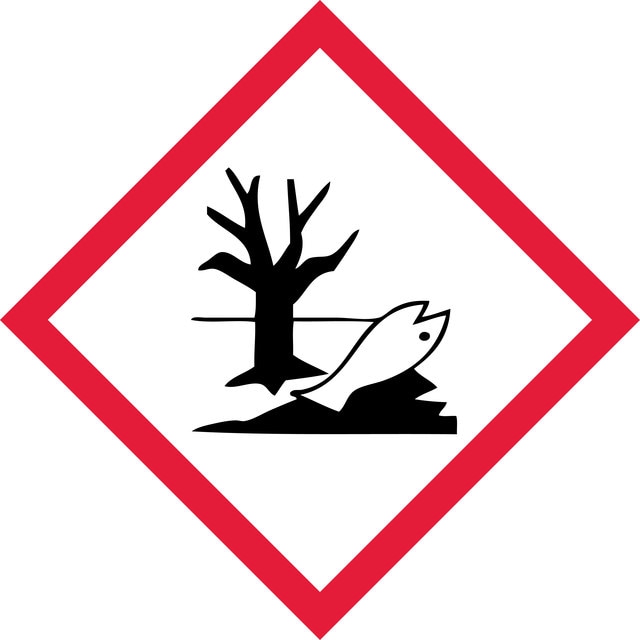
Acute Tox. 4 Oral - Aquatic Acute 1 - Aquatic Chronic 1 - Carc. 1B - Eye Dam. 1 - Muta. 2

Classe de armazenamento

6.1C - Combustible acute toxic Cat.3 / toxic compounds or compounds which causing chronic effects

wgk

WGK 3

flash_point_f

Not applicable

flash_point_c

Not applicable

ppe

Eyeshields, Faceshields, Gloves, type P3 (EN 143) respirator cartridges


Escolha uma das versões mais recentes:

Certificados de análise (COA)

Lot/Batch Number

Não está vendo a versão correta?

Se precisar de uma versão específica, você pode procurar um certificado específico pelo número do lote ou da remessa.

Já possui este produto?

Encontre a documentação dos produtos que você adquiriu recentemente na biblioteca de documentos.

Visite a Biblioteca de Documentos

Conn's Biological Stains
Kiernan & Horobin
Conn?s Biological Stains (2002)
Klaus Hunger
Industrial Dyes: Chemistry, Properties, Applications, 47-47 (2007)
Weixiao Liu et al.
Journal of industrial microbiology & biotechnology, 31(3), 127-132 (2004-04-08)
One laccase-secreting engineered strain and four white-rot fungi were tested for their capacity to decolorize nine dyes that could be classified as azo, anthraquinonic and triphenylmethane dyes. Trametes versicolor was the most efficient of the tested strains under these experimental
Histological and Histochemical Methods: Theory and Practice
J.A. Kiernan
Histological and Histochemical Methods: Theory and Practice (2015)
Wen Yue et al.
Cancer research, 69(15), 6339-6346 (2009-07-09)
The high mortality rate of lung cancer is largely due to the spread of disease to other organs. However, the molecular changes driving lung cancer invasion and metastasis remain unclear. In this study, we identified fibulin-5, a vascular ligand for

Questions

  1. Can it be used in calorimetric measurements to determine eukaryotic cell viability?

    1 answer
    1. This product has not been tested for use in any specific application, including cell viability assays. Suitability would have to be determined by the end user. However, this compound is rarely utilized in determining cell viability. Compounds such as Trypan blue and MTT tend to be the indicators of choice. Please see the links below for additional information that may be helpful.

      1. Crystal Violet in cell viability determination:
      https://pubmed.ncbi.nlm.nih.gov/27037069/

      2. Available reagents and kits for determining cell viability:
      https://www.sigmaaldrich.com/technical-documents/technical-article/cell-culture-and-cell-culture-analysis/imaging-analysis-and-live-cell-imaging/cell-viability-and-proliferation#Trypan-Blue

      Helpful?

Reviews

No rating value

Active Filters

Nossa equipe de cientistas tem experiência em todas as áreas de pesquisa, incluindo Life Sciences, ciência de materiais, síntese química, cromatografia, química analítica e muitas outras.

Entre em contato com a assistência técnica