
PD1

PeroxiDetect™ Kit
Sinônimo(s):
Peroxidase assay kit
Faça login para ver os preços organizacionais e de contrato.
Selecione um tamanho
1 KIT
R$ 4.071,00
Sobre este item
NACRES:
NA.32
UNSPSC Code:
41116158
Pular para
Assistência Técnica
Precisa de ajuda? Nossa equipe de cientistas experientes está à sua disposição.
Estamos aqui para ajudarstorage temp.
2-8°C
Quality Level
1 of 4
Este Item | CGP1 | CAT100 | RAB0408 |
|---|---|---|---|
| storage temp. 2-8°C | storage temp. −20°C | storage temp. 2-8°C | storage temp. −20°C |
| Quality Level 200 | Quality Level 200 | Quality Level 200 | Quality Level - |



Application
For the determination of aqueous peroxides and lipid hydroperoxides. Peroxides serve as a source for hydroxyl or peroxyl reactive radicals. These radicals can interact with DNA, proteins or lipid components of cells, causing cell damage that could lead to cell death. The measurement of peroxides in biological systems is an important factor in determining the degree of free radicals present in specific tissues. Lipid peroxidation has been proposed to contribute to various pathophysiological cell and tissue abnormalities. For example, increased levels of lipid peroxidation products in red blood cells were found to correlate well with the onset of diabetes mellitus in pregnant women. Cholesterol hydroperoxides accumulate in patients having excessive blood alcohol. Measurement of hydrogen peroxide in tissues has been used to study several aspects of free radical damage such as skin aging as induced by UV light and the effect of H2O2 as an inducer of elevated tyrosinase levels in melanoma cells. H2O2 has been shown to be a potent mitogen for growth-arrested cultured human aortic smooth muscle cells. The PeroxiDetect kit is capable of detection of H2O2 in aqueous solutions in the range of 1-7 nanomoles per reaction volume or of lipid hydroperoxides in organic solvents in the range of 1-16 nanomoles per reaction volume. This kit is based on the fact that peroxides will convert Fe2+ ion to Fe3+ ion at acidic pH. The Fe3+ ion will form a colored adduct with xylenol orange which is observed at 560 nm.
PeroxiDetect™ Kit is suitable for use:
- in the quantification of hydroperoxides in synaptosomal preparation[1]
- in measuring lipid peroxidation in melanoma cells[2]
- to quantify peroxides in the cerebral cortex[3]
- intestinal lumen sample[4]
Peroxides will convert Fe2+ to Fe3+ ions under acidic conditions. Fe3+ ions will then form a colored adduct with xylenol orange, which is observed at 560 nm.
General description
The PeroxiDetect Kit For the Determination of Aqueous and Lipid Hydroperoxides was developed for the measurement of peroxides in biological systems, which is an important factor in determining the degree of free radicals present in specific tissues.
Other Notes
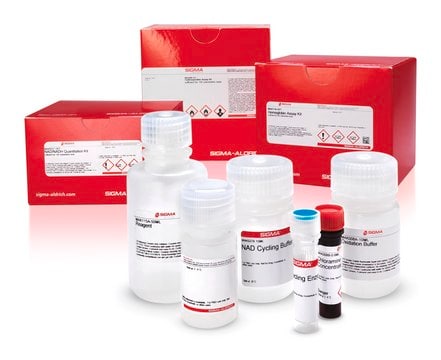
Kit contains reagents for 100 tests of aqueous peroxide and 100 tests of organic peroxide.
Legal Information
PeroxiDetect is a trademark of Sigma-Aldrich Co. LLC

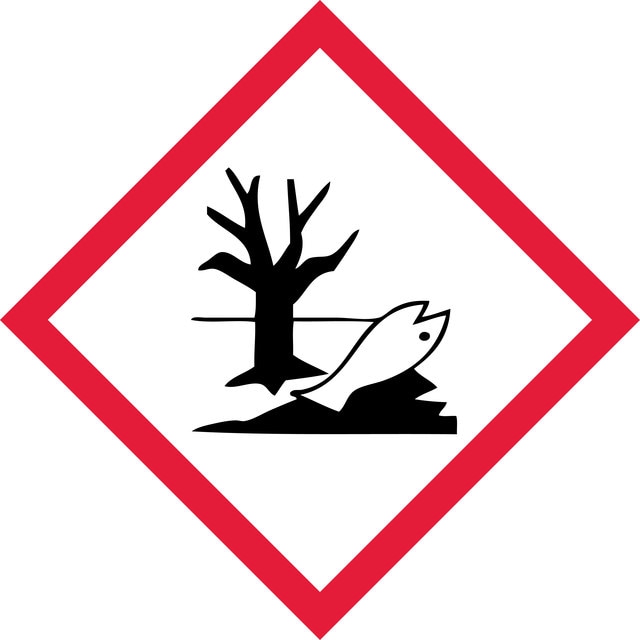
signalword
Danger
Hazard Classifications
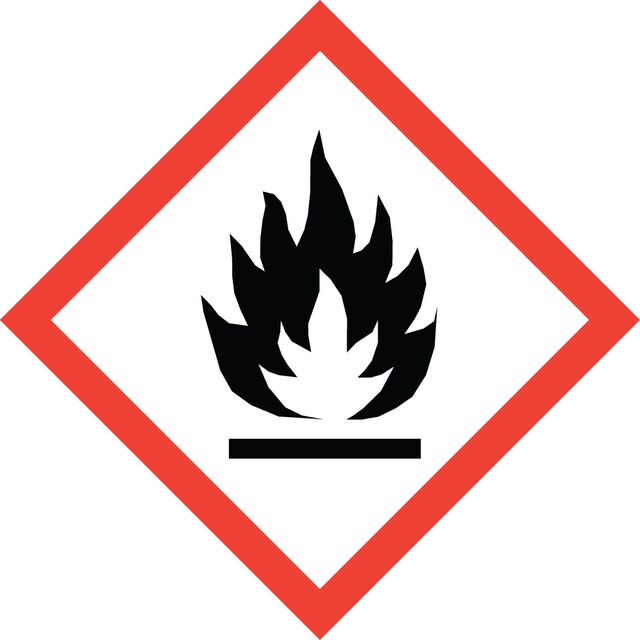
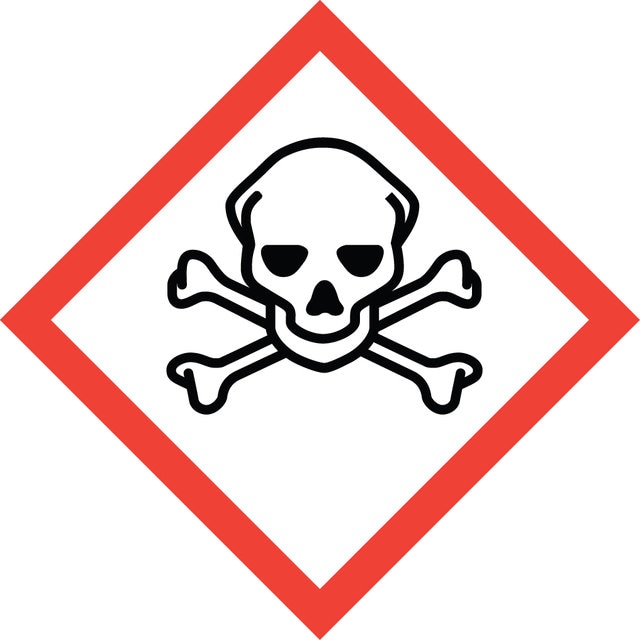
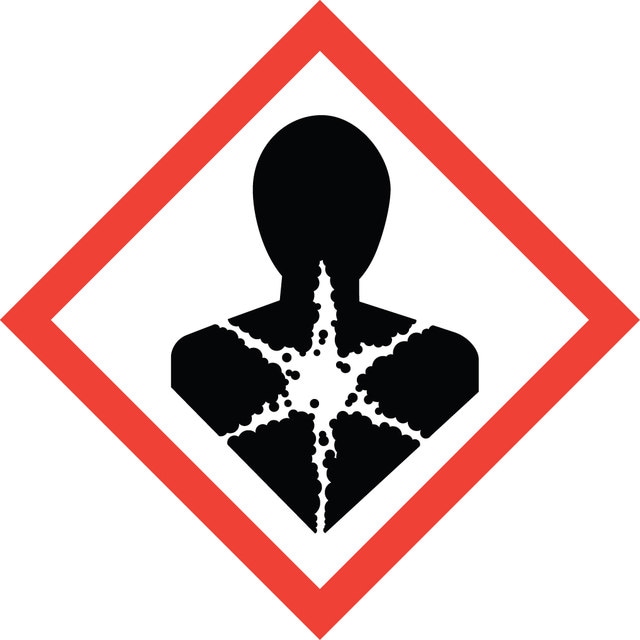
Acute Tox. 2 Inhalation - Acute Tox. 3 Dermal - Acute Tox. 4 Oral - Aquatic Acute 1 - Aquatic Chronic 1 - Eye Dam. 1 - Met. Corr. 1 - Muta. 2 - Org. Perox. C - Skin Corr. 1A - Skin Sens. 1 - STOT SE 3
target_organs
Respiratory system
Classe de armazenamento
5.2 - Organic peroxides and self-reacting hazardous materials
flash_point_f
Not applicable
flash_point_c
Not applicable
Escolha uma das versões mais recentes:
Já possui este produto?
Encontre a documentação dos produtos que você adquiriu recentemente na biblioteca de documentos.
Formation of malondialdehyde (MDA), 4-hydroxy-2-hexenal (HHE) and 4-hydroxy-2-nonenal (HNE) in fish and fish oil during dynamic gastrointestinal in vitro digestion
Larsson K, et al.
Food & Function, 7(2), 1176-1187 (2016)
E Karg et al.
The Journal of investigative dermatology, 100(2 Suppl), 209S-213S (1993-02-01)
The effects of systems generating active oxygen species (superoxide anion, hydrogen peroxide, hydroxyl radical) on tyrosinase have been studied in cultured human melanoma cells. Tyrosinase activity was determined by measuring the quantity of 5-S-L-cysteinyl-L-dopa (5-S-CD) formed in the presence of
Shaida A Andrabi et al.
Proceedings of the National Academy of Sciences of the United States of America, 103(48), 18308-18313 (2006-11-23)
Excessive activation of the nuclear enzyme, poly(ADP-ribose) polymerase-1 (PARP-1) plays a prominent role in various of models of cellular injury. Here, we identify poly(ADP-ribose) (PAR) polymer, a product of PARP-1 activity, as a previously uncharacterized cell death signal. PAR polymer
J Adachi et al.
Alcoholism, clinical and experimental research, 22(3 Suppl), 103S-107S (1998-06-11)
Profiles of very long-chain fatty acids were studied in the erythrocyte membrane of five alcoholic patients. We identified three fatty acids as cis-16-pentacosenoic acid (C25:1), cis-17-hexacosenoic acid (C26:1), and hexacosenoic acid (C26:1), and hexacosanoic acid (C26:0) by gas chromatography-mass spectrometry.
D Carone et al.
European journal of obstetrics, gynecology, and reproductive biology, 51(2), 103-109 (1993-10-01)
Oxygen free radicals produced during normal aerobic metabolism have been implicated in several pathophysiological mammalian processes. The importance of free radical-mediated fatty acid oxidation has received much attention. The generation of active oxygen species may lead to lipid peroxidation and
Conteúdo relacionado
Instructions
Active Filters
Nossa equipe de cientistas tem experiência em todas as áreas de pesquisa, incluindo Life Sciences, ciência de materiais, síntese química, cromatografia, química analítica e muitas outras.
Entre em contato com a assistência técnica