Direkt zum Inhalt
Merck

BCR293

2,2′,5,5′-Tetrachlor-biphenyl (IUPAC Nr. 52)

BCR®, certified reference material

Synonym(e):

2,2′,5,5′-Tetrachlorbiphenyl

Anmelden zur Ansicht der Organisations- und Vertragspreise.

Größe auswählen

25 MG

CHF 381.00

CHF 381.00


Warenkorb auf Verfügbarkeit prüfen

Großbestellung anfragen

Über diesen Artikel

Empirische Formel (Hill-System):
C12H6Cl4
CAS-Nummer:
Molekulargewicht:
291.99
PubChem Substance ID:
UNSPSC Code:
41116107
NACRES:
NA.24
MDL number:
Beilstein/REAXYS Number:
2053828
Ballschmiter Number:
52

Fortfahren mit

Technischer Dienst
Benötigen Sie Hilfe? Unser Team von erfahrenen Wissenschaftlern ist für Sie da.
Unterstützung erhalten

Produktname

2,2′,5,5′-Tetrachlor-biphenyl (IUPAC Nr. 52), BCR®, certified reference material

SMILES string

Clc1ccc(Cl)c(c1)-c2cc(Cl)ccc2Cl

InChI

1S/C12H6Cl4/c13-7-1-3-11(15)9(5-7)10-6-8(14)2-4-12(10)16/h1-6H

InChI key

HCWZEPKLWVAEOV-UHFFFAOYSA-N

grade

certified reference material

agency

BCR®

manufacturer/tradename

JRC

format

neat

storage temp.

2-8°C

Suchen Sie nach ähnlichen Produkten? Aufrufen Leitfaden zum Produktvergleich

Ähnliche Artikel vergleichen

Vollständigen Vergleich anzeigen

Unterschiede anzeigen

1 of 4

Dieser Artikel
BCR297BCR296BCR298
manufacturer/tradename

JRC

manufacturer/tradename

JRC

manufacturer/tradename

JRC

manufacturer/tradename

JRC

grade

certified reference material

grade

certified reference material

grade

certified reference material

grade

certified reference material

format

neat

format

neat

format

neat

format

neat

agency

BCR®

agency

BCR®

agency

BCR®

agency

BCR®

storage temp.

2-8°C

storage temp.

2-8°C

storage temp.

2-8°C

storage temp.

2-8°C

Analysis Note

For more information please see:
BCR293

Legal Information

BCR is a registered trademark of European Commission

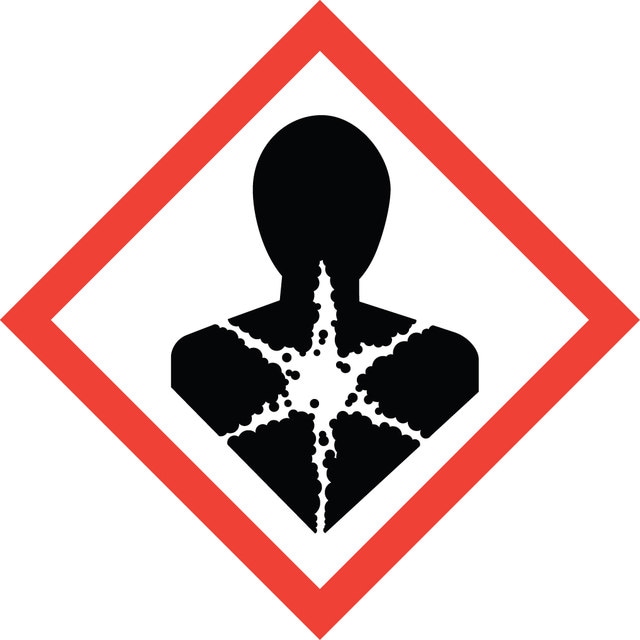
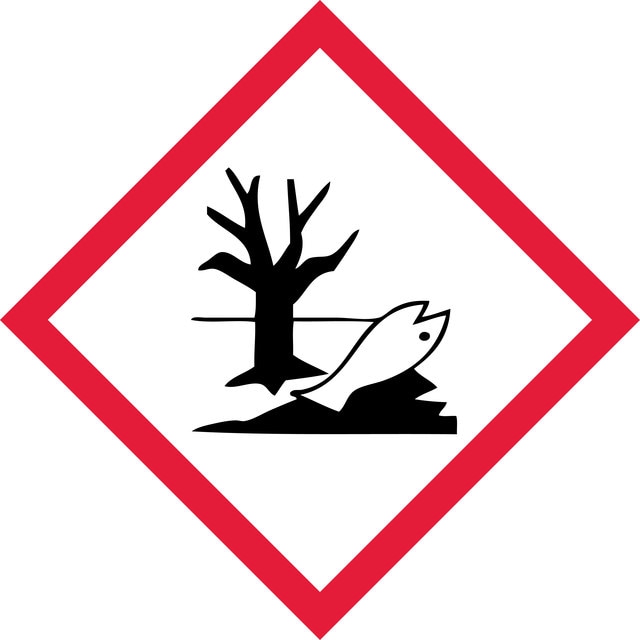
pictograms

Health hazardEnvironment

signalword

Warning

hcodes

Hazard Classifications

Aquatic Acute 1 - Aquatic Chronic 1 - STOT RE 2

Lagerklasse

11 - Combustible Solids

wgk

WGK 3

flash_point_f

Not applicable

flash_point_c

Not applicable

ppe

Eyeshields, Gloves


Analysenzertifikate (COA)

Suchen Sie nach Analysenzertifikate (COA), indem Sie die Lot-/Chargennummer des Produkts eingeben. Lot- und Chargennummern sind auf dem Produktetikett hinter den Wörtern ‘Lot’ oder ‘Batch’ (Lot oder Charge) zu finden.

Besitzen Sie dieses Produkt bereits?

In der Dokumentenbibliothek finden Sie die Dokumentation zu den Produkten, die Sie kürzlich erworben haben.

Die Dokumentenbibliothek aufrufen

Patrick Schäfer et al.
Archives of biochemistry and biophysics, 488(1), 60-68 (2009-07-01)
There are 75 full length cytochrome P450 (CYP) genes known in the genome of the nematode Caenorhabditis elegans. The individual biological functions of the vast majority are mostly as yet unknown. Here the impact of cytochrome P450 isoforms on the
Ze-Yu Yang et al.
Chemosphere, 72(10), 1435-1440 (2008-07-04)
To verify a theoretical mass balance and multiple compartment partitioning model developed to predict freely dissolved concentrations (FDCs) of hydrophobic organic chemicals (HOCs) using negligible depletion-solid phase microextraction (nd-SPME), a series of sediment slurry experiments were performed using disposable poly(dimethyl)siloxane
R J Jandacek et al.
Environment international, 36(8), 880-883 (2009-07-21)
Mice were gavaged with either (14)C-labeled 2,2'5,5' tetrachlorobiphenyl; 3,3',4,4' tetrachlorobiphenyl; or perfluorooctanoic acid. Absorption of these compounds was determined by assay of feces collected for 48 h after the gavage. Part of the animals received test diets containing olestra during
Chia-Hua Lin et al.
Toxicology letters, 188(1), 11-19 (2009-05-13)
Polychlorinated biphenyls (PCBs) are ubiquitous environmental contaminants. Much of the research has focused on the carcinogenic potential of higher chlorinated PCBs, but accumulative evidence has shown that lower chlorinated PCB congeners have initiating and promoting activities. The goal of this
Kristine L Richardson et al.
Chemical research in toxicology, 24(5), 718-725 (2011-04-13)
The rates of oxidative metabolism of two tetrachlorobiphenyl congeners were determined in hepatic microsomes from four species of sea turtles, green (Chelonia mydas), olive ridley (Lepidochelys olivacea), loggerhead (Caretta caretta), and hawksbill (Eretmochelys imbricata). Hydroxylation of 3,3',4,4'-tetrachlorobiphenyl (PCB 77), an

Questions

Reviews

No rating value

Active Filters

Unser Team von Wissenschaftlern verfügt über Erfahrung in allen Forschungsbereichen einschließlich Life Science, Materialwissenschaften, chemischer Synthese, Chromatographie, Analytik und vielen mehr..

Setzen Sie sich mit dem technischen Dienst in Verbindung