Passa al contenuto
Merck

R2625

Acido retinoico

≥98% (HPLC), powder, RAR and RXR ligand

Sinonimo/i:

ATRA, Acido all-trans-retinoico, Acido della vitamina C, Tretinoina

Autenticati per visualizzare i prezzi organizzativi e contrattuali.

Scegli un formato

50 MG

60,70 €

100 MG

102,00 €

500 MG

233,00 €

1 G

419,00 €

5 G

888,00 €

60,70 €


Per informazioni sulla disponibilità, contatta il Servizio Clienti.

Richiedi un ordine in blocco

Informazioni su questo articolo

Formula empirica (notazione di Hill):
C20H28O2
Numero CAS:
Peso molecolare:
300.44
NACRES:
NA.77
PubChem Substance ID:
UNSPSC Code:
12352106
EC Number:
206-129-0
MDL number:
Beilstein/REAXYS Number:
2057223

Vai a

Servizio Tecnico
Hai bisogno di aiuto? Il nostro team di scienziati qualificati è a tua disposizione.
Permettici di aiutarti

Nome del prodotto

Acido retinoico, ≥98% (HPLC), powder

SMILES string

CC1=C(\C=C\C(C)=C\C=C\C(C)=C\C(O)=O)C(C)(C)CCC1

InChI

1S/C20H28O2/c1-15(8-6-9-16(2)14-19(21)22)11-12-18-17(3)10-7-13-20(18,4)5/h6,8-9,11-12,14H,7,10,13H2,1-5H3,(H,21,22)/b9-6+,12-11+,15-8+,16-14+

InChI key

SHGAZHPCJJPHSC-YCNIQYBTSA-N

biological source

synthetic (organic)

assay

≥98% (HPLC)

form

powder

technique(s)

cell culture | mammalian: suitable

color

yellow

mp

180-181 °C (lit.)

solubility

chloroform: 50 mg/mL

storage temp.

−20°C

Quality Level

Cerchi prodotti simili? Visita Guida al confronto tra prodotti

Confronta articoli simili

Visualizza il confronto per intero

Mostra le differenze

1 of 4

Questo articolo
R46439514417772
Acido retinoico ≥98% (HPLC), powder

Sigma-Aldrich

R2625

Acido retinoico

Retinolo BioXtra, ≥97.5% (HPLC), ~3100 U/mg

Sigma-Aldrich

95144

Retinolo

Retinolo ≥95.0% (HPLC), ~2700 U/mg

Sigma-Aldrich

17772

Retinolo

assay

≥98% (HPLC)

assay

≥98% (HPLC)

assay

≥97.5% (HPLC)

assay

≥95.0% (HPLC)

form

powder

form

powder

form

(Powder or Powder with Lumps)

form

(Powder or Crystal with Lumps)

technique(s)

cell culture | mammalian: suitable

technique(s)

HPLC: suitable

technique(s)

-

technique(s)

-

Quality Level

200

Quality Level

200

Quality Level

200

Quality Level

100

storage temp.

−20°C

storage temp.

−20°C

storage temp.

−20°C

storage temp.

−20°C

solubility

chloroform: 50 mg/mL

solubility

-

solubility

-

solubility

-

Application

  • L′acido retinoico (RA) è stato utilizzato per la differenziazione delle cellule staminali embrionali in motoneuroni.[1]
  • È stato adoperato per la differenziazione dell′ectoderma di Xenopus nel pancreas.[2]
  • È stato usato anche per studiare la regolazione epigenetica del RARα (il recettore dell′acido retinoico α).[3]
  • È stato impiegato per studiare la segnalazione della transizione della prospermatogonia in spermatogonia da parte del RA.[4]

Biochem/physiol Actions

L′acido all−trans−retinoico (ATRA) è un ligando per il recettore dell′acido retinoico (RAR) e per il recettore X retinoide (RXR). Il RAR e il RXR legati fungono da fattori di trascrizione che regolano la crescita e la differenziazione delle cellule normali e maligne. I citocromi P450 (CYP) catalizzano la 4-idrossilazione dell′ATRA. L′acido retinoico dà via al processo di trasformazione delle cellule staminali embrionali in neuroni.
Ligando per il recettore dell′acido retinoico (RAR) e per il recettore X retinoide (RXR); dà il via al processo di trasformazione delle cellule staminali embrionali in neuroni.

Features and Benefits

Questo composto è descritto nella pagina Recettori nucleari (non steroidei) del Manuale di classificazione dei recettori e trasduzione dei segnali. Per consultare altre pagine del manuale, è sufficiente fare clic qui.

General description

L'acido retinoico (RA), un retinoide, esercita un′ampia serie di effetti biologici. Svolge un ruolo nella regolazione della differenziazione e della proliferazione cellulare sia nelle cellule normali che in quelle trasformate, influenzando potenzialmente gli oncogeni.[5] L'acido retinoico tutto trans (ATRA) è considerato il metabolita della vitamina A con la maggiore rilevanza e attività funzionale.[6] RA può agire come un tipo di molecola segnale attraverso un recettore nucleare per regolare la differenziazione regionale nel sistema nervoso centrale. A una concentrazione di 1 nM (con differenziazione massima a 1 µM), RA induce la differenziazione terminale morfologica e funzionale in una linea cellulare di leucemia promielocitica umana, indicando il suo potenziale coinvolgimento nella differenziazione delle specifiche cellule ematopoietiche. Inoltre, RA può avere un impatto indiretto sulla differenziazione neuronale modificando l'espressione dei recettori di superficie delle cellule neuronali per i fattori di crescita peptidici.[7]

RA e altri retinoidi possono anche inibire la proliferazione cellulare e stimolare l'attività della tirosinasi in una linea cellulare di melanoma umano,[8] inibendo al contempo l'adesione cellula-substrato e la motilità nei melanociti. ATRA svolge un ruolo di importanza vitale nella formazione del sistema vascolare nei mammiferi. In particolare, regola la proliferazione delle cellule endoteliali e il rimodellamento vascolare durante l'angiogenesi dei tessuti.[6]

signalword

Danger

Hazard Classifications

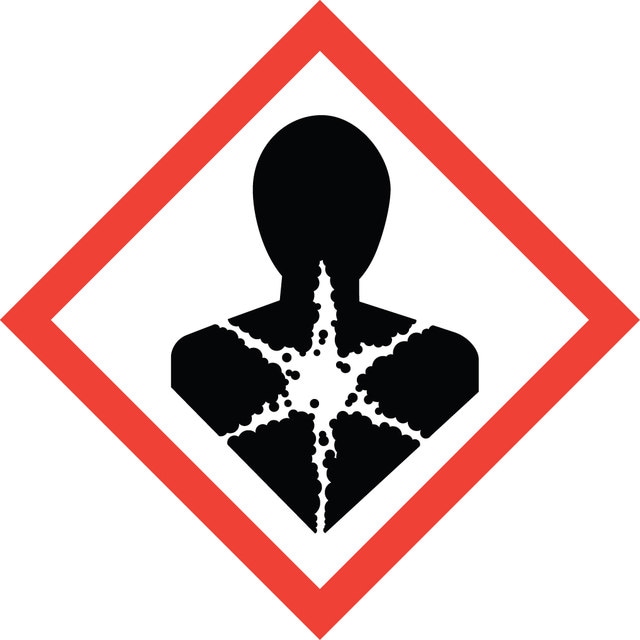
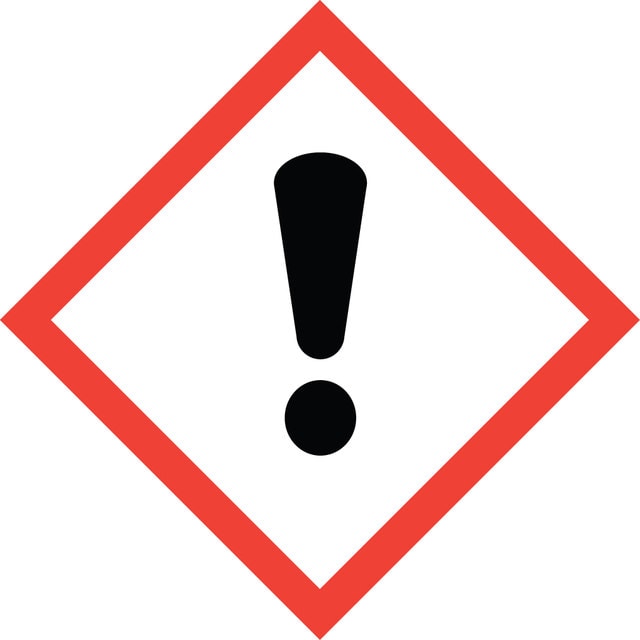
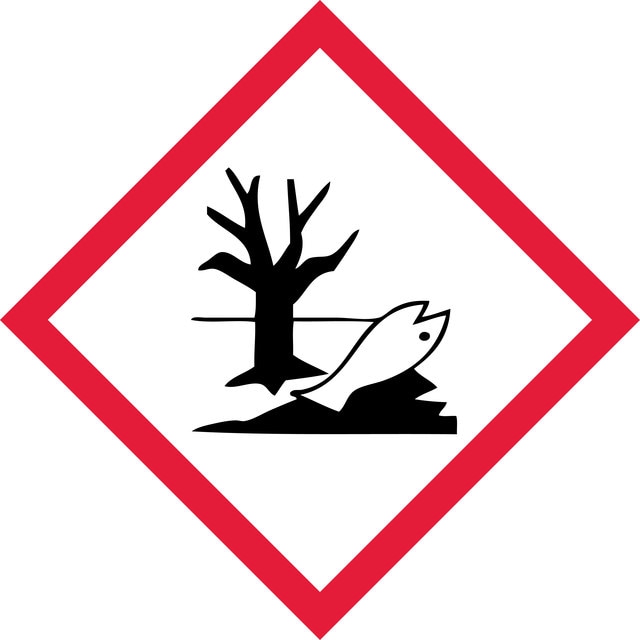
Acute Tox. 4 Oral - Aquatic Acute 1 - Aquatic Chronic 1 - Repr. 1B - Skin Irrit. 2

Classe di stoccaggio

6.1C - Combustible acute toxic Cat.3 / toxic compounds or compounds which causing chronic effects

wgk

WGK 2

flash_point_f

Not applicable

flash_point_c

Not applicable

ppe

dust mask type N95 (US), Eyeshields, Gloves


Scegli una delle versioni più recenti:

Certificati d'analisi (COA)

Lot/Batch Number

Non trovi la versione di tuo interesse?

Se hai bisogno di una versione specifica, puoi cercare il certificato tramite il numero di lotto.

Possiedi già questo prodotto?

I documenti relativi ai prodotti acquistati recentemente sono disponibili nell’Archivio dei documenti.

Visita l’Archivio dei documenti

Li Deng et al.
Journal of stroke and cerebrovascular diseases : the official journal of National Stroke Association, 28(9), 2555-2562 (2019-06-30)
The present study aimed to investigate the effects of Mesenchymal stem cells/glial cell line derived neurotrophic factor (MSCs/GDNF) transplantation on nerve reconstruction in rats with intracerebral hemorrhage. GDNF transduction to MSCs was using adenovirus vector pAdEasy-1-pAdTrack-CMV prepared. Intracerebral hemorrhage (ICH)
Recovery from paralysis in adult rats using embryonic stem cells.
Deshpande DM et al.
Annals of Neurology, 60, 32-32 (2006)
Retinoic acid regulates both expression of the nerve growth factor receptor and sensitivity to nerve growth factor.
Scheibe RJ and Wagner JA
The Journal of Biological Chemistry, 267, 17611-17616 (1992)
Cellular and micro-environmental responses influencing the antitumor activity of all-trans retinoic acid in breast cancer
Caricasulo MA, et al.
Cell communication and signaling : CCS, 22, 127-127 (2024)
Epigenetic regulation by RARa maintains ligand-independent transcriptional activity.
Laursen KB et al.
Nucleic Acids Research, 40, 102-102 (2012)

Articoli

Derivation and characterization of functional human neural stem cell derived oligodendrocyte progenitor cells (OPCs) that efficiently myelinate primary neurons in culture.

Protocolli

Step-by-step culture protocols for neural stem cell culture including NSC isolation, expansion, differentiation and characterization.

Contenuto correlato

Domande

1–10 di 15 domande  
  1. It was mentioned that the storing temperature is -20. How long can I store the powder in -20 and also how long can I store the 100mM diluted in DMSO in -80 degree?

    1 risposta
    1. When stored as recommended, the lyophilized retinoic acid is expected maintain stability at least until the recommended retest date printed on the lot specific certificate of analysis:
      https://www.sigmaaldrich.com/product/sigma/r2625#product-documentation

      Storage of retinoic acid in DMSO at -80c has not evaluated. Protecting the vials from light, and storing the solution under an inert gas will help to extend the stability.

      Utile?

  2. Can RA solutions be filtered with 0.22 uM filters?

    1 risposta
    1. Yes, the RA solutions can be filtered with 0.22 uM filters.
      The Product Information Sheet also mentions: Perform sterile filtering RA solutions before addition to suspension cells.
      https://www.sigmaaldrich.com/deepweb/assets/sigmaaldrich/product/documents/366/983/r2625pis-ms.pdf

      Utile?

  3. How long can I storage RA in DMSO? (in -70ºC and 4ºC)

    1 risposta
    1. To assure optimal performance, solutions should be prepared fresh. However, 40 mg/ml in DMSO or 3.0 mg/ml in ethanol (vortexing may be needed) have been stored at -70°C or -20°C for up to two weeks. Solution should be prepared and stored protected from light and under inert gas. Note that aqueous solutions deteriorate quickly.

      Utile?

  4. Is it possible to dilute RA in alcohol?

    1 risposta
    1. This product is soluble in 95% Ethanol at 2.7mg/mL and in absolute ethanol at 3mg/mL. Please see the link below to review the product datasheet for additional solvents and solution storage information:
      https://www.sigmaaldrich.com/deepweb/assets/sigmaaldrich/product/documents/231/812/r2625pis.pdf

      Utile?

  5. Can I dissolve retinoic acid in PEG 1500?

    1 risposta
    1. This compound has not been tested for solubility in PEG 1500. Various sources report that retinoic acid is slightly soluble in PEG 400. This information has not been validated. Other solvents include DMSO at 25 mg/mL, ethanol at 10 mg/mL, DMF at 20 mg/mL, chloroform at 40 mg/mL, and acetone at 30 mg/mL. Please see the link below to review the product datasheet which includes additional information on solubility and stability:
      https://www.sigmaaldrich.com/deepweb/assets/sigmaaldrich/product/documents/231/812/r2625pis.pdf

      Utile?

  6. After dissolving the Retinoic acid in DMSO to create a 20mM stock concentration, I diluted it 1,000 times to achieve a final concentration of 20μM. Crystals have formed in the cell culture dishes where I added this solution but not in the DMSO vehicle dishes. Could there be an issue with this lot, or are there other reasons why crystals are forming?

    1 risposta
    1. The product R2625 is soluble at around 40 mg/ml in DMSO, yielding a clear solution. Although the stock seems fine, adding the DMSO solution to the media causes crystals to form. This is common when diluting a high-concentration stock made in organic solvents into aqueous media. To address this, try reducing the stock solution to lower concentrations in DMSO multiple times before adding it to the media to ensure an adequate organic environment around the product. There is nothing wrong with the product itself.

      Utile?

  7. Can I reconstitute retinoic acid in water instead of chlorofrom? What is its solubility in water?

    1 risposta
    1. The solubility of each Lot of Retinoic Acid is tested in chloroform as shown on the specification sheet.
      https://www.sigmaaldrich.com/specification-sheets/150/073/R2625-BULK________SIGMA____.pdf

      The Product Information Sheet provides additional solvents, however, water is not recommended:
      "RA is more sensitive to light, heat, and air in solution. It is practically insoluble in water; slightly soluble in alcohol and chloroform, sparingly soluble in ether, and soluble in methylene chloride. RA is soluble at about 40 mg/ml in DMSO and at about 2.7 mg/ml in 95% ethanol (vortexing may be needed). "
      https://www.sigmaaldrich.com/deepweb/assets/sigmaaldrich/product/documents/231/812/r2625pis.pdf

      Utile?

  8. How long can you store RA in solution?

    1 risposta
    1. Stock solutions can be stored at -70 °C for up to two weeks.

      Utile?

  9. I bought 1 gram. How do I crush the vial? I can't break it with force.

    1 risposta
    1. The 1 G pack size is packaged in a 5 mL glass ampule. This packaging may be opened using ampule breakers. Kindly review the following links: https://www.sigmaaldrich.com/US/en/product/aldrich/z693847 and https://www.sigmaaldrich.com/US/en/product/aldrich/z122890.

      Utile?

  10. Could we reconstitute Retinoic Acid 30mM in DMSO instead of chloroform?

    1 risposta
    1. Yes, this product is soluble in DMSO at 25 mg/mL.

      Utile?

1–10 di 15 domande  

Recensioni

Nessuna valutazione

Filtri attivi

Il team dei nostri ricercatori vanta grande esperienza in tutte le aree della ricerca quali Life Science, scienza dei materiali, sintesi chimica, cromatografia, discipline analitiche, ecc..

Contatta l'Assistenza Tecnica