




This product undergoes temperature processes during production. Exact manufacturing methods are proprietary and cannot be disclosed.
221899

Vanadium(V) oxide
≥99.6% trace metals basis, powder
Vanadium(V) oxide
Synonym(s):
vanadium, Divanadium pentaoxide, Divanadium pentoxide, Pentaoxodivanadium, Vandia
Sign In to View Organizational & Contract Pricing
Select a Size
5 G
$58.39
250 G
$89.10
1 KG
$281.00
$58.39
List Price$68.70Save 15%Available to ship TODAYDetails
Subscriptions are currently unavailable.
Ships Every 4 weeks
About This Item
Linear Formula:
V2O5
CAS Number:
Molecular Weight:
181.88
EC Number:
MDL number:
UNSPSC Code:
12161600
PubChem Substance ID:
NACRES:
NA.22
Skip To
Product Name
Vanadium(V) oxide, ≥99.6% trace metals basis
assay
≥99.6% trace metals basis
form
powder
reaction suitability
core: vanadium
reagent type: catalyst
mp
690 °C (lit.)
density
3.35 g/mL at 25 °C (lit.)
SMILES string
O=[V](=O)O[V](=O)=O
InChI
1S/5O.2V
InChI key
GNTDGMZSJNCJKK-UHFFFAOYSA-N
Looking for similar products? Visit Product Comparison Guide
1 of 4
This Item | 223794 | 1.00824 | 590088 |
|---|---|---|---|
| assay ≥99.6% trace metals basis | assay ≥98% | assay ≥99.0% | assay 99.9% trace metals basis |
| reaction suitability core: vanadium, reagent type: catalyst | reaction suitability core: vanadium, reagent type: catalyst | reaction suitability - | reaction suitability core: vanadium, reagent type: catalyst |
| form powder | form powder | form solid | form - |
| Quality Level 200 | Quality Level 200 | Quality Level 200 | Quality Level 200 |
| mp 690 °C (lit.) | mp 690 °C (lit.) | mp 690 °C | mp - |
| density 3.35 g/mL at 25 °C (lit.) | density 3.35 g/mL at 25 °C (lit.) | density 3.36 g/cm3 at 20 °C | density - |
Application
- Vanadium(V) oxide is used in the preparation of vanadium alloys.[1]
- It is an oxidizing agent, commonly used as a catalyst in contact process (production of sulfuric acid) to oxidize sulfur dioxide to sulfur trioxide.[2]
- It is widely used as a host material for lithium-ion battery, sodium-ion battery, magnesium-ion battery and pseudocapacitors.[3][4]
- V2O5 is also used as the charge injection and extraction materials in organic electronic devices.[5]
signalword
Danger
Hazard Classifications
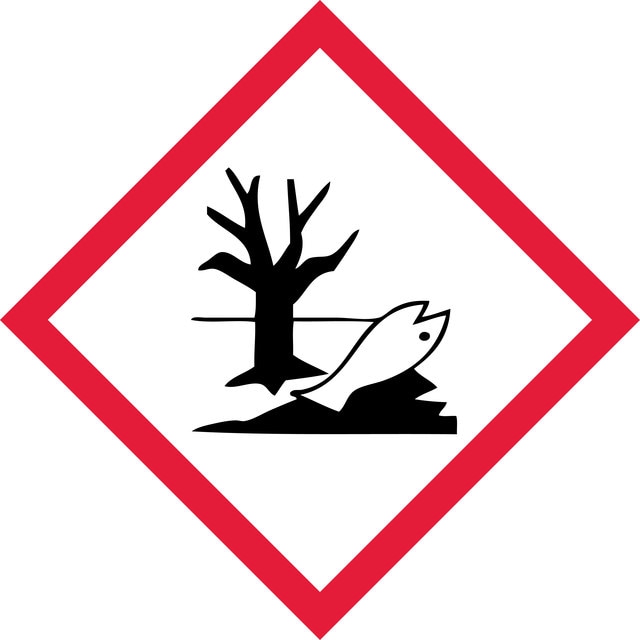
Acute Tox. 2 Inhalation - Acute Tox. 3 Oral - Aquatic Chronic 2 - Carc. 1B - Lact. - Muta. 2 - Repr. 2 - STOT RE 1 Inhalation - STOT SE 3
target_organs
Respiratory system, Respiratory Tract
Storage Class
6.1A - Combustible acute toxic Cat. 1 and 2 / very toxic hazardous materials
wgk_germany
WGK 3
flash_point_f
Not applicable
flash_point_c
Not applicable
ppe
Eyeshields, Faceshields, Gloves, type P3 (EN 143) respirator cartridges
Choose from one of the most recent versions:
Already Own This Product?
Find documentation for the products that you have recently purchased in the Document Library.
T G Folland et al.
Nature communications, 9(1), 4371-4371 (2018-10-24)
Metasurfaces control light propagation at the nanoscale for applications in both free-space and surface-confined geometries. However, dynamically changing the properties of metasurfaces can be a major challenge. Here we demonstrate a reconfigurable hyperbolic metasurface comprised of a heterostructure of isotopically enriched
Bilayered vanadium oxide as the host material for reversible beyond lithium ion intercalation.
Clites M, et al.
Advanced Materials Letters, 8(6), 679-688 (2017)
Molecular structure-reactivity relationships for the oxidation of sulfur dioxide over supported metal oxide catalysts.
Dunn JP, et al.
Catalysis Today, 53(4), 543-556 (1999)
Vanadium and vanadium compounds.
Ullmann's Encyclopedia of Industrial Chemistry, 1-22 (2000)
Self-assembled vanadium pentoxide (V2O5) hollow microspheres from nanorods and their application in lithium-Ion batteries.
Cao A-M, et al.
Angewandte Chemie (International Edition in English), 44(28), 4391-4395 (2005)
Articles
Professor Chen (Nankai University, China) and his team explain the strategies behind their recent record-breaking organic solar cells, reaching a power conversion efficiency of 17.3%.
-
Has this product undergone an annealing process?
1 answer-
Helpful?
-
-
How can I determine the shelf life / expiration / retest date of this product?
1 answer-
If this product has an expiration or retest date, it will be shown on the Certificate of Analysis (COA, CofA). If there is no retest or expiration date listed on the product's COA, we do not have suitable stability data to determine a shelf life. For these products, the only date on the COA will be the release date; a retest, expiration, or use-by-date will not be displayed.
For all products, we recommend handling per defined conditions as printed in our product literature and website product descriptions. We recommend that products should be routinely inspected by customers to ensure they perform as expected.
For products without retest or expiration dates, our standard warranty of 1 year from the date of shipment is applicable.
For more information, please refer to the Product Dating Information document: https://www.sigmaaldrich.com/deepweb/assets/sigmaaldrich/marketing/global/documents/418/501/product-dating-information-06-25-mk.pdfHelpful?
-
-
Does the particles are in nano-scale? If so, what is the size in nanometers.
1 answer-
The particle size of this material is not determined on a lot to lot basis. Historical data indicates 50% as +80 MESH or 177 um and 90% as +200 mesh or 74 um.
Helpful?
-
-
How is shipping temperature determined? And how is it related to the product storage temperature?
1 answer-
Products may be shipped at a different temperature than the recommended long-term storage temperature. If the product quality is sensitive to short-term exposure to conditions other than the recommended long-term storage, it will be shipped on wet or dry-ice. If the product quality is NOT affected by short-term exposure to conditions other than the recommended long-term storage, it will be shipped at ambient temperature. As shipping routes are configured for minimum transit times, shipping at ambient temperature helps control shipping costs for our customers. For more information, please refer to the Storage and Transport Conditions document: https://www.sigmaaldrich.com/deepweb/assets/sigmaaldrich/marketing/global/documents/316/622/storage-transport-conditions-mk.pdf
Helpful?
-
-
How big is the particle?
1 answer-
The particle size is not determined on a lot to lot basis. However, historical data indicates that typically 50% are +80 mesh and 90% are +200 mesh.
Helpful?
-
Active Filters
Our team of scientists has experience in all areas of research including Life Science, Material Science, Chemical Synthesis, Chromatography, Analytical and many others.
Contact Technical Service