
Skip to Content
MilliporeSigma

AB758

Anti-Collagen Type I (COL1A1) Antibody

CHEMICON®, goat polyclonal

Synonym(s):

Anti-CAFYD, Anti-EDSARTH1, Anti-EDSC, Anti-OI1, Anti-OI2, Anti-OI3, Anti-OI4

Sign In to View Organizational & Contract Pricing.

Select a Size

200 μG

$668.00

$668.00


Check Cart for Availability

Request a Bulk Order

About This Item

UNSPSC Code:
12352203
eCl@ss:
32160702
NACRES:
NA.41

Skip To

Technical Service
Need help? Our team of experienced scientists is here for you.
Let Us Assist

Product Name

Anti-Collagen Type I Antibody, Chemicon®, from goat

Quality Level

biological source

goat

antibody form

affinity purified immunoglobulin

antibody product type

primary antibodies

clone

polyclonal

purified by

affinity chromatography

species reactivity

human, bovine

manufacturer/tradename

Chemicon®

technique(s)

ELISA: suitable
dot blot: suitable
immunocytochemistry: suitable
immunohistochemistry: suitable
western blot: suitable

suitability

not suitable for immunohistochemistry (Paraffin)

NCBI accession no.

UniProt accession no.

shipped in

wet ice

target post-translational modification

unmodified

Gene Information

human ... COL1A1(1277)

Compare Similar Items

View Full Comparison

Show Differences

1 of 4

This Item
AB758BAB745AB765P
antibody form

affinity purified immunoglobulin

antibody form

affinity purified immunoglobulin

antibody form

purified immunoglobulin (Semi-purified)

antibody form

serum

Quality Level

100

Quality Level

100

Quality Level

100

Quality Level

100

biological source

goat

biological source

goat

biological source

rabbit

biological source

rabbit

clone

polyclonal

clone

polyclonal

clone

polyclonal

clone

polyclonal

technique(s)

ELISA: suitable, immunocytochemistry: suitable, western blot: suitable, dot blot: suitable, immunohistochemistry: suitable

technique(s)

ELISA: suitable, dot blot: suitable, immunohistochemistry: suitable, western blot: suitable

technique(s)

ELISA: suitable, immunohistochemistry: suitable, western blot: suitable

technique(s)

ELISA: suitable, immunohistochemistry: suitable, radioimmunoassay: suitable, western blot: suitable

species reactivity

human, bovine

species reactivity

bovine, human

species reactivity

human

species reactivity

mouse

Application

Anti-Collagen Type I Antibody is an antibody against Collagen Type I for use in DB, ELISA, IC, IH & WB.
Dot and slot blotting: 1:100-1:500

ELISA: 1:50-1:100

Indirect immunohistochemistry (frozen sections only): 1:10-1:20

Indirect immunocytochemistry: 1:10-1:20

Antibody reacts with human collagen I in reduced westerns with supernatant samples from serum-free cultures of human fibroblasts {LMF, personal communication}.

Not recommended for paraffin tissue sections.

Optimal working dilutions must be determined by the end user.

Biochem/physiol Actions

Recognizes Human type I collagen as demonstrated by ELISA. Less than 10% cross reactivity with collagen types II, III, IV, V, and VI. May show reactivity to type I collagen from other species. AB758 has not been tested with other extracellular matrix proteins (e.g., laminin, fibronectin).

Immunogen

Human placental collagen type I isolated by limited pepsin digestion and selective salt precipitation.

Other Notes

Concentration: Please refer to the Certificate of Analysis for the lot-specific concentration.

Physical form

Affinity Purified immunoglobulin. Prior to purification the antisera was adsorbed against collagen types II, III, IV, V and VI immobilized on Sepharose 4B.. Liquid in 0.5 mL of 100 mM borate buffered saline, pH 8.0, no preservatives.

Legal Information

CHEMICON is a registered trademark of Merck KGaA, Darmstadt, Germany
Sepharose is a trademark of Cytiva

Not finding the right product?  

Try our Product Selector Tool.
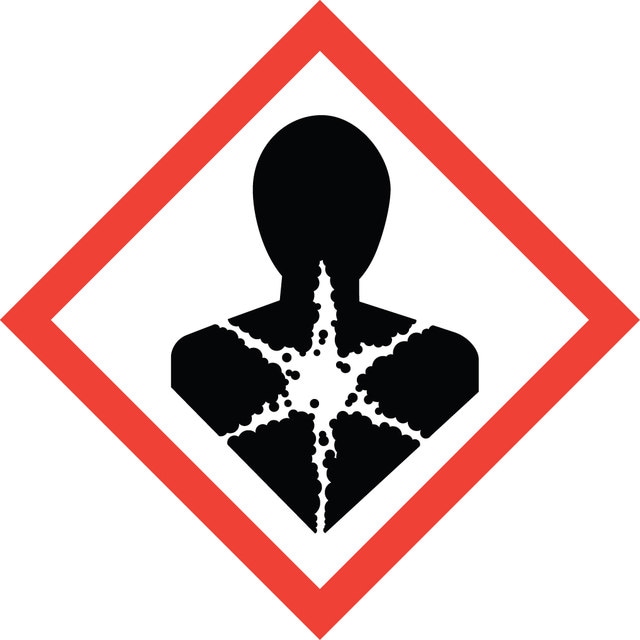
pictograms

Health hazard

signalword

Danger

hcodes

Hazard Classifications

Repr. 1B

Storage Class

6.1D - Non-combustible acute toxic Cat.3 / toxic hazardous materials or hazardous materials causing chronic effects

wgk

nwg

flash_point_f

Not applicable

flash_point_c

Not applicable


Certificates of Analysis (COA)

Search for Certificates of Analysis (COA) by entering the products Lot/Batch Number. Lot and Batch Numbers can be found on a product’s label following the words ‘Lot’ or ‘Batch’.

Already Own This Product?

Find documentation for the products that you have recently purchased in the Document Library.

Visit the Document Library

Maria-Grazia Spiga et al.
Investigative ophthalmology & visual science, 51(6), 3029-3041 (2010-01-22)
To design a glucocorticoid-inducible virus vector overexpressing recombinant matrix metalloproteinase 1 (MMP1) and counteract extracellular matrix deposition in the trabecular meshwork only when steroid is present. Endogenous MMP1 expression was measured in primary human trabecular meshwork cells (HTM) treated with
I Durán et al.
Developmental biology, 354(1), 160-172 (2011-03-23)
The skeleton of zebrafish fins consists of lepidotrichia and actinotrichia. Actinotrichia are fibrils located at the tip of each lepidotrichia and play a morphogenetic role in fin formation. Actinotrichia are formed by collagens associated with non-collagen components. The non-collagen components
Ben Yi Tew et al.
Oncogene, 38(21), 4002-4014 (2019-02-01)
The functional role of human derived stromal cells in the tumor microenviornment of CNS metastases (CM) remain understudied. The purpose of the current study was to isolate and characterize stromal cells of the tumor microenvironment in CM. Four different patient-derived
Andrea L Lalley et al.
Journal of orthopaedic research : official publication of the Orthopaedic Research Society, 33(11), 1693-1703 (2015-05-20)
Musculoskeletal injuries greatly affect the U.S. population and current clinical approaches fail to restore long-term native tissue structure and function. Tissue engineering is a strategy advocated to improve tendon healing; however, the field still needs to establish biological benchmarks for
Eva Crosas-Molist et al.
Arteriosclerosis, thrombosis, and vascular biology, 35(4), 960-972 (2015-01-17)
Marfan's syndrome is characterized by the formation of ascending aortic aneurysms resulting from altered assembly of extracellular matrix microfibrils and chronic tissue growth factor (TGF)-β signaling. TGF-β is a potent regulator of the vascular smooth muscle cell (VSMC) phenotype. We

Questions

Reviews

No rating value

Active Filters

Our team of scientists has experience in all areas of research including Life Science, Material Science, Chemical Synthesis, Chromatography, Analytical and many others.

Contact Technical Service