Skip to Content
MilliporeSigma

HKI1MAG-99K

MILLIPLEX® Human Kidney Injury Panel

Configurable Human Kidney Toxicity 8-plex Panel 1

Sign In to View Organizational & Contract Pricing.
To order a Milliplex® kit, please search for your analyte of interest.

About This Item

UNSPSC Code:
12161503
NACRES:
NA.84
eCl@ss:
32161000

Skip To

Technical Service
Need help? Our team of experienced scientists is here for you.
Let Us Assist

Product Name

MILLIPLEX® Human Kidney Injury Panel, Configurable Human Kidney Toxicity 8-plex Panel 1

species reactivity

human

Quality Level

packaging

pkg of 1 ea

manufacturer/tradename

Milliplex®

assay range

accuracy: 73-117%
sensitivity: 0.010-6.473 ng/mL
(MinDC = 2SD)

standard curve range: 0.005-5 ng/mL
(IP-10)

standard curve range: 0.02-25 ng/mL
(Renin)

standard curve range: 0.05-50 ng/mL
(GSTα)

standard curve range: 0.05-50 ng/mL
(KIM-1)

standard curve range: 0.10-100 ng/mL
(TIMP-1)

standard curve range: 0.20-200 ng/mL
(Calbindin)

standard curve range: 0.34-350 ng/mL
(Collagen IV)

standard curve range: 0.49-500 ng/mL
(TFF-3)

standard curve range: 5.86-6,000 ng/mL
(FABP1)

inter-assay cv: <15%
intra-assay cv: <10%

technique(s)

multiplexing: suitable

input

urine

detection method

fluorometric (Luminex® xMAP® technology)

shipped in

wet ice

storage temp.

2-8°C

Compare Similar Items

View Full Comparison

Show Differences

1 of 4

This Item
HKI2MAG-99KHKI4MAG-99KHKI6MAG-99K
species reactivity

human

species reactivity

human

species reactivity

human

species reactivity

human

assay range

accuracy: 73-117%, standard curve range: 0.005-5 ng/mL
(IP-10), standard curve range: 0.05-50 ng/mL
(GSTα), standard curve range: 0.10-100 ng/mL
(TIMP-1), standard curve range: 0.34-350 ng/mL
(Collagen IV), standard curve range: 5.86-6,000 ng/mL
(FABP1), inter-assay cv: <15%
intra-assay cv: <10%, standard curve range: 0.02-25 ng/mL
(Renin), standard curve range: 0.20-200 ng/mL
(Calbindin), sensitivity: 0.010-6.473 ng/mL
(MinDC = 2SD), standard curve range: 0.49-500 ng/mL
(TFF-3), standard curve range: 0.05-50 ng/mL
(KIM-1)

assay range

accuracy: 95-109%, sensitivity: 0.015-5.359 ng/mL
(MinDC = 2SD), standard curve range: 0.01-10 ng/mL
(EGF), standard curve range: 0.02-20 ng/mL
(Lipocalin-2/ NGAL), standard curve range: 0.20-200 ng/mL
(Cystatin C), standard curve range: 0.59-600 ng/mL
(Osteopontin (OPN)), standard curve range: 0.98-1,000 ng/mL
(α-1-Microglobulin), standard curve range: 3.91-4,000 ng/mL
(Albumin), standard curve range: 4.88-5,000 ng/mL
(Clusterin), inter-assay cv: <20%
intra-assay cv: <10%

assay range

accuracy: 63-118%, intra-assay cv: <10, sensitivity: 0.01-0.71 ng/mL
(MinDC+2SD), standard curve range: 0.01-5 ng/mL
(IP-10), standard curve range: 0.012-12.5 ng/mL
(EGF), standard curve range: 0.02-20 ng/mL
(PTH), standard curve range: 0.15-150 ng/mL
(FABP1), standard curve range: 0.17-1,200 ng/mL
(Osteopontin (OPN)), standard curve range: 0.20-200 ng/mL
(KIM-1), standard curve range: 0.68-700 ng/mL
(Renin)

assay range

accuracy: 103-133%, intra-assay cv: <10, sensitivity: 0.10-3.42 ng/mL
(MinDC+2SD), standard curve range: 0.05-50 ng/mL
(β-2-Microglobulin (β2M)), standard curve range: 0.10-100 ng/mL
(RBP4), standard curve range: 0.59-600 ng/mL
(Cystatin C), standard curve range: 2.93-3,000 ng/mL
(Clusterin)

manufacturer/tradename

Milliplex®

manufacturer/tradename

Milliplex®

manufacturer/tradename

Milliplex®

manufacturer/tradename

Milliplex®

Quality Level

200

Quality Level

200

Quality Level

200

Quality Level

200

shipped in

wet ice

shipped in

wet ice

shipped in

wet ice

shipped in

wet ice

detection method

fluorometric (Luminex xMAP)

detection method

fluorometric (Luminex xMAP)

detection method

fluorometric (Luminex xMAP)

detection method

fluorometric (Luminex xMAP)

Legal Information

Luminex is a registered trademark of Luminex Corp
MILLIPLEX is a registered trademark of Merck KGaA, Darmstadt, Germany
xMAP is a registered trademark of Luminex Corp

Application

MILLIPLEX® Qualified assays undergo rigorous assay development, verification, and Quality Control testing to achieve optimal performance. Simultaneously analyze up to 8 analytes in human urine samples.Analytes included: Calbindin, Collagen IV, GSTα, IP-10, KIM-1, Renin, TFF-3, TIMP-1Assay Characteristics: Refer to kit protocol for assay cross-reactivity, sensitivity, precision, and accuracy.

Disclaimer

For research use only. Not for use in diagnostic procedures.Label License/Sticker for Assay Product:By opening the packaging containing this Assay Product (which contains fluorescently labeled microsphere beads authorized by Luminex Corporation) or using this Assay Product in any manner, you are consenting and agreeing to be bound by the End User Terms and Conditions and the End User License Agreement available at http://support.diasorin.com/end-user-terms-and-conditions/. If you do not agree to all of the terms and conditions, you must promptly return this Assay Product for a full refund prior to using it in any manner.

Features and Benefits

Features:•Includes 8 key biomarkers associated with kidney injury and renal function•Targets proteins involved in inflammation, tubular damage, fibrosis, and renal stress•Designed for use with human serum, plasma, or urine samples•Compatible with Luminex® xMAP® technology for multiplex analysis•Validated for high sensitivity, specificity, and reproducibilityBenefits:•Enables early detection and monitoring of kidney injury and dysfunction•Supports research in nephrotoxicity, acute kidney injury (AKI), chronic kidney disease (CKD), and drug safety•Reduces sample volume requirements while increasing data throughput•Improves efficiency in biomarker discovery and translational nephrology research•Facilitates high-throughput screening with consistent and reliable result

General description

Calbindin, Collagen IV, GSTα, IP-10/CXCL10, KIM-1, Renin, TFF-3, and TIMP-1 are key biomarkers associated with kidney injury, inflammation, and fibrosis. These analytes help assess tubular damage, immune activation, and extracellular matrix remodeling, providing valuable insights into renal function and disease progression. They are especially relevant in studies of acute kidney injury, chronic kidney disease, and nephrotoxicity.

signalword

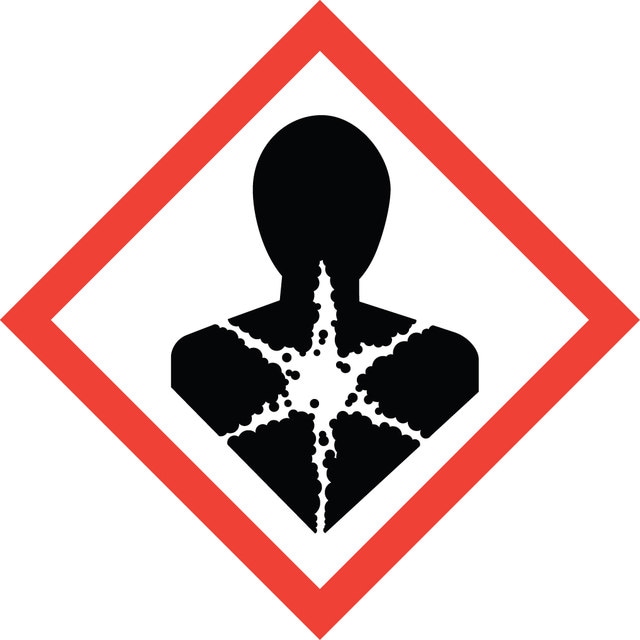
Danger

Hazard Classifications

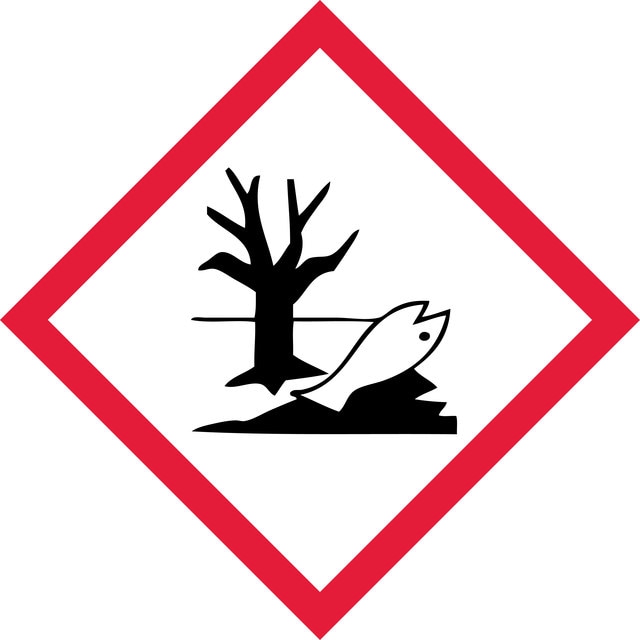
Acute Tox. 3 Dermal - Acute Tox. 4 Inhalation - Acute Tox. 4 Oral - Aquatic Chronic 2 - Eye Dam. 1 - Skin Sens. 1 - STOT RE 2

target_organs

Respiratory Tract

Storage Class

6.1C - Combustible acute toxic Cat.3 / toxic compounds or compounds which causing chronic effects


Certificates of Analysis (COA)

Search for Certificates of Analysis (COA) by entering the products Lot/Batch Number. Lot and Batch Numbers can be found on a product’s label following the words ‘Lot’ or ‘Batch’.

Already Own This Product?

Find documentation for the products that you have recently purchased in the Document Library.

Visit the Document Library

Leonardo Trasande et al.
Environmental pollution (Barking, Essex : 1987), 256, 113334-113334 (2019-11-05)
The goal of this study was to assess biomarkers of exposure to glyphosate and assess potential associations with renal function in children. Glyphosate is used ubiquitously in agriculture worldwide. While previous studies have indicated that glyphosate may have nephrotoxic effects
Hui Huang et al.
Journal of translational medicine, 20(1), 102-102 (2022-02-25)
Acute kidney injury (AKI) is associated with high morbidity and mortality. Multiple urinary biomarkers have been identified to be associated with the prediction of AKI and outcomes. However, the accuracy of these urinary biomarkers for AKI and associated outcomes has
Irene Capelli et al.
In vivo (Athens, Greece), 34(3), 1333-1339 (2020-05-02)
Acute kidney injury is an important cause of mortality in very-low-birth-weight (VLBW) preterm infants. As in the general population, the detection of renal damage cannot rely on the measurement of serum creatinine, since it has been demonstrated to be a

Related Content

Discover the benefits of MILLIPLEX® multiplex assays, based on Luminex® xMAP® multiplex assay technology, that provide consistent, high-quality results and see how these multiplex biomarker Luminex® assays are being used to advance research.

Multiplex toxicity assays enable researchers to simultaneously measure multiple toxicity biomarkers of various organs to gain a better understanding of toxicity. Explore how MILLIPLEX® multiplex toxicity assays are advancing research on liver injury, kidney toxicity, genotoxicity, and more.

Novel kidney toxicity biomarkers expand options for acute nephrotoxicity detection. Multiplex assays measure multiple renal damage biomarkers in small sample volumes, minimizing time and costs. See how MILLIPLEX® multiplex kidney toxicity assays detected vancomycin-induced subacute nephrotoxicity in rat models.

See All

Questions

Reviews

No rating value

Active Filters

Our team of scientists has experience in all areas of research including Life Science, Material Science, Chemical Synthesis, Chromatography, Analytical and many others.

Contact Technical Service