


Following the addition of buffer, the solution may be stored for 6 months at 2–8 °C. For extended storage after opening, with or without the addition of buffer, the material may be stored at –20 °C, protected from light. This information is available in the product datasheet. Please see the link below to review additional details:
https://www.sigmaaldrich.com/deepweb/assets/sigmaaldrich/product/documents/154/087/p4557dat.pdf
P4557

Fenol
Equilibrated with 10 mM Tris HCl, pH 8.0, 1 mM EDTA, BioReagent, Molecular Biology
Sinônimo(s):
Tris-equilabrated Phenol
Faça login para ver os preços organizacionais e de contrato.
Selecione um tamanho
Preço e disponibilidade não estão disponíveis no momento.
Sobre este item
Fórmula empírica (Notação de Hill):
C6H6O
Número CAS:
Peso molecular:
94.11
UNSPSC Code:
12352104
NACRES:
NA.52
PubChem Substance ID:
EC Number:
203-632-7
Beilstein/REAXYS Number:
6428463
MDL number:
Grade:
Molecular Biology
Assay:
≥99.0% (GC)
Pular para
Assistência Técnica
Precisa de ajuda? Nossa equipe de cientistas experientes está à sua disposição.
Estamos aqui para ajudarNome do produto
Fenol, Equilibrated with 10 mM Tris HCl, pH 8.0, 1 mM EDTA, BioReagent, Molecular Biology
InChI key
ISWSIDIOOBJBQZ-UHFFFAOYSA-N
InChI
1S/C6H6O/c7-6-4-2-1-3-5-6/h1-5,7H
SMILES string
Oc1ccccc1
grade
Molecular Biology
product line
BioReagent
assay
≥99.0% (GC)
form
liquid
dilution
(for analytical testing)
pH
7.7-8.1 (25 °C)
storage temp.
2-8°C
Quality Level
Gene Information
human ... GABRA1(2554)
Procurando produtos similares? Visita Guia de comparação de produtos
1 of 4
Este Item | P4682 | 48688 | 40063 |
|---|---|---|---|
| grade for molecular biology | grade for molecular biology | grade certified reference material, TraceCERT® | grade certified reference material, TraceCERT® |
| Quality Level 200 | Quality Level 200 | Quality Level 300 | Quality Level 300 |
| assay ≥99.0% (GC) | assay - | assay - | assay - |
| form liquid | form liquid | form - | form - |
| pH 7.7-8.1 (25 °C) | pH 4.1-4.5 (25 °C) | pH - | pH - |
| product line BioReagent | product line BioReagent | product line TraceCERT® | product line TraceCERT® |
Application
A solução de fenol foi usada:
- como um componente da mistura de reação de digestão para preparar plasmídeos livres de RNase para tradução in vitro em um lisado de reticulócitos de coelho
- para extração de DNA de folhas de roseta de Arabidopsis thaliana
- na extração de DNA de sangue em papel de preservação pelo protocolo padrão de fenol-clorofórmio
- como um componente do tampão de extração
- para extrair RNA de polpa de frutas[1]
- para extração de proteína de raízes para isolamento de DNA fecal[2]
- para extração de RNA em gaiola[3]
Biochem/physiol Actions
O método de extração com fenol-clorofórmio é amplamente empregado para extrair ácidos nucleicos. Embora o fenol não iniba completamente a atividade da RNase, sua característica exclusiva o torna benéfico para o isolamento de ácidos nucleicos quando usado em combinação com clorofórmio e álcool.[4]
General description
A solução de fenol equilibrada em Tris é um líquido transparente encapsulado com uma camada de tampão Tris. As soluções de fenol podem ser usadas em uma ampla variedade de aplicações de biologia molecular. Os compostos orgânicos, como os fenóis, têm um anel carbocíclico aromático com um grupo hidroxila ligado diretamente a ele. O nome comum do mono-hidroxibenzeno é fenol.[5]
Other Notes
- 1 frasco de fenol equilibrado em Tris (número de produto P4557)
- Tampão de equilíbrio (produto B5658)
signalword
Danger
Hazard Classifications
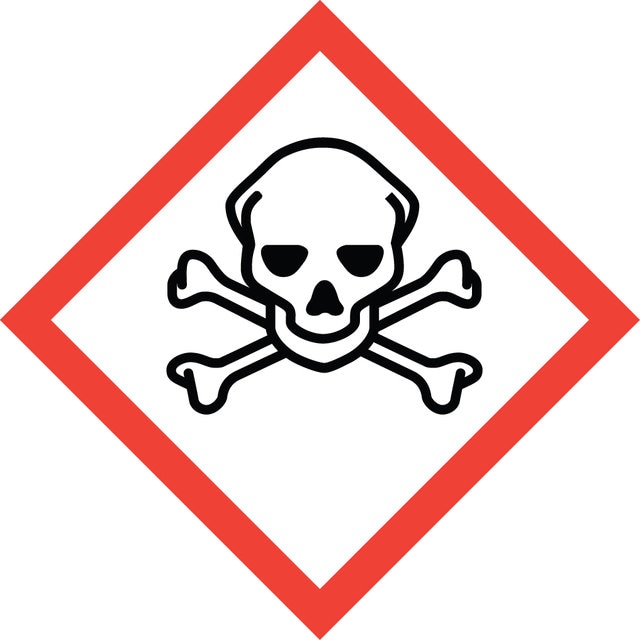
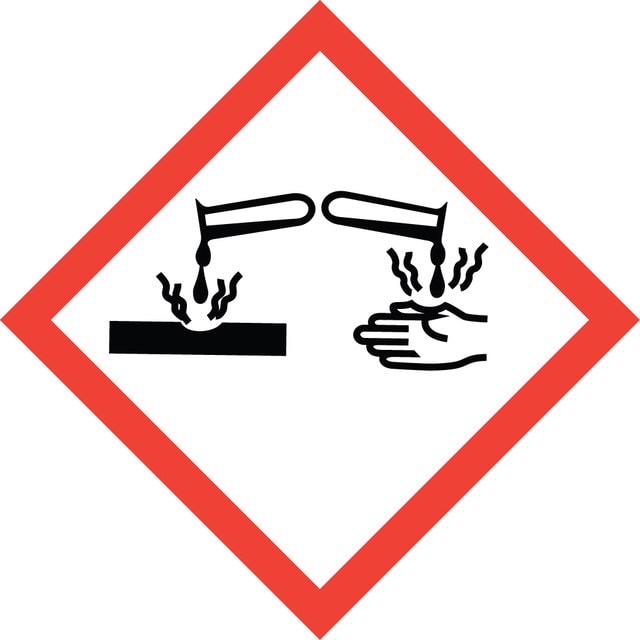
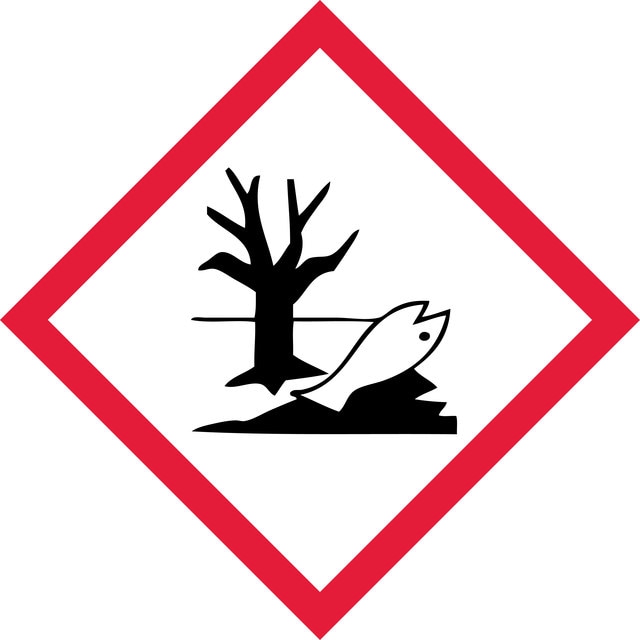
Acute Tox. 3 Dermal - Acute Tox. 3 Inhalation - Acute Tox. 3 Oral - Aquatic Chronic 2 - Eye Dam. 1 - Muta. 2 - Skin Corr. 1B - STOT RE 2
target_organs
Nervous system,Kidney,Liver,Skin
Classe de armazenamento
6.1A - Combustible acute toxic Cat. 1 and 2 / very toxic hazardous materials
wgk
WGK 2
flash_point_f
Not applicable
flash_point_c
Not applicable
ppe
Faceshields, Gloves, Goggles, type ABEK (EN14387) respirator filter
Escolha uma das versões mais recentes:
Já possui este produto?
Encontre a documentação dos produtos que você adquiriu recentemente na biblioteca de documentos.
Nucleic Acid Extraction Techniques
Yi-Wei Tang and Charles W. Stratton
Journal of Separation Science (2012)
Fecal Microbiome and Food Allergy in Pediatric Atopic Dermatitis: A Cross-Sectional Pilot Study
Fieten KB, et al.
International Archives of Allergy and Immunology, 175(1-2), 77-84 (2018)
PHENOLS
Smith PWG and Tatchell AR
Aromatic Chemistry, 79-104 (1969)
Protocol Optimization of Proteomic Analysis of Korean Ginseng (Panax ginseng Meyer)
Braccia C, et al.
Journal of Separation Science, 8(4), 53-53 (2021)
Tim J Bull et al.
Journal of clinical microbiology, 41(7), 2915-2923 (2003-07-05)
Mycobacterium avium subsp. paratuberculosis is a robust and phenotypically versatile pathogen which causes chronic inflammation of the intestine in many species, including primates. M. avium subsp. paratuberculosis infection is widespread in domestic livestock and is present in retail pasteurized cows'
Conteúdo relacionado
Instructions
-
How long can you store phenol for, after adding the buffer?
1 answer-
Helpful?
-
-
Esta botella de Fenol (10 mM TrisHCl pH 8.0) viene junto con una botella pequeña de tampón Tris a pH 10.5 for saturated phenol. Se supone que debo añadírsela a la botella de fenol para ajustar a 10 mM TrisHCl?
1 answer-
Yes, this phenol solution includes a separate bottle of equilibration buffer (Product No. B5658) to adjust the phenol phase to pH 7.9±0.2. The entire contents of the bottle of the buffer should be added to the phenol.
Helpful?
-
-
What is the export packaging? Is it in thermocol/Foam packaging? Can you share the packaging Image.
1 answer-
Both package sizes are bottles that are sealed in a polyamide bag. This bag is placed, with additional absorbent material and padding, in a metal can with a pull tap. The final packaged item is placed in the shipping box that is most compatible with the order. This product is shipped at ambient temperature.
Helpful?
-
-
What is the Department of Transportation shipping information for this product?
1 answer-
Transportation information can be found in Section 14 of the product's (M)SDS.To access the shipping information for this material, use the link on the product detail page for the product.
Helpful?
-
-
What is the final pH of Phenol solution, Product P4557, after adding the buffer?
1 answer-
The pH is typically 8.0; the specifications state a range of 7.7-8.1.
Helpful?
-
-
What is the molarity of Phenol solution, Product P4557?
1 answer-
The Molarity is ~10.6. The density of the phenol is 1.05g/ml, and the molecular weight is 94.11.
Helpful?
-
-
I see that there are two layers in the bottle Phenol solution, Product P4557. Which layer do I use?
1 answer-
The top phase is Tris buffer, so use the lower/bottom phase.
Helpful?
-
-
What do I do to equilibrate the Phenol solution, Product P4557, to around pH 8?
1 answer-
This phenol solution (Product No. P4557) includes a separate bottle of equilibration buffer (Product No. B5658) to adjust the phenol phase to pH 7.9±0.2. After addition of the buffer to the phenol, it may take about 6 hours (mixture can be kept at 2-8 °C) until the bottom phase (phenol) becomes clear. Some of the haziness in the phenol phase may be due to some air bubbles caused by mixing by inversion. There could be a hazy interface between the phenol and aqueous phase which remains after the separation. The entire contents of the bottle of the buffer should be added to the phenol. If buffering less than the complete bottle, use at a ratio of 6.5 mL buffer to 100 mL phenol. For 10 mL of phenol, use 650 μL of buffer. For 1 mL of phenol, use 65 μL of buffer.
Helpful?
-
Active Filters
Nossa equipe de cientistas tem experiência em todas as áreas de pesquisa, incluindo Life Sciences, ciência de materiais, síntese química, cromatografia, química analítica e muitas outras.
Entre em contato com a assistência técnica