Skip to Content
MilliporeSigma
Get up to 22% off for Pi Day through March 27.Save Now

C8261

Sodium chenodeoxycholate

≥97%

Synonym(s):

3α,7α-Dihydroxy-5β-cholanic acid, 5β-Cholanic acid-3α,7α-diol, Chenodeoxycholic acid sodium salt, Chenodesoxycholic acid, Chenodiol

Sign In to View Organizational & Contract Pricing.

Select a Size

Pricing and availability is not currently available.

About This Item

Empirical Formula (Hill Notation):
C24H39NaO4
CAS Number:
Molecular Weight:
414.55
NACRES:
NA.25
PubChem Substance ID:
UNSPSC Code:
12161900
MDL number:

Skip To

Technical Service
Need help? Our team of experienced scientists is here for you.
Let Us Assist

InChI

1S/C24H40O4.Na.H/c1-14(4-7-21(27)28)17-5-6-18-22-19(9-11-24(17,18)3)23(2)10-8-16(25)12-15(23)13-20(22)26;;/h14-20,22,25-26H,4-13H2,1-3H3,(H,27,28);;/t14-,15+,16-,17-,18+,19+,20-,22+,23+,24-;;/m1../s1

SMILES string

[Na].[H][C@@]12C[C@H](O)CC[C@]1(C)[C@@]3([H])CC[C@]4(C)[C@]([H])(CC[C@@]4([H])[C@]3([H])[C@H](O)C2)[C@H](C)CCC(O)=O

InChI key

WANBNZVOEKGHSS-VQNKLXGESA-N

description

anionic

assay

≥97%

form

powder

mol wt

414.55 g/mol

technique(s)

protein purification: suitable

Quality Level

Compare Similar Items

View Full Comparison

Show Differences

1 of 4

This Item
30970C644527029
assay

≥97%

assay

≥98.0% (dry matter, NT)

assay

≥99%

assay

≥97.0% (dried material, NT)

form

powder

form

powder

form

powder

form

powder

technique(s)

protein purification: suitable

technique(s)

DNA purification: suitable, RNA purification: suitable, electrophoresis: suitable

technique(s)

-

technique(s)

-

mol wt

414.55 g/mol

mol wt

micellar avg mol wt 1200-5000

mol wt

micellar avg mol wt 900-1300

mol wt

micellar avg mol wt 900-1300

Quality Level

200

Quality Level

300

Quality Level

200

Quality Level

200

description

anionic

description

anionic

description

anionic

description

anionic

General description

Sodium chenodeoxycholate is a bile salt, which has been shown to accelerate colonic transit and improve bowel function. [1]

Application

Sodium chenodeoxycholate has been used in a study to assess DNA repair response in the bacterium Escherichia coli. [2] It has also been used in a study to investigate the physical and chemical factors influencing germination of Clostridium difficile spores. [3]

Biochem/physiol Actions

Bile Salt

pictograms

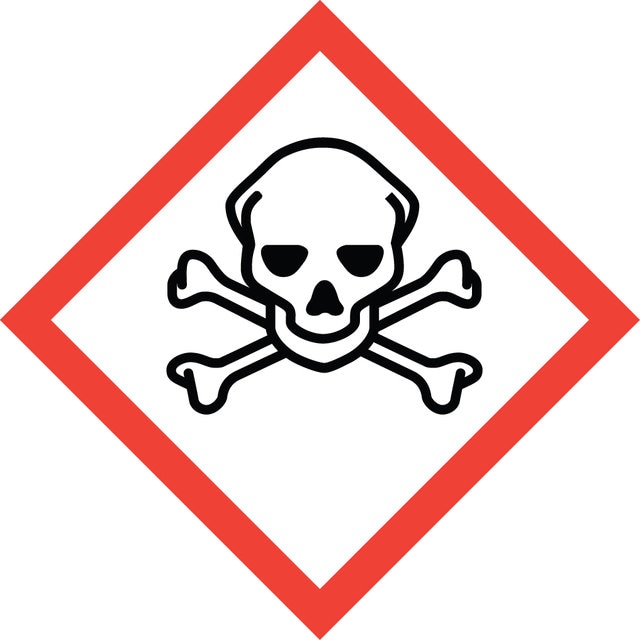
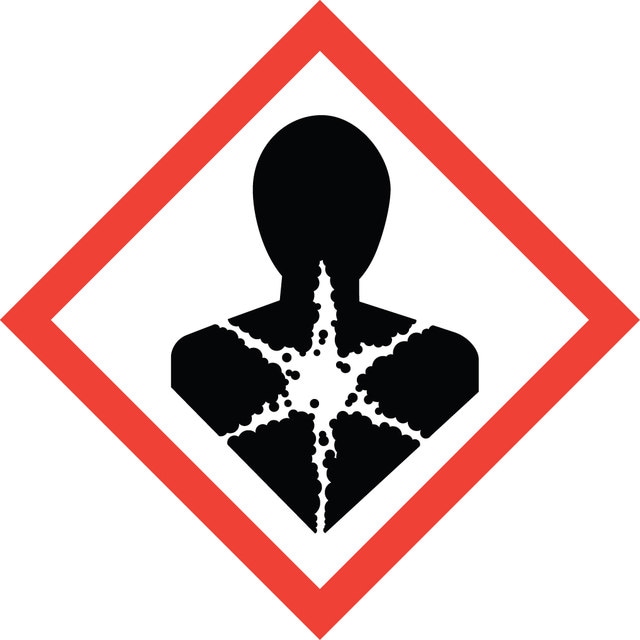
Skull and crossbonesHealth hazard

signalword

Danger

Hazard Classifications

Acute Tox. 3 Oral - Repr. 2

Storage Class

6.1C - Combustible acute toxic Cat.3 / toxic compounds or compounds which causing chronic effects

wgk

WGK 3


Choose from one of the most recent versions:

Certificates of Analysis (COA)

Lot/Batch Number

Don't see the Right Version?

If you require a particular version, you can look up a specific certificate by the Lot or Batch number.

Already Own This Product?

Find documentation for the products that you have recently purchased in the Document Library.

Visit the Document Library

L J Wheeldon et al.
Journal of applied microbiology, 105(6), 2223-2230 (2009-01-06)
To investigate the influence of chemical and physical factors on the rate and extent of germination of Clostridium difficile spores. Germination of C. difficile spores following exposure to chemical and physical germinants was measured by loss of either heat or
R L Kandell et al.
Nutrition and cancer, 16(3-4), 227-238 (1991-01-01)
Two bile salts, sodium chenodeoxycholate and sodium deoxycholate, induced a DNA repair response in the bacterium Escherichia coli. Similarly, a bile acid and a bile salt, chenodeoxycholic acid and sodium deoxycholate, induced DNA repair (indicated by unscheduled DNA synthesis) in
V Vanhoorne et al.
Orphanet journal of rare diseases, 14(1), 186-186 (2019-08-03)
Pharmaceutical compounding of orphan active ingredients can offer cost-effective treatment to patients when no other drug product is available for a rare disease or during periods of drug product shortages. Additionally, it allows customized therapy for patients with rare diseases.
Tina Kauss et al.
Journal of pharmaceutical sciences, 108(8), 2805-2813 (2019-03-18)
Current pediatric antibiotic therapies often use oral and parenteral routes of administration. Neither are suitable for treating very sick neonates who cannot take oral medication and may be several hours away from hospital in developing countries. Here, we report on
Sarinya Tawthep et al.
Journal of bioscience and bioengineering, 124(5), 514-522 (2017-07-29)
Understanding the dynamics of secondary bile acid (SBA) formation in the gut by SBA-producing bacteria is important for host health, as SBAs have been shown to affect host pathophysiology and gut microbiota composition. However, our knowledge of SBA producers is

Articles

Probiotics exhibit an inhibitory effect on pathogens, help prevent chronic intestinal inflammatory diseases or atopic syndromes, and support the immune system.

Questions

Reviews

No rating value

Active Filters

Our team of scientists has experience in all areas of research including Life Science, Material Science, Chemical Synthesis, Chromatography, Analytical and many others.

Contact Technical Service