
S2002

Sodium azide
ReagentPlus®, ≥99.5%
Synonym(s):
Hydrazoic acid sodium salt
Select a Size
| Pack Size | SKU | Availability | Price |
|---|
About This Item
biological source
synthetic (inorganic)
Quality Level
product line
ReagentPlus®
assay
≥99.5%
form
powder
storage condition
(Tightly closed. Dry. Keep in a well-ventilated place. Do not store near acids.)
technique(s)
cell based assay: suitable, immunohistochemistry: suitable
color
white
mp
370-425 °C
solubility
soluble 65 g/L at 20 °C (completely)
suitability
suitable for chromatography, suitable for derivatization
application(s)
sample preparation
SMILES string
[Na]N=[N+]=[N-]
InChI
1S/N3.Na/c1-3-2;/q-1;+1
InChI key
PXIPVTKHYLBLMZ-UHFFFAOYSA-N
General description
Application
Catalyst for:
- Oxidative decarboxylation
- Michael addition reactions[3]
Reagent for synthesis of
- Blue fluorescent copolymers
- Metal phosphonates[4]
- Arenes via aminations
Biochem/physiol Actions
Other Notes
Legal Information
1 of 1
This Item | |||
|---|---|---|---|
| assay ≥99.5% | assay - | assay ≥99.0% (T) | assay ≥99.5% (T) |
| biological source synthetic (inorganic) | biological source - | biological source - | biological source - |
| Quality Level 200 | Quality Level 200 | Quality Level 200 | Quality Level 200 |
| form powder | form - | form crystals | form crystals |
| solubility soluble 65 g/L at 20 °C (completely) | solubility 420 g/L | solubility H2O: 0.1 g/mL, clear, colorless | solubility H2O: 1 M at 20 °C, clear, colorless |
| color white | color - | color - | color - |

Still not finding the right product?
Explore all of our products under Sodium azide
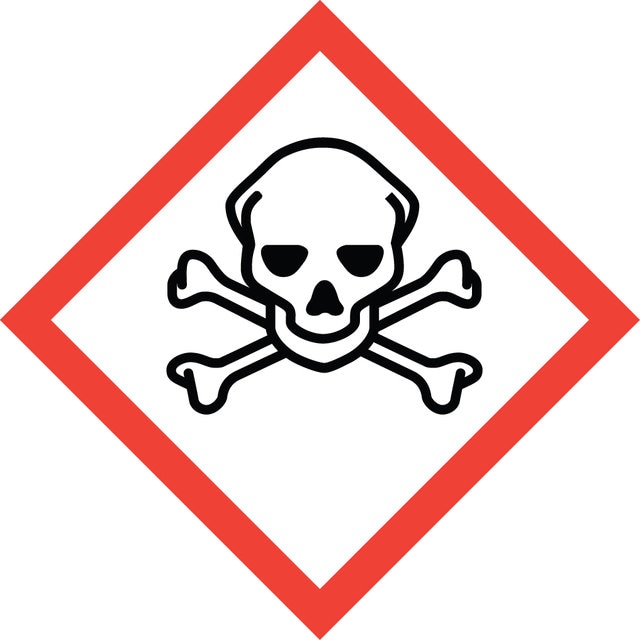

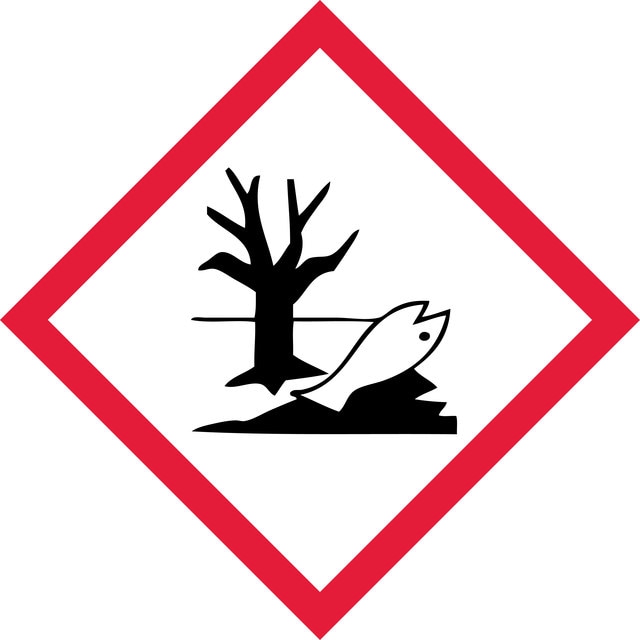
signalword
Danger
Hazard Classifications
Acute Tox. 1 Dermal - Acute Tox. 2 Inhalation - Acute Tox. 2 Oral - Aquatic Acute 1 - Aquatic Chronic 1 - STOT RE 2 Oral
target_organs
Brain
supp_hazards
Storage Class
6.1A - Combustible acute toxic Cat. 1 and 2 / very toxic hazardous materials
flash_point_f
Not applicable
flash_point_c
Not applicable
Choose from one of the most recent versions:
Already Own This Product?
Find documentation for the products that you have recently purchased in the Document Library.
Protocols
Detailed ELISA protocols cover indirect and capture ELISA techniques, recommending products for sandwich and indirect ELISA experiments.
Antibody purification protocols yield preparations containing endogenous IgG alongside specific antibodies.
Global Trade Item Number
| SKU | GTIN |
|---|---|
| S2002-2KG | 04061836916053 |
| S2002-100G | 04061835549283 |
| S2002-500G | 04061835549306 |
| S2002-25G | 04061835549290 |
| S2002-5G | 04061835549313 |
| S2002-25KG | 04061833512913 |